Photo: James DeMers / Pixabay
The Decoy Carvers of the Southern Coast
A good decoy carver will tell you the bird is already in the wood, and the work is just taking away everything that is not the bird.
He starts with a block, white cedar or pine or cork, often cut from something with a past, an old barn beam or a piece of a downed telephone pole, wood that has dried a year or two in the corner of the shop. Then he goes at it with the old tools. A hatchet to rough it out. A drawknife to pull the body into shape, then a rasp and a spokeshave and a pocketknife for the rest. No power tools, in the purest version of the craft, nothing but hand tools any waterman would have owned. The body comes up V-bottomed so it will ride the chop. The head is carved separately and set on. And slowly, out of a square of dead wood, comes a duck, just lifelike enough to fool a live one.
Because that is what a decoy is for.
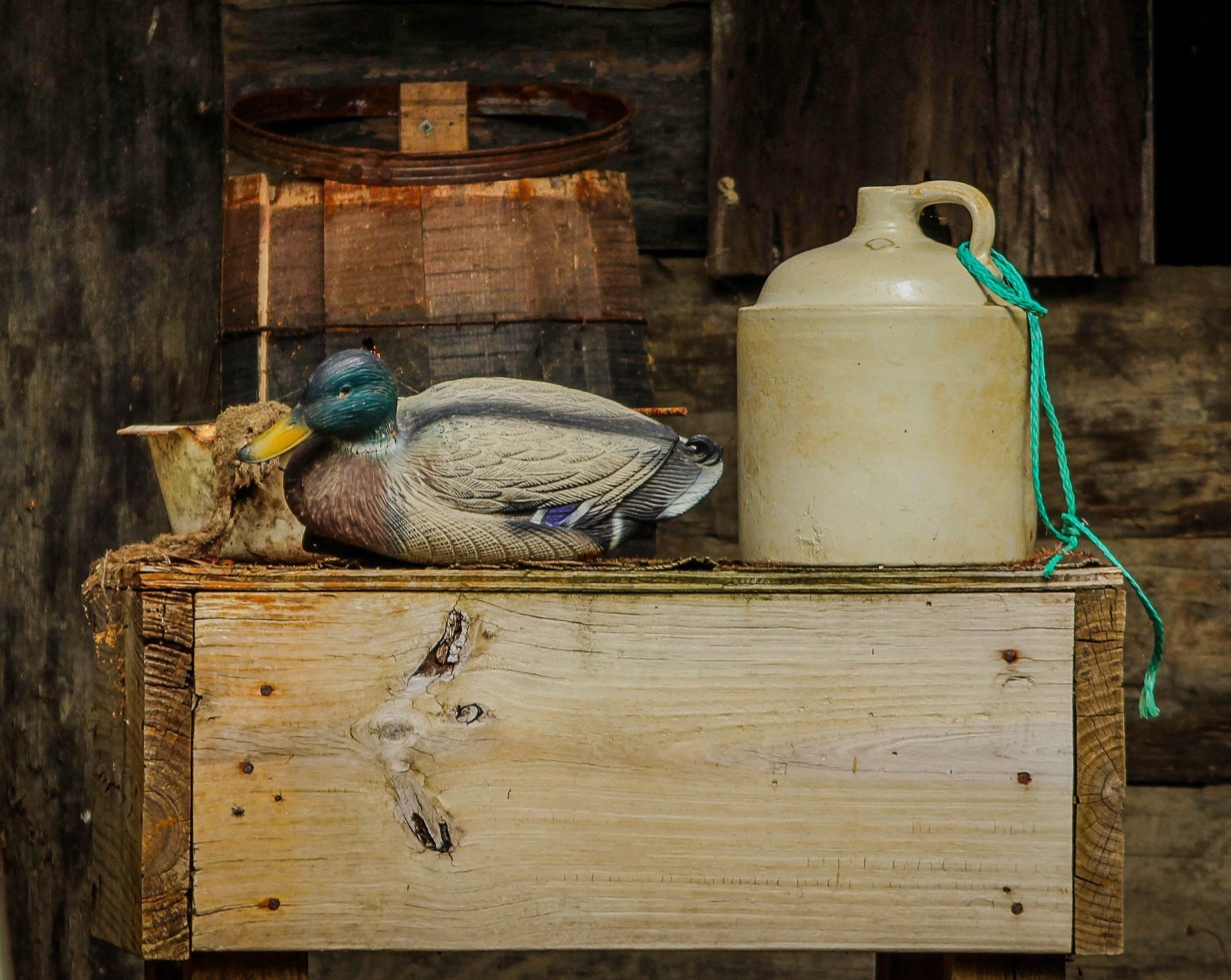
Not the mantel, not the gallery, not the collector’s shelf, though a good one ends up in all three. A working decoy is a tool. You carve a dozen or two, you weight them with lead so they sit upright and steady, and you set them out on the water in the gray before dawn so that a duck coming down the sky sees company on the cold water and decides to join it. That is the entire job. The man who carved it was not trying to make art. He was trying to put supper on the water.
The Southern coast is where this runs deepest. From the marshes behind the Carolina sounds to the Chesapeake’s Eastern Shore to the bayous of Louisiana, wherever the great winter flights came down the flyway, the watermen who hunted them learned to carve the birds that would bring them in. They worked out their own local styles, a Core Sound bird, a Chesapeake bird, each shaped by the particular water it had to float on and the particular ducks it had to fool. And they handed it down. The famous carving families of the coast go back generations, father to son to grandson, a boy of eight or nine playing in the sawdust under the workbench, then handed a knife, then one day carving birds as fine as his father’s.
Then the world did to the decoy what it did to so many handmade things.
By the 1950s you could buy a decoy stamped out of plastic, cheap and identical and good enough, and most hunters did. Why spend weeks carving a rig when a factory would sell you one for a few dollars? The old craft could have died right there, the way so many crafts quietly went in those years, replaced by something faster and cheaper that no one would miss until it was already gone.
But it did not die.
Partly the decoy was saved by becoming art. The best of the old working birds turned into prized folk art, sought by collectors and set behind museum glass, their makers lifted from watermen to masters. And partly, more quietly, it was saved by people who simply refused to let it go, carvers who kept making working birds the old way, and a steady trickle of hunters, some of them young, who wanted a hand-carved decoy precisely because of what it is. A wooden duck cut by hand and meant to get wet carries a history that a plastic one never will.
Walk into one of their shops and you will know it by the smell first, cedar and pine, wood chips and shavings piled deep on the floor. There will be birds in every stage, rough blocks and finished drakes, heads waiting on bodies, a drawknife laid across the bench. And somewhere there will be a row of decoys each tucked into its own paper bag with the top crumpled shut, ready to go to the water, because to the people who make them that is still where a decoy belongs.
This is not really a story about wooden ducks.
It is about a kind of skill that began as pure necessity, a tool a man made because he needed it, that turned out to be beautiful almost by accident, and is kept alive now by the few who still know how. The decoy carver is not painting a picture. He is doing what watermen on this coast have done for three hundred years, finding the bird inside the wood, with the same tools, for the same reason.
Some things are worth keeping not because we still need them, but because of everything they hold, the patience and the lineage and the long marriage of a people to their water. The hand-carved decoy is one of those things. It still rides the cold water before dawn, in fewer rigs every year, a wooden bird made by hand to call the living ones down, and the coast that forgets how to make it will have lost more than a way to hunt. It will have lost one more thing its grandfathers knew by heart.
The South, shared.