Photo: Taylor Heery / Unsplash
Seagrove, Where the Clay Remembers
Drive the back roads of Randolph County, North Carolina, and you start to notice the signs, hand-lettered, tucked at the ends of driveways, pointing toward barns and outbuildings and modest shops. Each one marks a potter. There are more than a hundred of them working within a short radius of the little town of Seagrove, which makes this unassuming stretch of countryside one of the largest concentrations of working potters in America. The North Carolina Pottery Center, the state’s museum of the craft, sits right in town and is the place to start, with a map and a sense of who is firing what.
The reason all of them are here is in the ground. The soil is rich with the kind of clay potters dream about, the residue of an ancient mountain range worn down over hundreds of millions of years into dense, workable earth. Combine that clay with forests to fuel the kilns, and you have the raw conditions for a craft. Potters found those conditions in the latter half of the eighteenth century, immigrant craftsmen, many of them English and German, who came down from Pennsylvania and Virginia and began turning the local clay into the plain, necessary goods of frontier life: jugs, crocks, storage jars, the humble vessels that held a household together before refrigeration and glass.
The remarkable part is that the tradition never broke. For generation after generation, the knowledge passed down through families, often only by blood or marriage, a closely held inheritance of how to dig the clay, mix the glazes, and read the fire. The craft shifted with the times. When demand for utilitarian stoneware faded in the early twentieth century, Jacques and Juliana Busbee helped reinvent Seagrove pottery as art for a national audience. In 1921 they founded Jugtown Pottery, which still operates today, and carried the region’s work to buyers far beyond the county line, including a shop the Busbees ran in Greenwich Village. Later potters opened their own shops and began, slowly, to draw the wider world down those back roads.
Today the tradition is both old and alive. Some potters here still work in the most traditional way imaginable, digging local clay, mixing their own glazes, and firing in wood-burning groundhog kilns that reach temperatures over two thousand degrees and demand days of tending. Others have moved toward contemporary forms and techniques. The range is the point. Along the road locally known as Pottery Highway, North Carolina Route 705, you can find a face jug rooted in centuries-old folk tradition and, a few miles on, a piece of strikingly modern studio ceramics. The annual Seagrove Pottery Festival each November brings the potters together and draws collectors from across the country.
A craft with this kind of memory is a rare thing. The pots coming off these wheels are made one at a time, by hand, by people whose families have been shaping this same earth for two and a half centuries. To buy a piece here is to carry home a small part of that continuity.
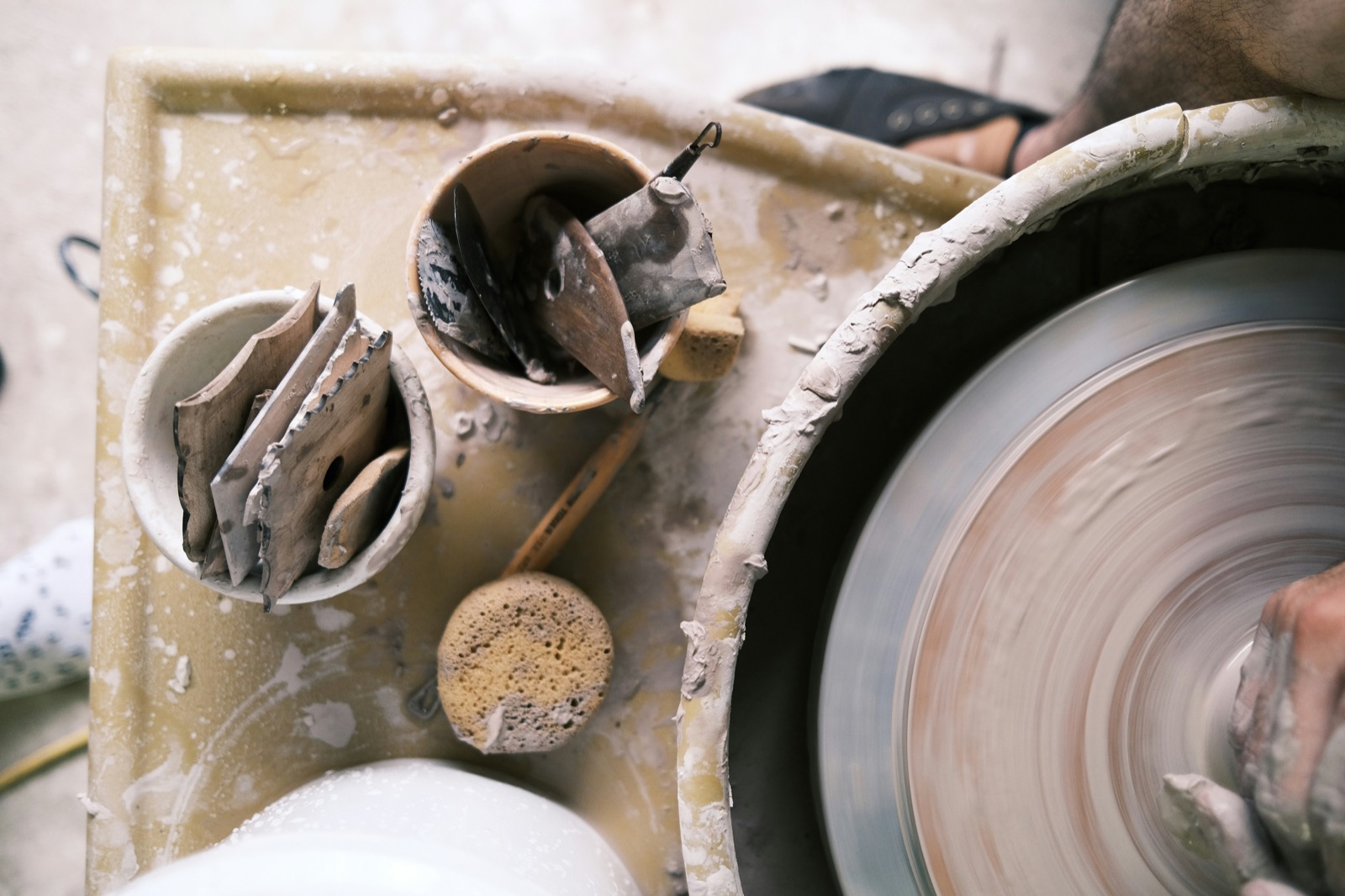
The best way to understand it is to go. Wander the back roads, follow the hand-lettered signs, and stop where you see a potter at the wheel. Most are glad to talk about the work, and in their hands, you can watch a 250-year-old tradition turning, quite literally, in front of you. Stop at Jugtown itself, still firing after a hundred years, and you can hold the proof of it in your two hands.