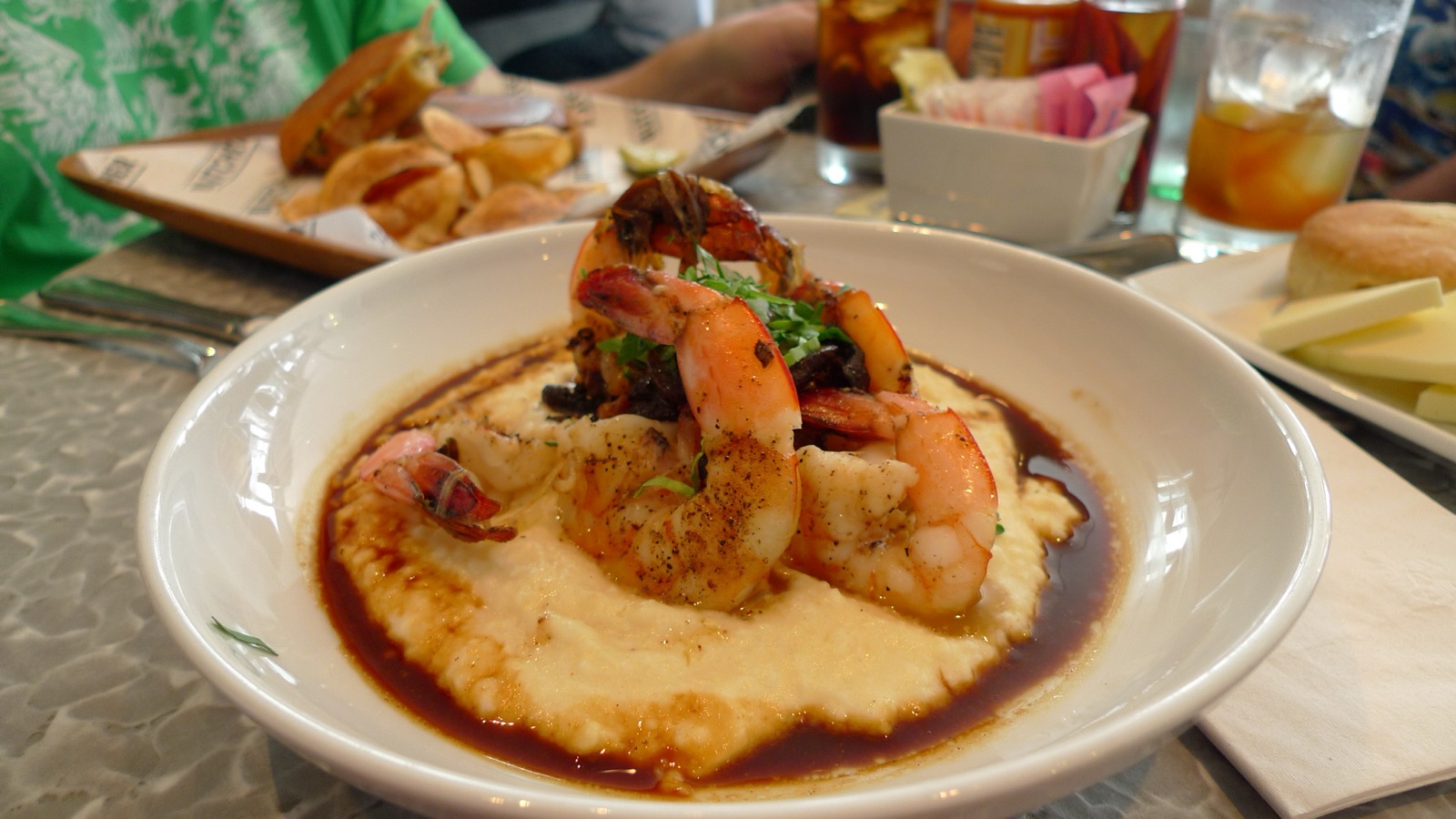
Photo: Ann Larie Valentine / Wikimedia Commons (CC BY-SA 2.0)
Shrimp and Grits, and the Long Road to the Table
Some dishes are invented. Others are simply made, again and again, out of what a place and its people happen to have, until one day the rest of the world notices.
Shrimp and grits belongs to the second kind. It was born in the Lowcountry, the marshy coastal stretch of South Carolina and Georgia, among the Gullah Geechee, the descendants of West and Central Africans brought to the region to work the rice, indigo, and cotton plantations of the Sea Islands. Isolated on those islands, they held onto their language, their music, their basketry, and their cooking with a tenacity that preserved a culture against long odds.
A fisherman’s breakfast
The dish itself began as the plainest kind of sustenance. Grits, ground corn, came to the Gullah Geechee as part of a food allowance, a staple inherited from the Native peoples of the region who had been grinding corn for generations. Shrimp came from the creeks and tidal waters just beyond the door, caught in cast nets at the right turn of the tide. Together they made a hot, filling breakfast for people who rose early and worked hard. For most of its history the dish went by plainer names, “breakfast shrimp” or “shrimp and hominy,” and it stayed exactly that, a local working morning meal known in the marshes near the coast and almost nowhere else. A recipe titled “Breakfast Shrimp” appears in Charleston Receipts, the Junior League of Charleston cookbook first published in 1950, describing the small, sweet shrimp caught in the creeks and inlets of the Lowcountry.
From Crook’s Corner to the country
It might have remained a regional secret indefinitely. What changed was a single restaurant and a single cook. In 1982, a chef named Bill Neal put shrimp and grits on the menu at Crook’s Corner in Chapel Hill, North Carolina. His version enriched the grits with cheddar and parmesan and dressed the shrimp with bacon, mushrooms, and a few well-chosen seasonings. In 1985, Craig Claiborne of The New York Times came through and ate it, and the praise-filled article he published, printed with the recipe, sent the dish traveling. Within a generation it had moved from the Sea Islands to white-tablecloth dining rooms across the country, reinterpreted a thousand ways.
That journey sits underneath every version of the dish on a brunch menu now, often served far from any marsh. Beneath the cheese and the garnish is something older and more dignified: the resourcefulness of a people who made a lasting thing out of modest ingredients, and whose contribution to American cooking runs far deeper than this one bowl. The Gullah Geechee gave the wider South a great deal of what it eats, from Hoppin’ John to okra to the whole grammar of rice cookery to the Frogmore stew that feeds a crowd at a coastal boil.
What makes a great bowl
The best versions still taste of that origin. Stone-ground grits, the kind from a working mill like Geechie Boy on Edisto Island or Anson Mills in Columbia, cooked low and slow until they are creamy rather than stiff. Shrimp with real snap to them, ideally wild-caught from local waters and not previously frozen. A sauce built on rendered bacon, the shrimp shells simmered into a quick stock, and aromatics, rather than cream alone doing the work. Order it where the water is close and the cooks respect the tradition, and you can still taste the marsh in it.
The dish has carried a long way from a Sea Island kitchen, but its heart never moved. It is still food about making much from little and sharing it freely, and the next great bowl of it is probably waiting at a counter somewhere along the Carolina or Georgia coast, where someone learned to make it from someone who learned it from someone else.