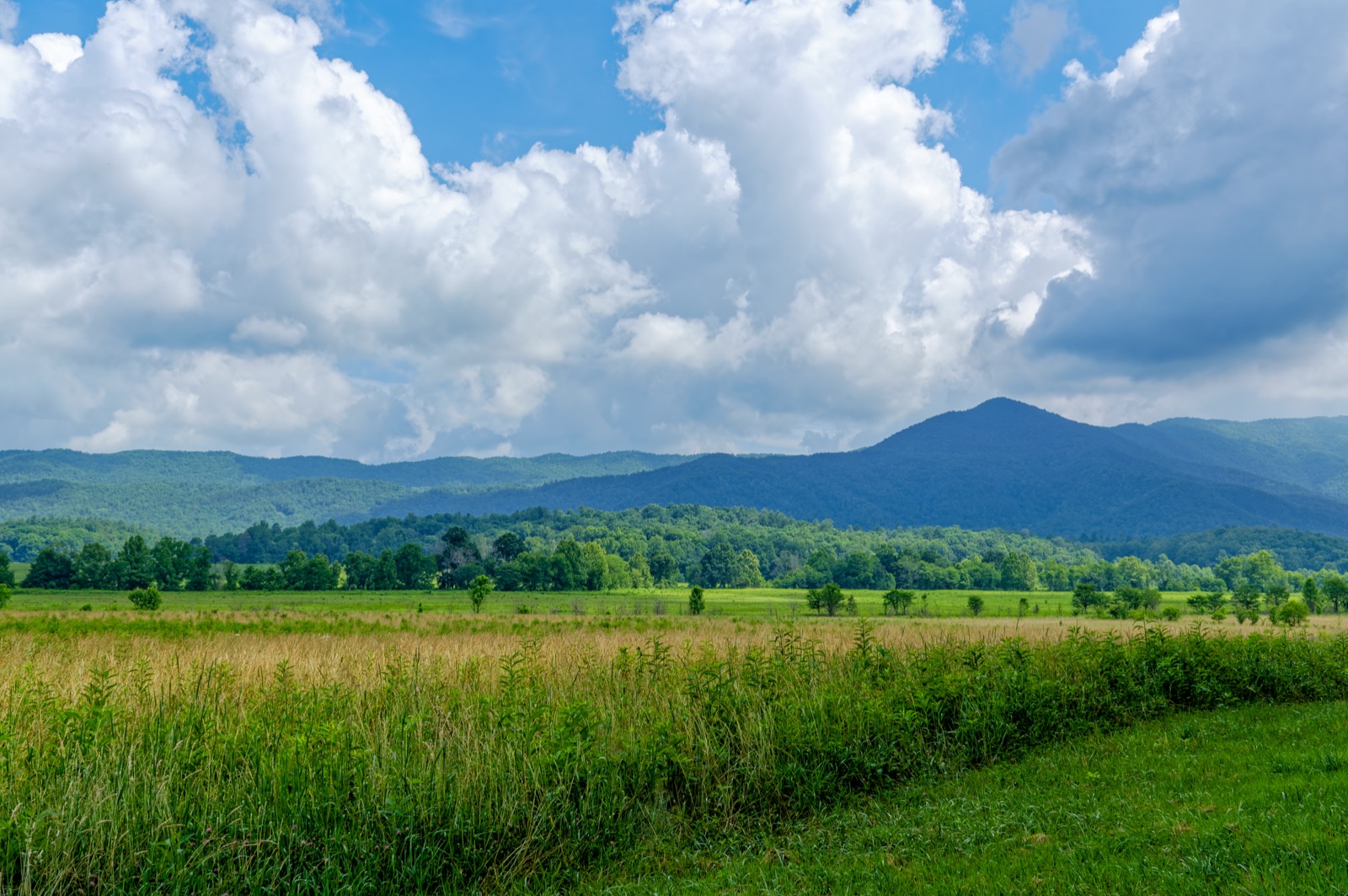
Photo: Lee Ann Ratledge / Wikimedia Commons (CC BY 4.0)
Cades Cove: The Valley That Was Kept
There is a particular kind of quiet in Cades Cove that you do not find in many places anymore, and once you understand why it is quiet, it changes the way the whole valley looks.
The cove sits on the Tennessee side of the Great Smoky Mountains, a broad green floor of fields and meadows ringed completely by forested peaks. The mountains hold it like cupped hands. A single road, eleven miles around and running only one way, loops the valley and lets you see it the way it has looked for the better part of two hundred years. There are split-rail fences and wildflower fields and, scattered along the edges, the cabins and the churches and the old mill of the people who used to live here.
Used to. That is the word the whole place turns on.
Because Cades Cove was a town. Not a tourist idea of a town, a real one, with families and feuds and Sunday dinners and a couple of churches that did not always get along. The first permanent settlers came around 1818, a man named John Oliver and his wife Lurena, who nearly starved their first winter and were kept alive by dried pumpkin the Cherokee gave them. Others followed. The valley filled in. By its height the cove held something like seven hundred people, a self-sustaining mountain community with its homes and barns and schoolhouses, its gristmill grinding corn on Saturday mornings, its dead buried in the churchyards under their own names.
Then, in the late 1920s, the states began buying the mountains to make a national park.
Most people sold. Some fought it in court. A few signed leases that let them stay on the land they no longer owned, living out their years under rules written by someone else, watching the place become a park around them while they were still in it. By the 1940s the community had mostly scattered or died off. The school closed. The post office closed. The families who had farmed that valley for over a century were gone, and the government began, carefully, to keep the cove looking exactly the way it had looked when they left.
That is what you are driving through. Not a town that died on its own, the way the shrimp docks and the hardware stores are dying, slowly, of changing times. A town that was deliberately emptied so that it could be saved. And the strange ache of the place is that the saving worked. Cades Cove is preserved more perfectly than almost any settled valley in the South, and it is preserved precisely because the people are no longer in it.
Walk up to the John Oliver cabin, the oldest building still standing in the entire park, reachable by a short path through the grass. It is a simple thing, dark logs and a stone chimney, built by hand by people who chose this hard and beautiful place. Stand in the doorway and look out at what they looked out at every morning, the fields and the wall of mountains, and you understand both halves of it at once. The view that made them stay. The emptiness that lets you see it now.
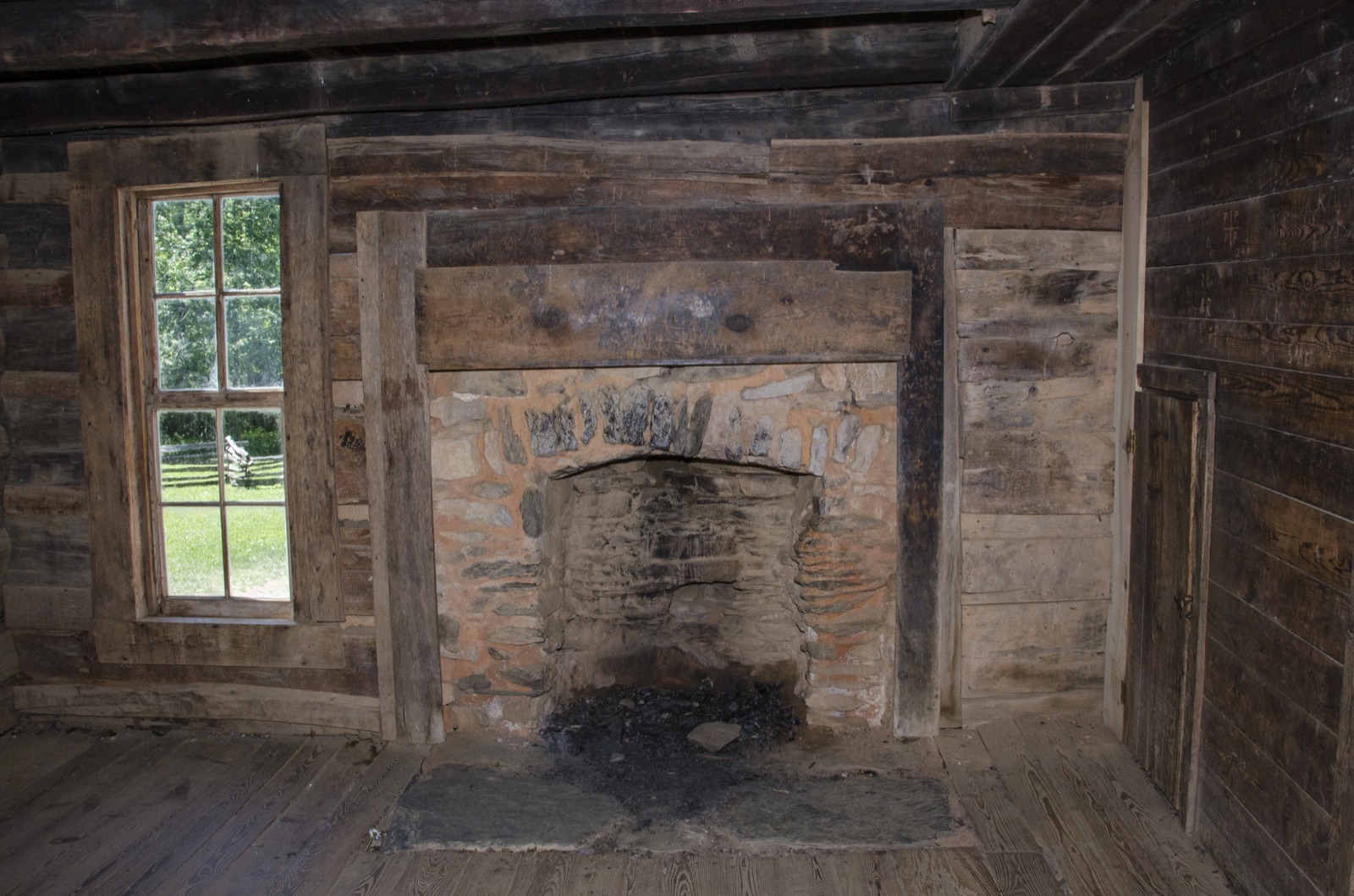
The churches are the hardest part. Three of them stand along the loop, plain white mountain churches with their cemeteries beside them, and the graves are real, and the names on the graves belonged to people who sang in those buildings and are buried within sight of where they worshipped. The buildings are immaculate. The congregations are a hundred years gone. You can sit in a pew on a summer afternoon with the door open and the light coming in and feel the whole weight of it, a room built for a community that no longer exists, kept perfect, kept empty.
Here is the question Cades Cove leaves you with, and it does not have an easy answer.
What is the cost of keeping something? We say we want to preserve the old ways, the old places, the way things were. And sometimes preservation is a porch repaired and a recipe passed down and a town that simply refuses to tear itself apart. But sometimes it is this. Sometimes saving a place means stopping it, freezing it, moving the living out so the past can stand undisturbed. Cades Cove is the most beautiful argument for preservation you will ever drive through, and it is also a quiet reminder that the past we keep is not the same as the past that was lived. One had people in it. The other has us, passing through, cameras out, trying to feel what it was.
The cove does not resolve this for you. It just sits there in its ring of mountains, green and still and kept, the most visited place in the most visited park in the country, full of empty homes that someone loved.
Some things we save by living in them. Some things we save by letting them go and standing guard over the space they left. Cades Cove is the second kind, and it is worth the drive, and it will stay with you longer than you expect, this valley that was kept by being emptied, beautiful and silent under the same sky those first families woke up to.
The South, shared.
Keep Reading
Places
The Southern Town We Can't Stop Thinking About: Oxford, MississippiThe students come back, the Square fills up, and Faulkner's ghost keeps a quiet house at the edge of town. This is Oxford, Mississippi.
Places
Abingdon, Virginia: The Town That Traded Ham for HamletIn the far corner of Virginia sits a handsome mountain town whose famous theater once let farmers pay for a play with produce. It is still going.
Places
The Lighthouses of the South, Part Two: The Gulf CoastThe second in our series on the beacons of the Southern coast. From Pensacola to Sanibel, the Gulf lights guard a flatter, trickier shore.