Leiper's Fork: The Village That Decided Not to Grow
The change happens in the space of a few miles.
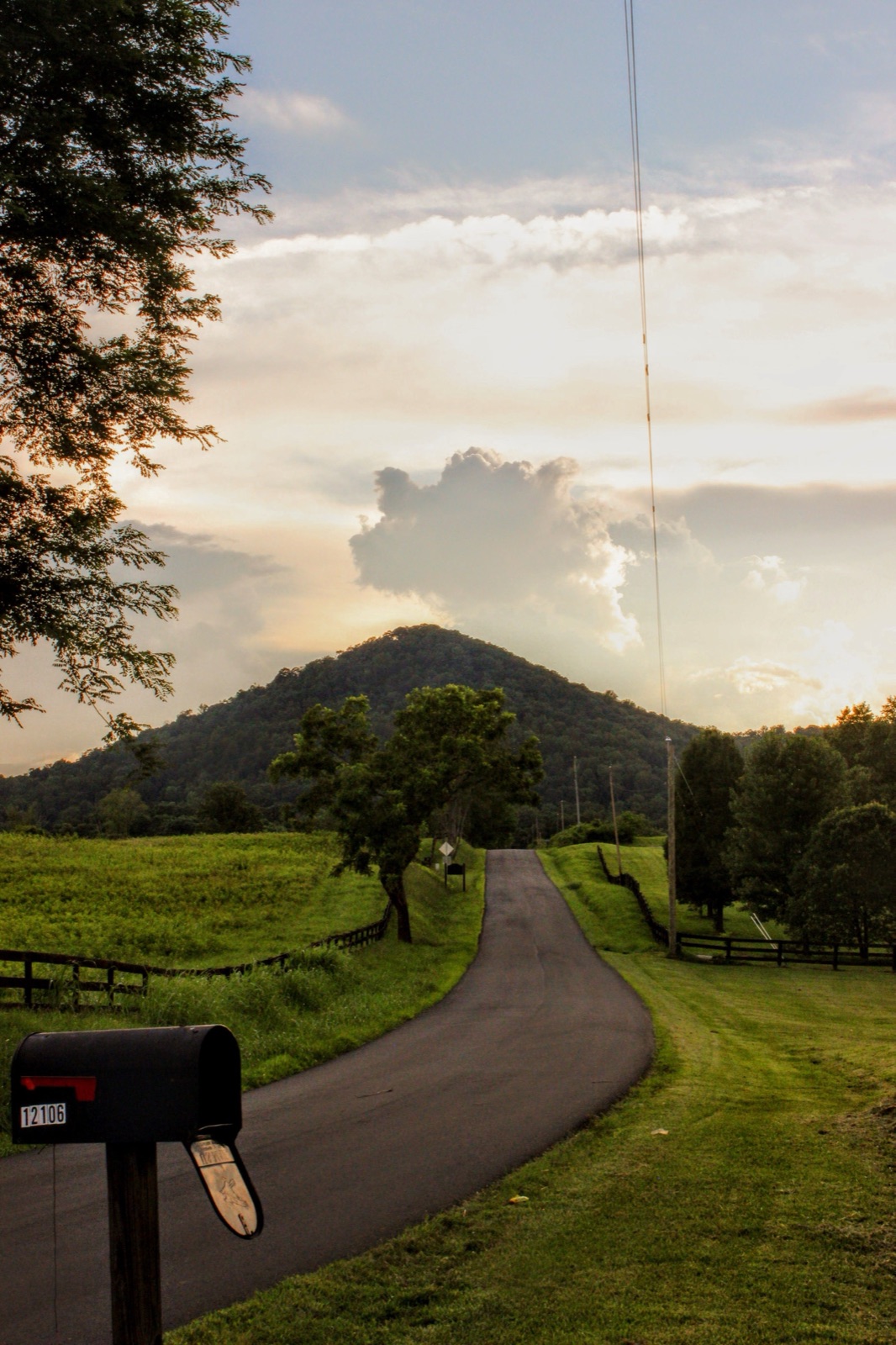
Leave Nashville heading south and for a while it is all the things a growing city is now: the four lanes, the chain signs stacked one after another, the storage units and the car lots and the new apartments going up behind construction fence. Then the road narrows. The hills begin to roll. The billboards thin and then stop altogether, and somewhere along Old Hillsboro Road, the village’s main drag, the twenty-first century simply lets go of you.
What it hands you to instead is a village.
I have come here several times, with family and with friends. The rhythm is always the same. You walk through the stores first, the kind of places where the past is laid out on tables and shelves, and you find a treasure or two from long ago and offer it a new home.
Leiper’s Fork is small in a way that is hard to do on purpose anymore. It is an unincorporated village on the western edge of Franklin, the kind of place you can take in on foot in an afternoon: a short main stretch of old buildings, a grocery, a few galleries and shops, front porches, and the green country folding in close on every side.
And here is the thing worth understanding before you go, the thing that makes it more than a pretty drive: none of this stayed by accident.
A village this close to Nashville, on land this beautiful, is worth a great deal of money to the people who build subdivisions. The pressure that flattened so much of middle Tennessee into the same handful of rooflines and the same five restaurants did not skip Williamson County, one of the wealthiest and fastest-growing counties in the state. By every ordinary law of how American places change, Leiper’s Fork should have become another exit.
It did not, because people decided it would not, and they have the rare distinction to show for it. Leiper’s Fork is the only historic district along the whole length of the Natchez Trace Parkway, a two-hundred-year-old village whose well-heeled residents guard its character with something close to jealousy. When the old grocery came up for sale and out-of-town investors began circling, it was a local preservationist, Aubrey Preston, already known for rescuing landmarks around middle Tennessee, who stepped in to buy it and keep it what it was. The protection here is not an accident of being overlooked. It is deliberate, and it has names.
That choice is the whole character of the place. A town that decides to stay small is really deciding to keep something it would rather have than money, and you can read what that something is by walking the main stretch and seeing what people protected.
What they protected, mostly, is a way of being together.
You see it best at the old grocery on Old Hillsboro Road, the building that has anchored this village for the better part of a century.
It opened in 1947 as Fox and Locke, a general store named for the two men who built it, Jack Fox and Martin Locke. In 1960 the Puckett family bought it and put their own name over the door, and Puckett’s it stayed for decades, through a string of owners, becoming along the way one of the most beloved music rooms in Tennessee. Then in 2022 the building did something that tells you everything about this place. It changed its name back. Local historians and preservationists urged the owners to restore the original name, to honor the building’s place on the National Register of Historic Places, and so the grocery that the world had come to know as Puckett’s became, once again, Fox and Locke.
Think about what that means. A business with a famous name, a name people drove an hour to find, gave that name up to be more faithful to its own history. That is not a marketing decision. That is the same instinct that kept the whole village from becoming a subdivision, applied to a single storefront. Here, the past is not a theme. It is the thing itself, and people will trade a good name to keep it true.
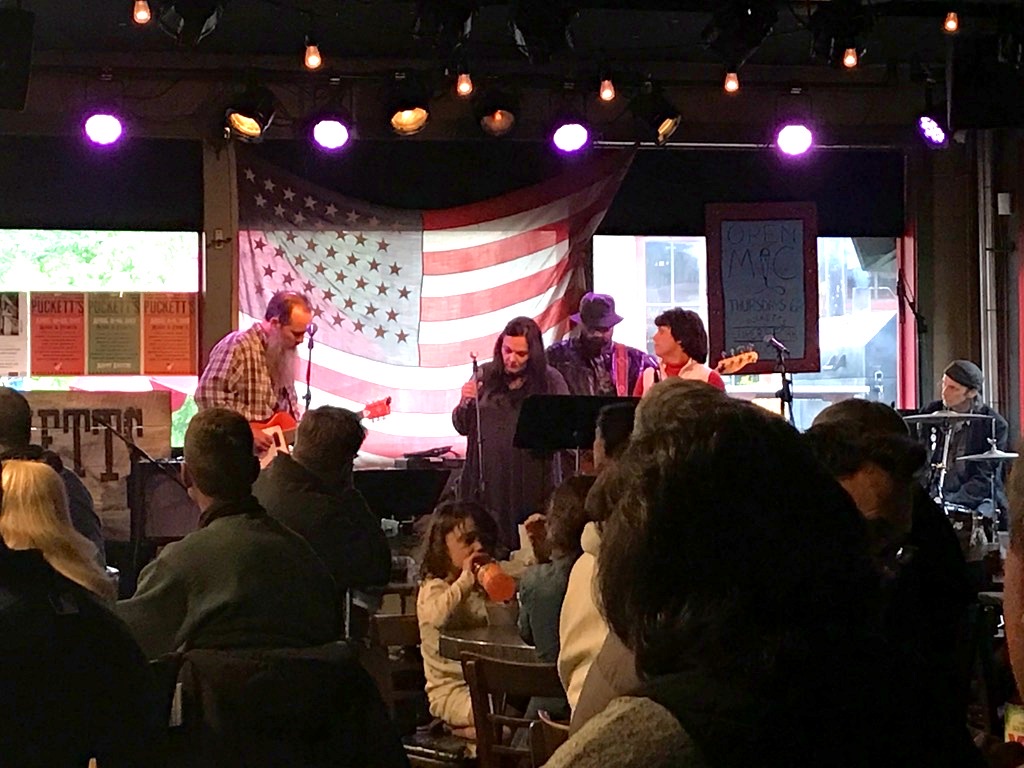
I knew it in its Puckett’s years, and the name on the door never much mattered once you were inside. You find your way to an old rustic table, set around with even older mismatched chairs, and you sit down to listen to some of the finest musicians this country has ever produced. They play for the love of the music and the joy of sharing it, and that is the whole arrangement.
I was there once with a small handful of close friends from church when, in the space between two songs, a voice you would know stepped over to chat for a few minutes. She was picking up an item for her daughter, every bit as well known as she was, who was off filming abroad and missing home. No fuss was made of it. It was just a moment between songs, and then the music started again.
That is the thing about the place. An evening like that does not feel like an event. It feels like an average night of Southern comfort, lived out in the soft hills of a beautiful part of the world.
The point of the place is not that the food is good, though it is, the cherry-smoked pulled pork and the fried catfish and the Southern plates that send no one home hungry. The point is older than the menu. Before a town had a venue, it had a store, and the store was where you found out who was sick and who was getting married and who could play. The music and the meal and the news all happened in the same room because there was only the one room. Fox and Locke still works that way. You do not go to a concert hall in Leiper’s Fork. You go to the grocery, and the music finds you there.
And the music has never really stopped here. Live music came to the grocery in 2002, and what grew up around it became something rare. The Thursday open mic is the stuff of legend now, treated by young songwriters as a kind of gateway into Music City, and the regular shows draw players and listeners from around the world to a room that seats a fraction of what its reputation could fill. Big names turn up unannounced and play a few songs for the joy of it, the way I watched happen, because this is the kind of room where that still feels normal rather than staged.
This is the part Nashville people understand in their bones. Their city became Music City and then became something past that, a brand, a bachelorette destination, a skyline that did not used to be there. Most of them love it and would not move. But a city that grows that fast loses track of what it was, and there is a particular ache in that, the ache of a hometown you can still visit but not quite recognize.
Leiper’s Fork is where the thing underneath is still visible. Not preserved behind glass, but lived. The porch, the pickin’, the screen door, the plate of food, the town the size of a handshake. People drive out from Nashville on a Friday and tell themselves they are going for the barbecue, and some of them are. But a lot of them are going to remember.
If you go, and you should, it is an easy thing to do, a short drive of roughly forty minutes south and west of Nashville along the Natchez Trace. Make it a slow afternoon rather than a checklist. Stroll the little town and let the shops slow you down. Sit down to some barbecue. Stay for the music. And before you point the car back toward the city, take the long way, a tranquil drive around the countryside, and let yourself truly absorb the wonder of God’s creation in these soft green hills.
Go on a day you are not in a hurry. That is the only way the place makes sense. Leiper’s Fork is not somewhere you check off. It is somewhere you slow down to the speed of, and on the drive back, when the billboards start up again and the road widens and the city closes back over you, you will understand exactly what the village decided to keep.
Keep Reading
Places
Abingdon, Virginia: The Town That Traded Ham for HamletIn the far corner of Virginia sits a handsome mountain town whose famous theater once let farmers pay for a play with produce. It is still going.
Places
The Lighthouses of the South, Part Two: The Gulf CoastThe second in our series on the beacons of the Southern coast. From Pensacola to Sanibel, the Gulf lights guard a flatter, trickier shore.
Places
The Lighthouses of the South, Part One: The Atlantic CoastThe first in a series on the beacons of the Southern coast. Seven Atlantic towers built to keep ships off the shoals, and worth the climb.