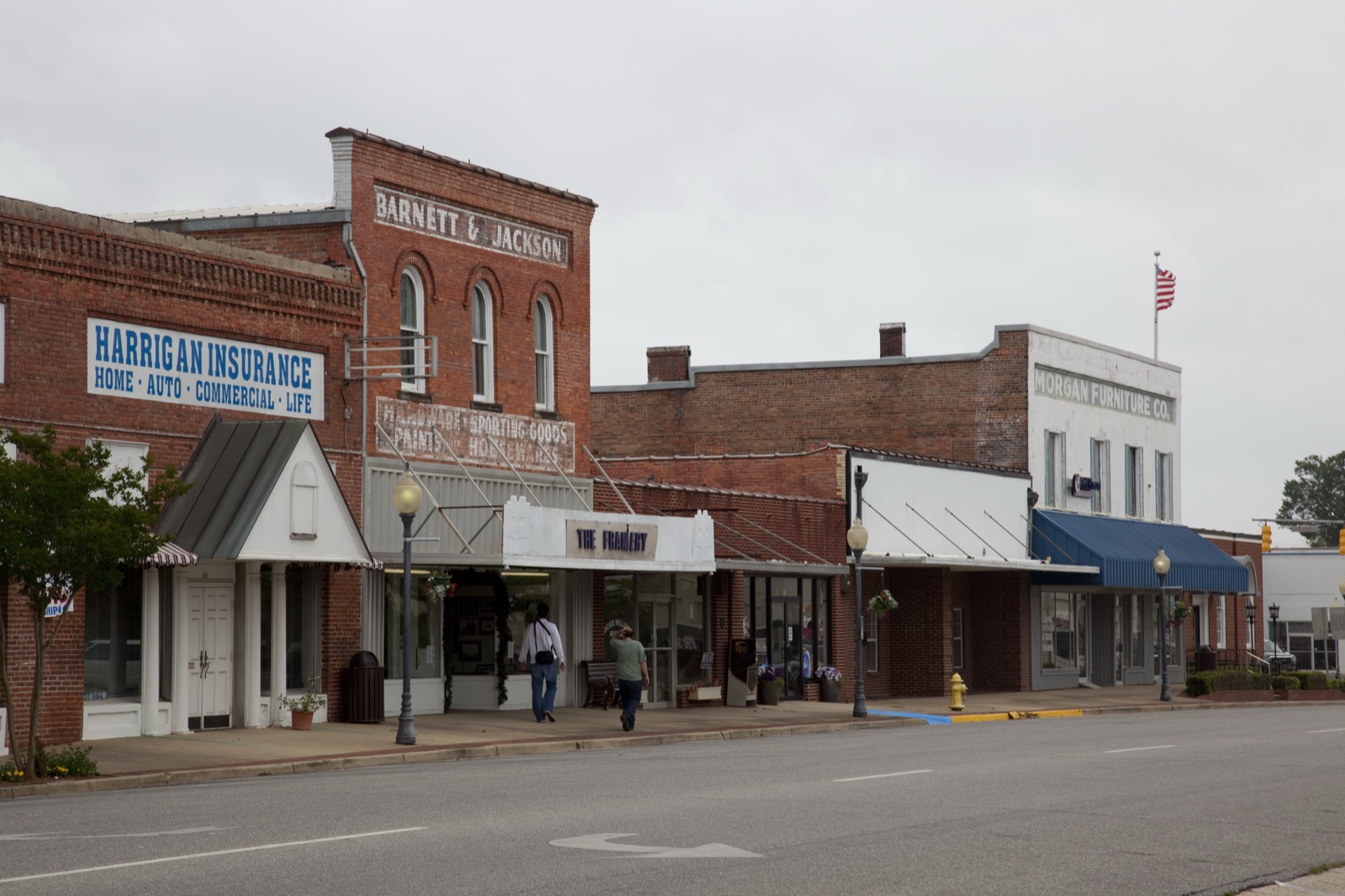
Photo: Carol M. Highsmith / Library of Congress
Monroeville, Alabama: The Town That Became a Book
Millions of people have walked the streets of Monroeville, Alabama, and most of them have never set foot in the state.
They have walked it on the page. Because Monroeville is the real town behind Maycomb, the sleepy Alabama county seat where Harper Lee set “To Kill a Mockingbird,” one of the most beloved and most taught novels this country has ever produced. Lee grew up here, a few blocks from the courthouse, a tomboy named Nelle who would sit in the balcony of the Monroe County courtroom and watch her father, a small-town lawyer, practice his trade. She took that town, and that courthouse, and that father, and she made them into Maycomb and the trial of Tom Robinson and Atticus Finch, and the book sold forty million copies and was translated into forty languages, and the world fell in love with a place it thought was invented.
It was not invented. It was Monroeville, looked at closely.
And here is the part that makes this town almost too good to be true. The little boy next door, Nelle’s summer playmate, the model for the character Dill in the novel, was Truman Capote. Two of the most important American writers of the twentieth century grew up as neighbors and friends on the same dusty street in the same small Alabama town, and you can stand on the ground where their houses stood, marked now by plaques because the houses themselves are gone. Something was in the air here, or the water, or just in the long slow attention that a small town teaches a watchful child. Whatever it was, it produced two writers who changed American letters, side by side.
The heart of it all is the old courthouse on the square.
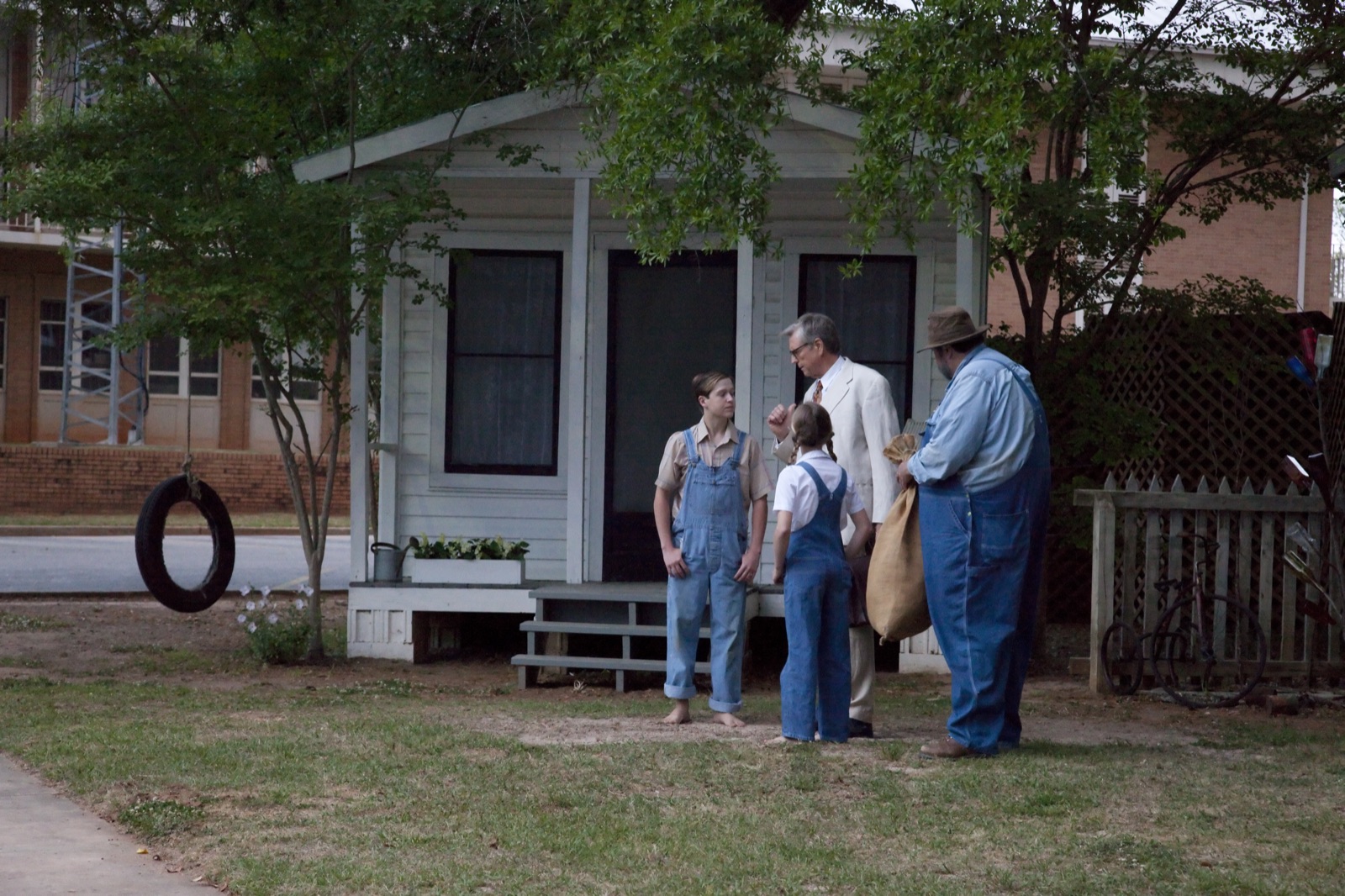
The Old Monroe County Courthouse, built in 1903, with its handsome dome, is now a museum, and the courtroom inside is the one Harper Lee knew. When Hollywood made the film of “To Kill a Mockingbird,” the one that won Gregory Peck his Academy Award, they built their courtroom set by copying this room, board for board, balcony for balcony. So the most famous courtroom in American fiction, the one where Atticus rises to defend an innocent man and the Reverend tells Scout to stand up because her father is passing, is a faithful copy of a real room you can walk into in a small Alabama town. Each spring the local players stage the novel right there, the first act on the lawn, the second act in the actual courtroom, performed by the people of the town the book is about.
Monroeville is not a fancy place. It is timber and cotton country, thirty-some miles off the interstate, a town of a few thousand people and a great many churches, the kind of place where the first question is still which congregation you belong to. It is the sort of town you could drive through in five minutes and never think about again. And yet thousands of people still come every year, from all over the world, not for the timber or the cotton but for Maycomb, looking for a fictional town and finding the real one underneath it.
Here is what Monroeville proves, and it is the same thing Faulkner proved a few hundred miles north, the great secret of Southern literature.
The material was always here. You did not need a great city or a wide world to write something that would last. A watchful child on a small-town street, paying close attention to her own people and her own courthouse and her own complicated home, had everything she needed. Harper Lee took the most ordinary kind of Southern town, the kind you would drive through without stopping, and looked at it so honestly and so lovingly that she turned it into a place the whole world carries in its heart.
That is the strange alchemy of it. A town becomes a book, and the book outlives everyone in it, and then people travel across oceans to stand on a courthouse square in rural Alabama because a girl who grew up there once paid very close attention. Monroeville did not set out to be immortal. It just happened to raise someone who was watching.
The South, shared.
Keep Reading
Places
Abingdon, Virginia: The Town That Traded Ham for HamletIn the far corner of Virginia sits a handsome mountain town whose famous theater once let farmers pay for a play with produce. It is still going.
Places
The Lighthouses of the South, Part Two: The Gulf CoastThe second in our series on the beacons of the Southern coast. From Pensacola to Sanibel, the Gulf lights guard a flatter, trickier shore.
Places
The Lighthouses of the South, Part One: The Atlantic CoastThe first in a series on the beacons of the Southern coast. Seven Atlantic towers built to keep ships off the shoals, and worth the climb.