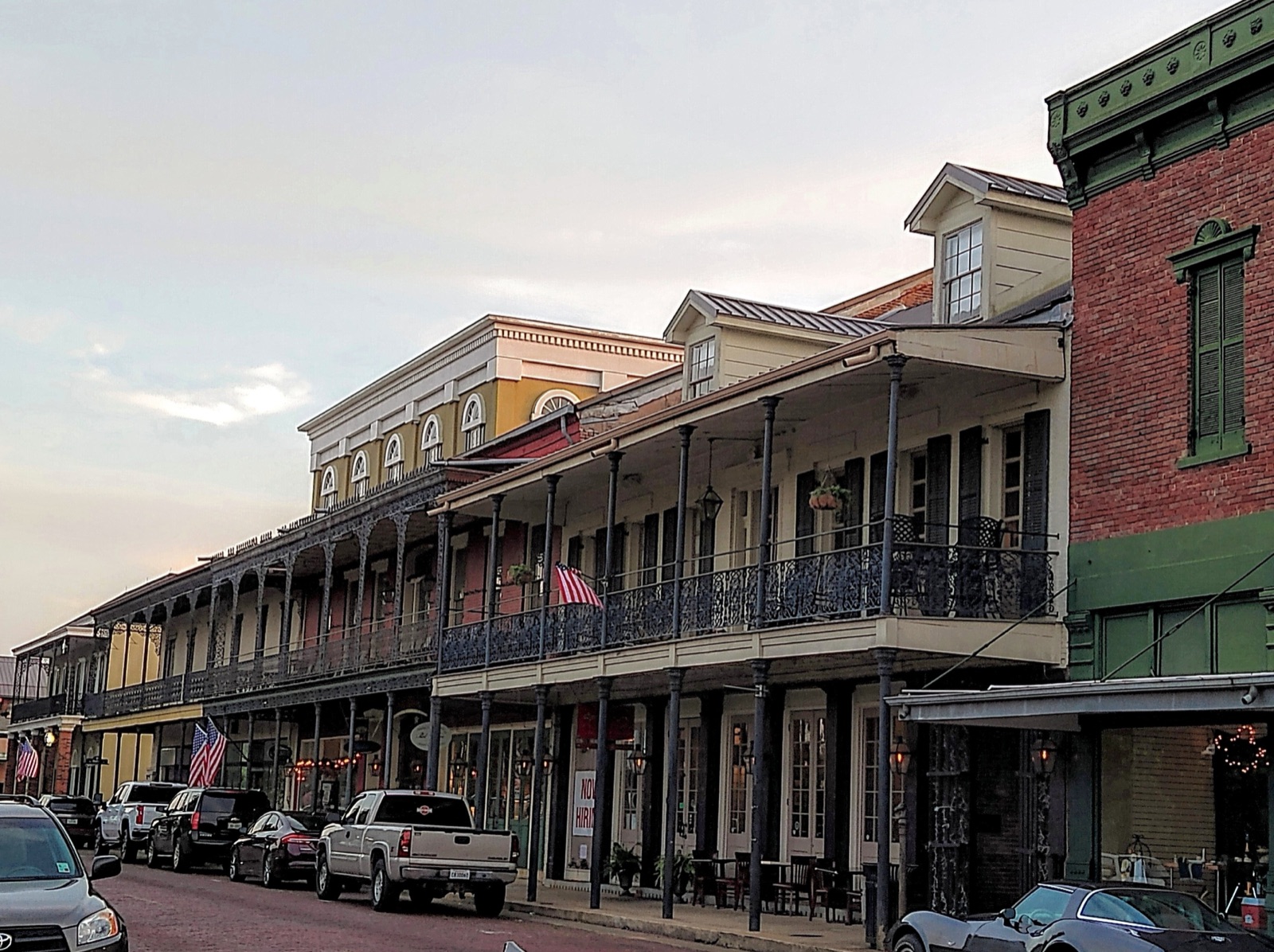
Photo: amanderson2 / Wikimedia Commons (CC BY 2.0)
The Southern Town We Can't Stop Thinking About: Natchitoches, Louisiana
Say the name out loud and you will already know something about the place. It is pronounced “NACK-a-tish,” and the gap between how it looks and how it sounds is the first sign that Natchitoches plays by its own rules.
Founded in 1714, it is the oldest permanent settlement in the Louisiana Purchase, older than New Orleans by four years. But age alone is not what holds you here. What holds you is the way the town wears its history lightly, like a coat it has owned so long it has stopped noticing the weight.
The heart of it is Front Street, running along the Cane River Lake, where wrought-iron balconies lean out over brick pavement laid more than a century ago. The bricks are worth pausing on. They were fired locally, and generations of feet have worn them smooth, so that walking the street feels less like sightseeing than like stepping into a current that has been moving for three hundred years.
The Cane River itself is part of the spell. It is not really a river anymore but a long, still lake, left behind when the Red River changed its course and moved on. The water stayed. The town stayed with it. Along its banks, the old Creole plantations and the families descended from them have carried forward a culture that belongs to nowhere else, a blend of French, Spanish, African, and Native threads woven so tightly they cannot be pulled apart.
And then there are the meat pies. In Natchitoches, the meat pie is not a snack but an institution, a crescent of fried dough filled with seasoned beef and pork that locals will argue about with the conviction other towns reserve for football. To eat one on Front Street, with the lake going gold in the late afternoon, is to understand something about the place that no plaque could tell you.
Hollywood found Natchitoches once, filming “Steel Magnolias” along these streets, and for a while the town was famous for being a backdrop. But the movie has faded and the town has not, because Natchitoches was never really a backdrop. It was always the main thing.
There are older cities in the South, and grander ones, but few that hold their three centuries so easily. You may forget the name’s spelling before you forget the feel of those worn bricks underfoot, and the long gold light on a river that decided, a long time ago, to stay exactly where it was.
Keep Reading
Places
Abingdon, Virginia: The Town That Traded Ham for HamletIn the far corner of Virginia sits a handsome mountain town whose famous theater once let farmers pay for a play with produce. It is still going.
Places
The Lighthouses of the South, Part Two: The Gulf CoastThe second in our series on the beacons of the Southern coast. From Pensacola to Sanibel, the Gulf lights guard a flatter, trickier shore.
Places
The Lighthouses of the South, Part One: The Atlantic CoastThe first in a series on the beacons of the Southern coast. Seven Atlantic towers built to keep ships off the shoals, and worth the climb.