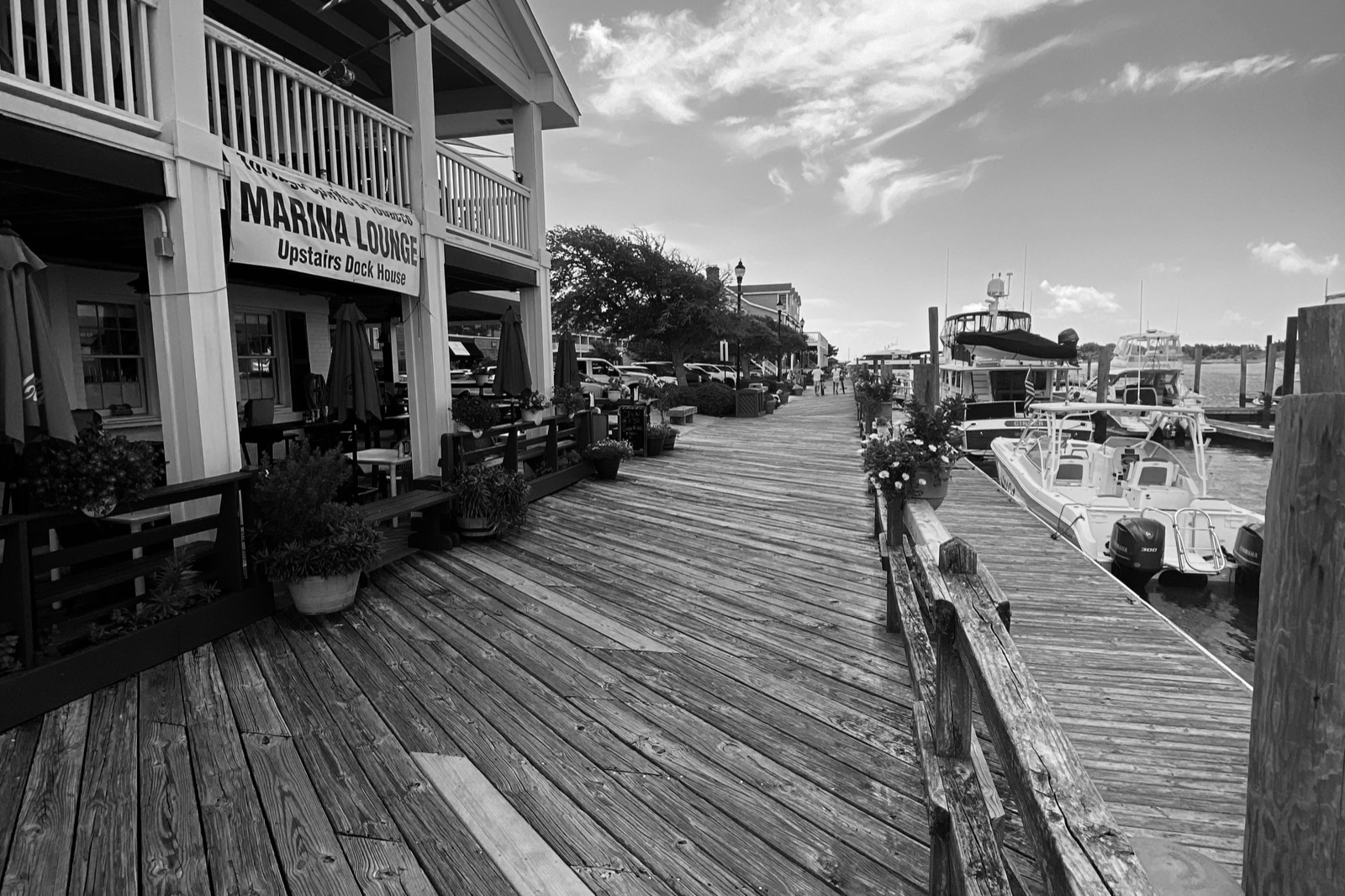
Photo: Beth Foster / Pexels
A Tale of Two Beauforts: North Carolina and South Carolina
There is a small test you can fail before you ever arrive.
Say the name out loud. If you are standing on the North Carolina coast, out past Morehead City where the land runs thin and the Atlantic gets the last word, it is BOH-fort. Said quick and flat, almost clipped, the way you would read a name painted on the stern of a boat. Now drive south. Cross into the South Carolina Lowcountry, past the marsh grass and the two-lane causeways, and the very same word, spelled letter for letter the same, softens in the mouth and stretches out into BYOO-fort. Slow. Unhurried. Drawn long, like a porch afternoon that nobody is in a hurry to end.
Two towns. One spelling. Two entirely different sounds. And if you get it wrong in either place, someone will kindly set you straight, because in both Beauforts the name is the first thing the town asks you to get right.
I have spent time in both, and what has always fascinated me is not that they share a name. It is that they share so little else. You could not build two more different towns out of the same seven letters if you set out to try.
The one that works
Beaufort, North Carolina wears its living plainly, and it has been at that living a long while. It is one of the oldest towns in the state, laid out early in the seventeen hundreds when this coast was still mostly wind and water, and it has spent every year since with its back to the mainland and its face turned out to sea.
The waterfront tells you everything. Along Taylor’s Creek the docks hold a working mix, shrimp boats and sailboats and small craft that have clearly earned their scuffs, all rocking on the same brackish water. The boardwalk runs the length of it, and on a good morning the whole town seems to be out on it with coffee, watching the boats the way other towns watch television. There is salt in the air and a briskness to the place, a sense that the tide is coming or going and there is work to be done on its schedule, not yours.
Look across the creek and you may see the horses. On the low green bank of the reserve opposite downtown, wild horses graze in plain sight, close enough to watch and far enough to belong entirely to themselves. It is an ordinary miracle the town has simply gotten used to. Children point. Newcomers stop walking. The horses do not look up.
There is history here too, and the best of it has an edge of adventure. This is Blackbeard’s water, more or less. His flagship ran aground off the inlet three hundred years ago and lay lost on the bottom for the better part of three centuries. But even the pirates feel like part of the working record here, one more thing that happened on a coast where things have always happened at the waterline.
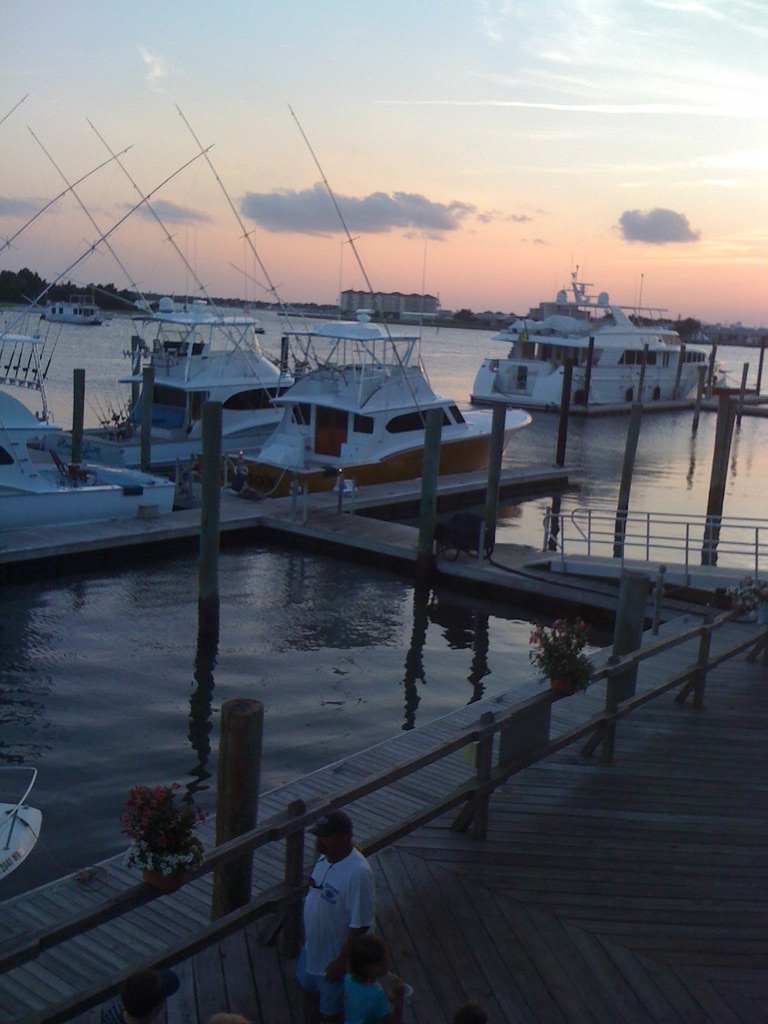
I know this waterfront about as well as I know any, because I have spent a great deal of time on it, and a good part of that from the water itself. I have brought my own boat up into Taylor’s Creek and tied off among the others, and I can tell you there is no better way to arrive. Beaufort makes the most sense from the deck of a boat, which is, when you think about it, exactly how it was meant to be seen.
Some of my favorite mornings there came around the Big Rock, when the big sportfishing boats that run out of that tournament come and go through the inlet and the whole waterfront turns out to watch them pass. There is a particular thrill to it, all of that power and purpose sliding by the same docks where a sailboat sits patiently waiting on the wind.
I also happened to be living nearby when the town’s most famous story came back to the surface, quite literally. When divers found Blackbeard’s flagship out at the inlet, it was news to us, not history, and I have never forgotten it. I have stood in the North Carolina Maritime Museum more than once since, looking at the things they raised from the Queen Anne’s Revenge, cannon and ballast stones and small ordinary objects that spent three hundred years under the water, and the strangeness of it has never once worn off.
And I will confess I have probably eaten my way through every restaurant in town by now, and I would not talk you out of a single one of them. But if you are asking where I would send you first, it is the Beaufort Creamery, for ice cream. Anyone who knows me knows there is no higher recommendation I am capable of giving.
The one that dreams
Six hours south, and one whole temperament away, sits the other Beaufort.
Beaufort, South Carolina does not work in front of you the way its northern cousin does. It reclines. It is among the oldest towns in its state as well, set on Port Royal Island in the heart of the Lowcountry, and where the North Carolina town feels brisk and salt-scrubbed, this one feels shaded and slow and green all the way through.
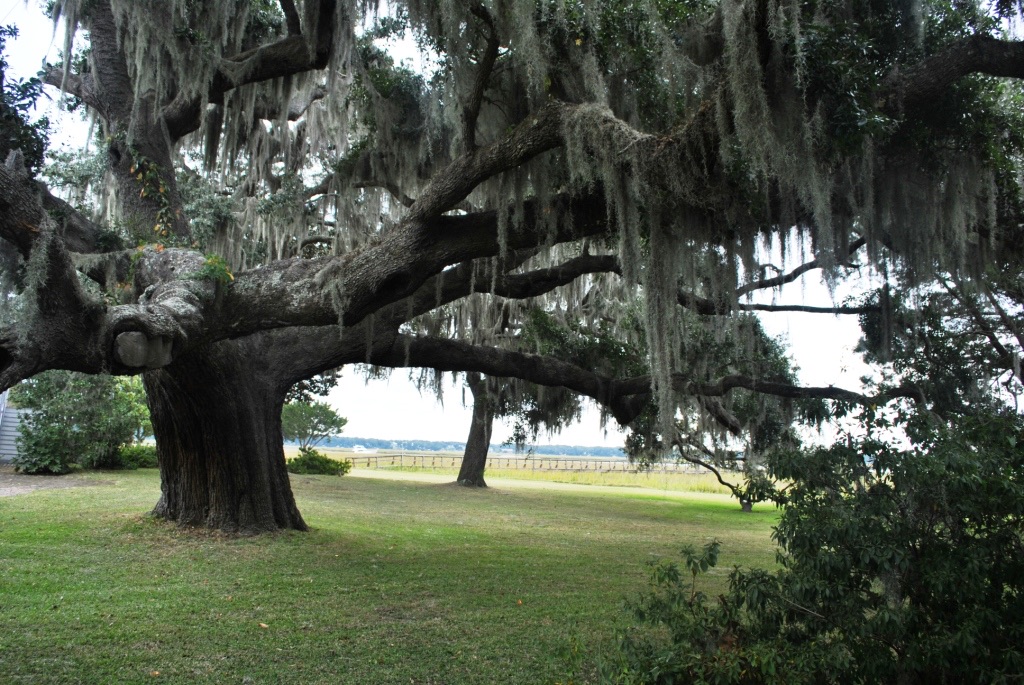
The live oaks are the first thing. They are enormous, older than the country, their limbs reaching sideways as far as they reach up, and every one of them is draped in Spanish moss that filters the light down soft and gray-gold. You do not walk through this Beaufort so much as move through its light. Along The Point, the old homes sit back behind their gardens with deep porches built for exactly this heat, and the whole neighborhood keeps the unbothered dignity of a place that has watched a great deal of time go by and intends to watch a great deal more.
Down at the river, Henry C. Chambers Waterfront Park opens the town to the water without hurrying anyone toward it. There are swings that face the marsh. There are people sitting in them who appear to have nowhere else to be, and who are correct. At low tide the pluff mud gives off its particular Lowcountry smell, that rich living reek that regulars will tell you they have come to love, which is its own kind of confession.
This light and this languor have pulled storytellers here for generations. Filmmakers keep coming back for the oaks and the water, and the writer most bound to this landscape, Pat Conroy, spent his life turning the Lowcountry into sentences other people could feel. Stand under those trees near the water at the right hour and you understand the pull without anyone having to explain it.
I will be honest with you: I have spent far less time in this Beaufort than in its northern namesake. But it did not take long to make its mark. The Spanish moss did some of that, the way it softens all the light and hangs off those enormous limbs. And more than anything, what stayed with me was the Hunting Island Lighthouse.
Out on Hunting Island, a short drive east of town, a black-and-white tower rises above the maritime forest and the beach, and you can climb it. From the top the whole Lowcountry lays itself out, the ocean on one side, the marsh and the forest rolling away on the other, and it rearranges the place in your mind. I did not expect a lighthouse to be the thing I carried home from Beaufort, South Carolina. But it was, and it is.
As it happens, that lighthouse is the first thread of something we have wanted to pull for a while now. The Southern coast is dotted with them, from the Outer Banks down through the Lowcountry and around the Gulf, each one with its own light and its own story to tell, and we will be giving them a piece of their own before long. Consider Hunting Island the one that got us started.
What the two share
And yet.
Stand on either waterfront long enough and the same thing rises up underneath all the difference. Both towns are old, and both know it, and both decided somewhere along the way that being old was worth protecting rather than paving over. Both sit exactly where the land gives out and the water takes over, which is the kind of edge that tends to keep a place honest about what it is. Both are small on purpose. Neither is trying to become somewhere else.
That is the quiet thing they have in common, and it may be the most Southern thing about either of them. They know who they are. One knows it briskly, with salt on the wind and a boat to get to. The other knows it slowly, under the oaks, with all the time in the world. But both know it completely, and neither would trade it.
So here is what I have decided, after standing on both waterfronts and getting the name right in both places. You do not have to choose. The South is wide enough to hold a BOH-fort and a BYOO-fort at the same time, spelled exactly alike and sounding nothing alike, and to love each one for the very thing the other one lacks. Learn to say them both. Then go stand in each, and let the difference do the rest.
Keep Reading
Places
Abingdon, Virginia: The Town That Traded Ham for HamletIn the far corner of Virginia sits a handsome mountain town whose famous theater once let farmers pay for a play with produce. It is still going.
Places
The Lighthouses of the South, Part Two: The Gulf CoastThe second in our series on the beacons of the Southern coast. From Pensacola to Sanibel, the Gulf lights guard a flatter, trickier shore.
Places
The Lighthouses of the South, Part One: The Atlantic CoastThe first in a series on the beacons of the Southern coast. Seven Atlantic towers built to keep ships off the shoals, and worth the climb.