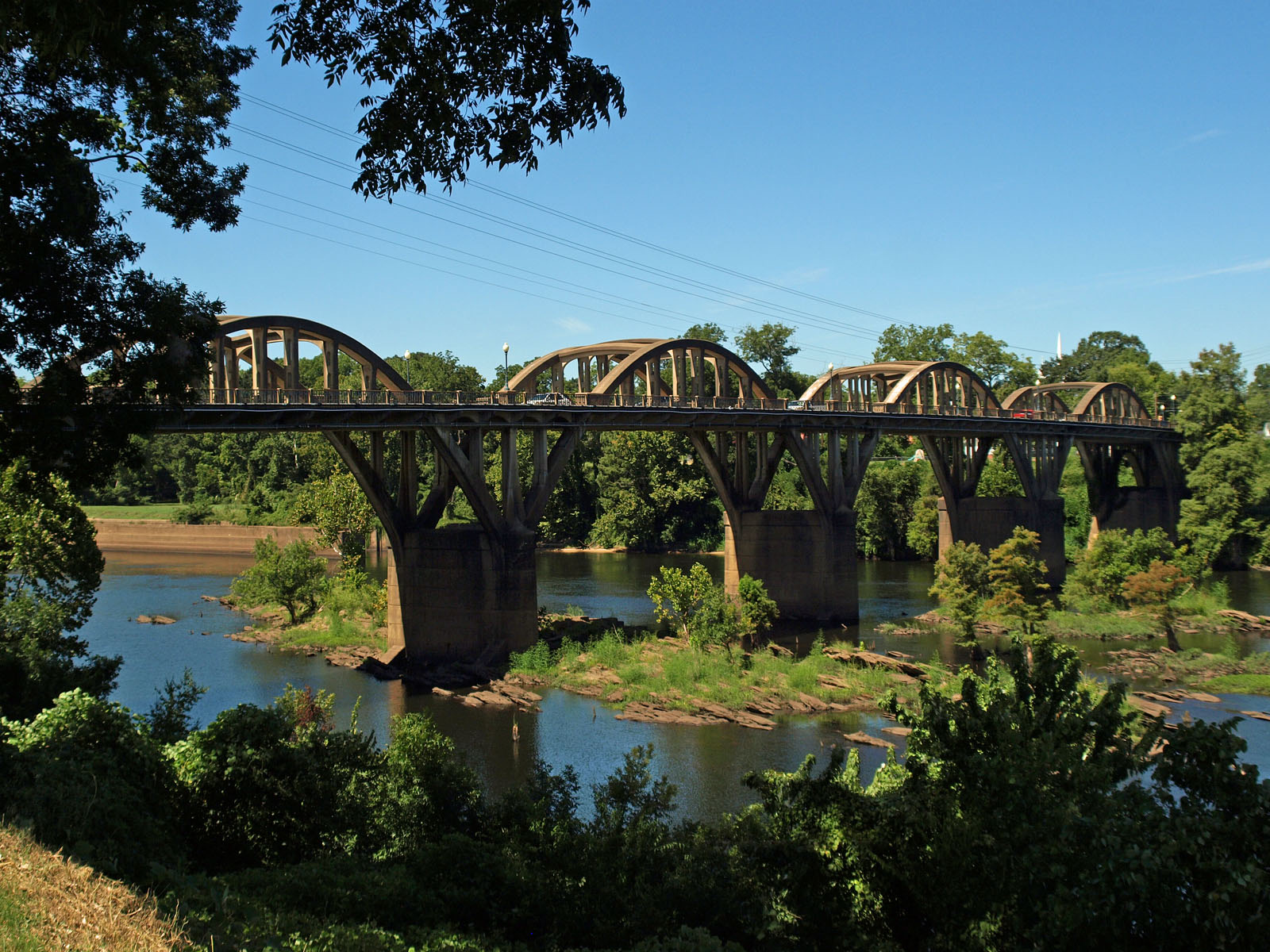
Photo: Chris Pruitt / Wikimedia Commons (CC BY-SA 3.0)
Wetumpka, Alabama: The Town in the Crater
Most towns are shaped by a river, or a railroad, or a road that came through at the right time. Wetumpka was shaped by something falling out of the sky.
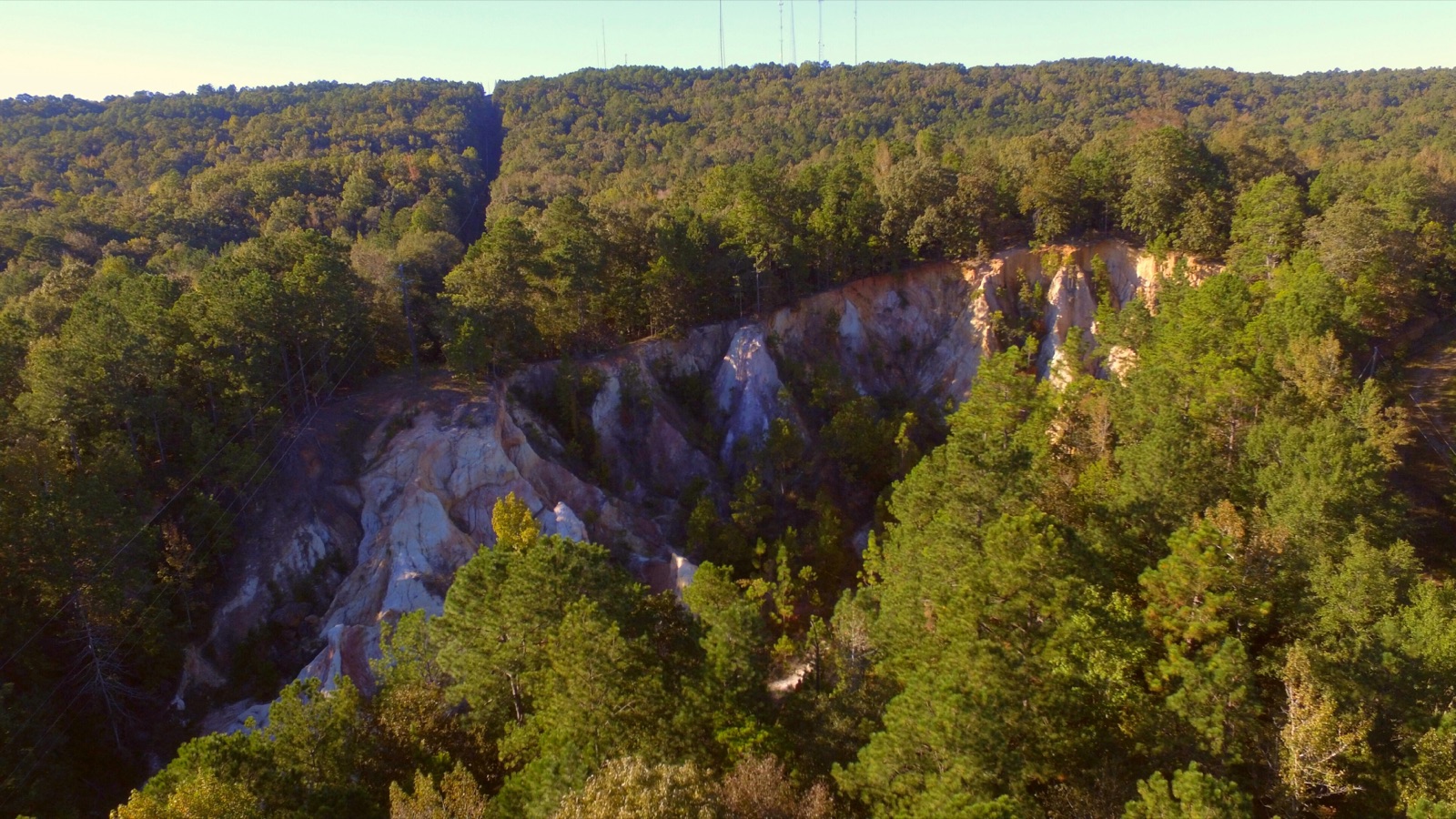
Long before there was a town, or a state, or anyone to name either, a meteor came down on this stretch of central Alabama and left a crater roughly five miles across. It happened when this whole region lay under a shallow sea, and the mark it made is one of the best-preserved impact craters you can stand inside anywhere in the country. You do not see it the way you would picture a crater, sharp-rimmed and obvious. You see it in the way the hills rise gently around the town on the low ground, a wide bowl worn soft by all the time that has passed since. Wetumpka simply grew up in the middle of it, going about its business on the floor of an ancient wound it took geologists a long while to even recognize.
The town sits north of Montgomery, on both banks of the Coosa River, and the river is the other thing that made it. The name itself comes down from the Creek word for rumbling or tumbling water, a reference to the rapids that once churned along this reach. The Coosa is quieter now than it was, but it still runs right through the heart of things, splitting downtown between two sides and asking to be crossed.
The way you cross it is a landmark in its own right. The Bibb Graves Bridge arches over the Coosa in a series of graceful spans, and it has been the town’s front door since the early nineteen thirties. Standing on it, with the river below and the old downtown on either end, you get the whole town in a single view: the water, the banks, the low brick storefronts, the church steeples, the hills closing softly around all of it.
That downtown has held on the way the good ones do. The storefronts face the street and one another, built for people on foot in an age that keeps trying to talk towns out of it. There is fishing and boating on the river, and there are the ordinary rhythms of a small Southern town that knows exactly what it is. It has enough going on to feel alive and few enough distractions to feel like itself.
Filmmakers have noticed the place, too. Its river-town looks and its unhurried streets have drawn a camera or two over the years, and it is easy to see why. Wetumpka photographs like a town from a slightly gentler version of the present, which is another way of saying it has kept things that most places let go.
But the crater is the thing you carry home. There is a particular feeling that comes from learning that the pretty river town you are standing in sits inside the scar of an impact old beyond real imagining, and that the people here have lived their whole ordinary, beautiful lives on the floor of it without giving it much thought. Something enormous happened here once, and then the water came, and then the town, and then the bridge, and the fishing, and the storefronts, and Saturday mornings downtown. The sky fell, and Wetumpka went right on being Wetumpka.
Keep Reading
Places
Abingdon, Virginia: The Town That Traded Ham for HamletIn the far corner of Virginia sits a handsome mountain town whose famous theater once let farmers pay for a play with produce. It is still going.
Places
The Lighthouses of the South, Part Two: The Gulf CoastThe second in our series on the beacons of the Southern coast. From Pensacola to Sanibel, the Gulf lights guard a flatter, trickier shore.
Places
The Lighthouses of the South, Part One: The Atlantic CoastThe first in a series on the beacons of the Southern coast. Seven Atlantic towers built to keep ships off the shoals, and worth the climb.