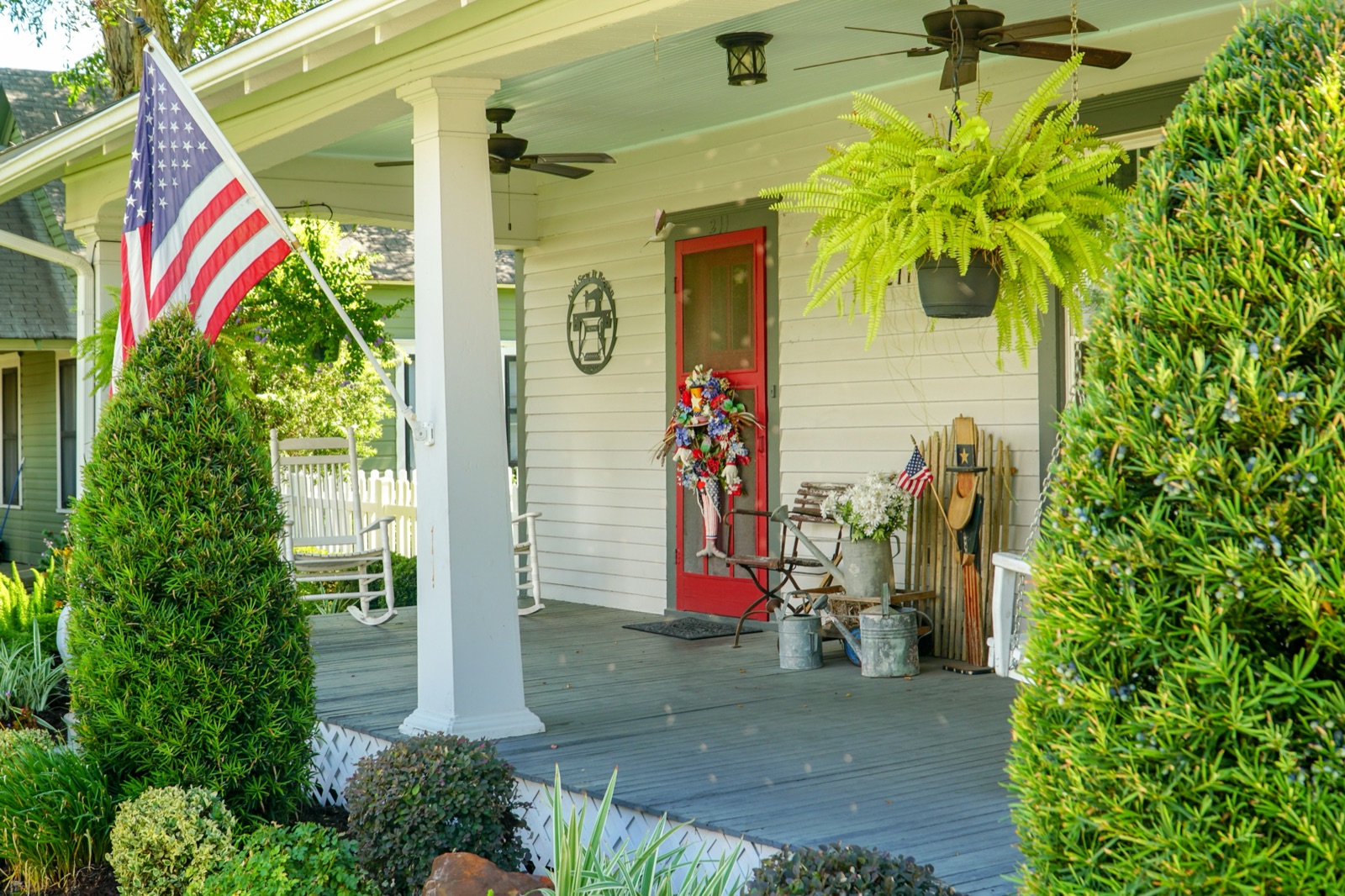
Photo: Thomas Park / Unsplash
In Defense of the Front Porch
In old Charleston, the houses tell you how people used to live.
The classic Charleston single house turns its narrow end to the street and runs back deep into a long lot, one room wide, with a tall porch, called a piazza here, stretched along its south or west side. There is a door right at the sidewalk, but it is a kind of polite fiction. Open it and you are not inside the house at all. You are on the piazza, and the real front door waits halfway down the porch. The whole arrangement was built to catch the breeze coming off the Cooper and the Ashley rivers and to shade the windows from the worst of the summer sun, in the long era before anyone could cool a room by machine. The piazza was where a Charleston family actually lived in the warm months, which was most of them.
The Southern porch was never just decoration. It was infrastructure for a hot climate and a social life both, and you can read the same logic up and down the region in different dialects of architecture. In Savannah, porches and verandas face the city’s shaded squares, turning the act of sitting out toward the public green. In Beaufort, South Carolina, deep two-story verandas wrap the old houses along the water to pull in whatever moves off the Beaufort River. In Natchez, Mississippi, the grand antebellum houses lifted their columned galleries a full two stories, broad enough to walk, made for catching air and being seen catching it. Different forms, one purpose: to put the family in the moving air and, not incidentally, in view of the street.
Because the porch did social work as surely as it did the work of cooling. In the heat of the day and the cool of the evening, people came out to it, to shell peas, to watch the neighbors and be watched in turn. Children played on the steps. Courtships unfolded slowly on the swing, within view of the screen door and whoever stood behind it. News traveled porch to porch down the block. The home and the road met there, and in that meeting the porch kept private life and public life in conversation with each other.
Then the world cooled its houses, and the center of gravity moved indoors. Air conditioning was a genuine mercy, and no one would trade it back. But something went with it. The new subdivisions traded deep front porches for attached garages and fenced backyards. The life that had faced the street turned inward, behind walls and windows. We gained comfort and lost a kind of casual, daily contact: the unplanned conversation, the nod to a passing neighbor, the sense of a block as a place where people actually saw one another.
It would be too easy, and not quite honest, to wrap the porch only in nostalgia. These were real spaces with a real social order, and that order reflected the South’s complications as much as its graces, including questions of who was welcomed up the steps and who was not. The porch was a stage, and not every scene that played on it was a gentle one. To remember it well is to remember all of that.
The impulse behind it, though, is worth reclaiming. The wish to be both sheltered and open, both at home and available to the world passing by, is a deeply human one, and the porch answered it about as well as anything we have built since. You can feel that longing in the way new neighborhoods now advertise their porches, and in the way people who have a real one tend to use it: morning coffee, the evening paper, a glass of something at dusk.
So if you find yourself in Charleston some warm evening, walk down Tradd or Church Street at dusk and watch the upper piazzas fill, one after another, with people doing nothing in particular except sitting in the moving air, exactly as the houses were built for them to do. Then go home and pull a chair onto whatever porch you have. The invitation is still open, to anyone willing to sit a spell.