Photo: 12019 / Pixabay
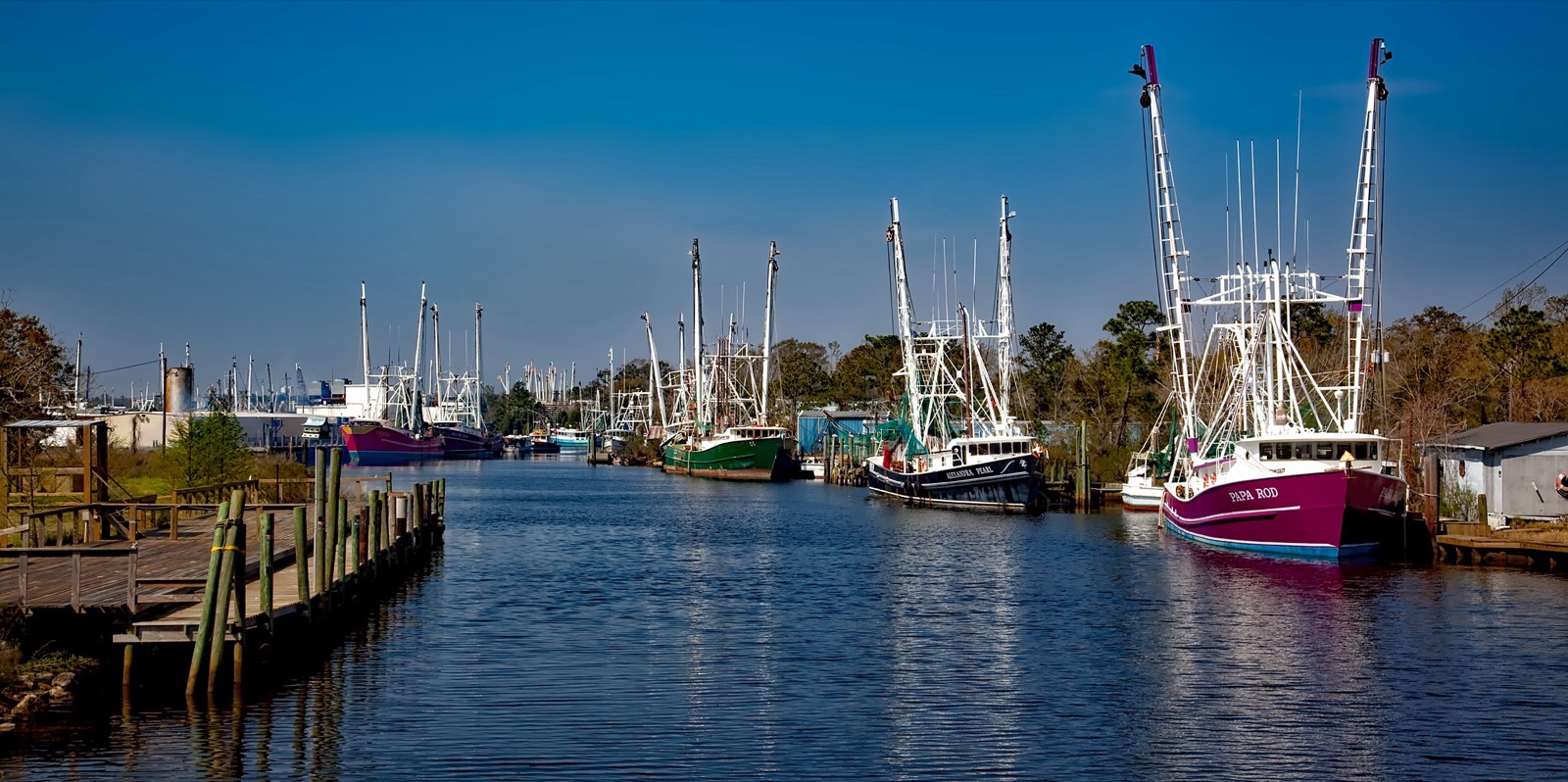
The Last of the Shrimp Boats
The boats leave before the sun, which is the first thing you should understand about them. By the time the rest of the coast is pouring coffee, the shrimpers are already an hour out, running lights on the dark water, and the docks they left behind smell of diesel and salt and yesterday’s catch, a smell that gets into your clothes and stays there.
There used to be more of them.
You hear that sentence up and down the Southern coast now, in Apalachicola and Brunswick and Bayou La Batre, in any town where the shrimp boats still tie up. There used to be more. The old-timers say it without much drama, the way you might mention that a road has changed. But it is the whole story, that sentence, and everyone on the dock knows it.
A shrimp boat is a hard way to make a living and always was. You are awake when no one else is. You are betting a tank of expensive fuel against a catch you cannot see, in weather that does not care about your mortgage. The work itself has not gotten easier. What changed is everything around it. Imported farmed shrimp, frozen and cheap, fills the freezer cases now at a price no man pulling nets at dawn can match. The young people who would once have followed their fathers onto the water have done the math and gone to work somewhere with air conditioning and a regular check, and no one can blame them.
So the fleet ages. The boats get older and the captains get older and when one of them finally ties up for good, more often than not no one takes his place. The slip sits empty. The town has one fewer reason to be the kind of town it was.
This is not a story about boats.
It is a story about a profession, and what a place loses when a profession leaves it. A shrimper is not only a man who catches shrimp. He is a knowledge, a way of reading water and weather that took a lifetime to learn and cannot be downloaded. He is a thread connecting a town to the thing it was built to do. When the last boat goes, the dock does not just lose a vessel. It loses the reason the dock was built.
Stand on a working waterfront before dawn while there are still boats going out, and you are watching something that will not always be there. The diesel cough of the engines. The white birds wheeling for scraps. The slow heavy push of a loaded boat coming back in with the morning while the empty ones are still heading out. It is ordinary, and it is ending, and ordinary endings are the ones nobody photographs until it is too late.
The men who do this work know all of it. They do not need an article to tell them. Ask one why he keeps going out, and you will not get a speech. You will get a shrug, and something about not knowing how to do anything else, and underneath the shrug a stubbornness that is its own kind of answer.
Some things are worth keeping not because they are easy or profitable, but because when they are gone they take a whole way of being with them. The shrimp boats are one of those things. They go out before the sun, fewer every year, and the coast that loses them will not get them back.
The South, shared.
Keep Reading
Southern Stories
The Front Porch, Part Two: On the Art of Sitting a SpellWe wrote once about why the South built porches. This is about what people did on them: the lost art of sitting, watching, and letting the evening pass.
Southern Stories
The Courthouse Square, and the Town That Grew Around ItIn a thousand Southern towns, everything points to the same place: the courthouse on the square. Here is why it was built that way, and why it still holds.
Southern Stories
The Last of the Whole-Hog PitmastersCooking a whole pig over wood coals from dark to dawn is one of the oldest crafts in the South, and one of the fastest disappearing.