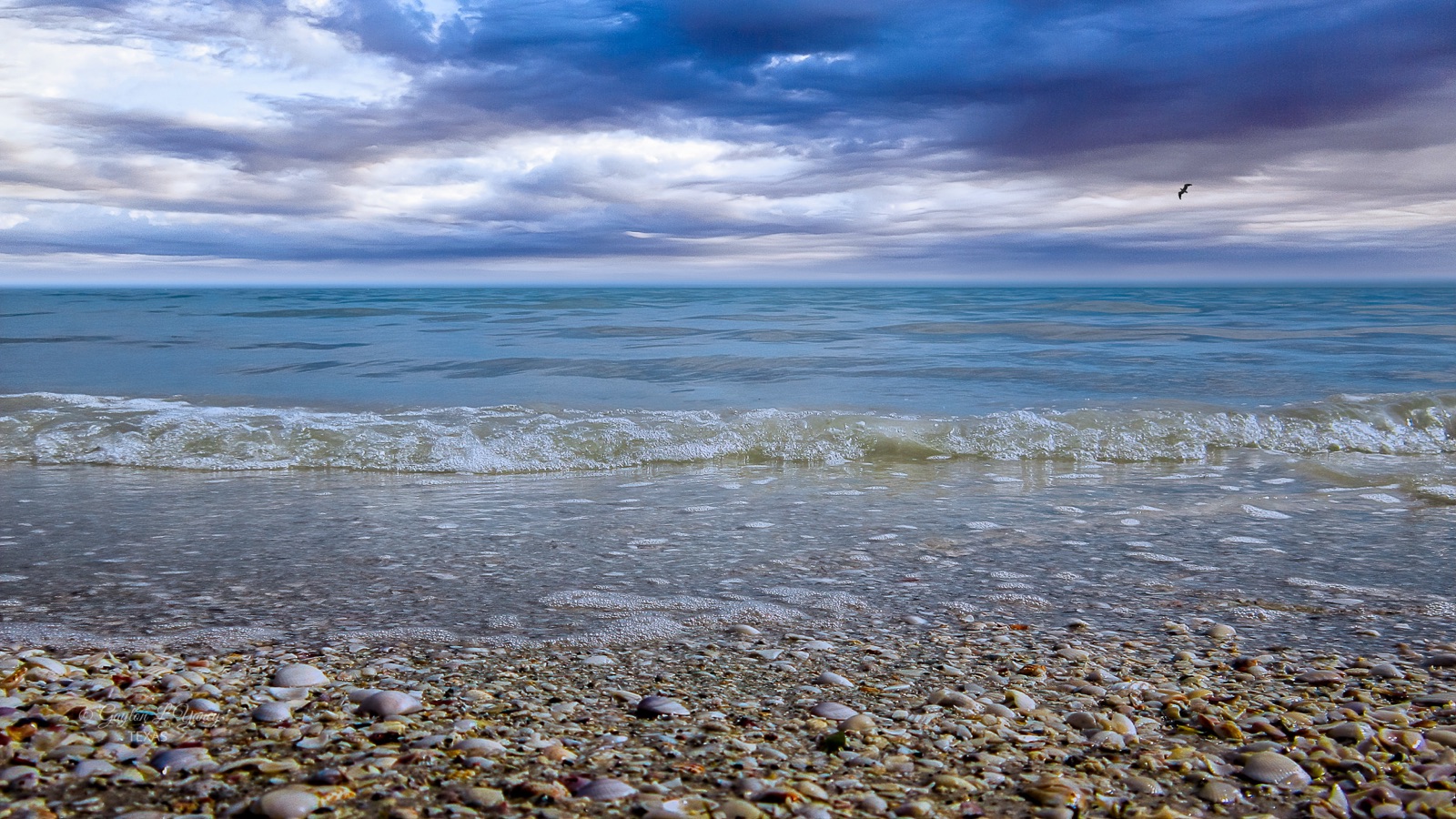
Photo: G. Lamar / Wikimedia Commons (CC BY 2.0)
Sanibel, and the Beach That Catches the Sea's Best Work
There is a posture you will see on Sanibel that you will see nowhere else in quite the same way, and the island has given it a name.
They call it the Sanibel Stoop. It is what happens to a person who spends a morning on this beach, bent at the waist, eyes down, moving slowly along the waterline with the total absorption of someone who has forgotten there is anything in the world but the sand in front of them. You will do it too. You will not mean to. You will walk down to the water with every intention of taking a nice upright stroll, and twenty minutes later you will be folded over like everyone else, filling your hand with shells you did not know you wanted until you saw them.
Sanibel is a barrier island off Florida’s Gulf coast, near Fort Myers, and it is widely called the finest shelling beach in North America. That is not island boosterism. It is geography. Most barrier islands run north and south, parallel to the coast, and the Gulf’s currents slide right past them carrying their cargo of shells on down the line. Sanibel does something almost no other island does. It turns sideways. It lies nearly east to west, jutting out into the Gulf so that the currents hit it broadside and dump everything they are carrying right onto its beaches. The island is a scoop. Day after day, tide after tide, the sea hands its best work up onto the sand at Sanibel, and the people come from all over the world to stoop down and gather it.
What the water brings
The variety is the astonishing part. More than four hundred species of shell wash up along this coast, in a range of shape and color that looks less like nature and more like the contents of a jeweler’s drawer spilled out along the tideline.
There are lightning whelks and fighting conchs, their spirals wound tight as a fist. There are coquinas the size of a fingernail, in pastel pinks and yellows and lavenders, so delicate they look painted. There are cockles and scallops and olives and tulips, augers like little screws, and the occasional heavy horse conch, the state shell, big as a grapefruit. And there is the one everybody dreams of and almost nobody finds, the junonia, a deep-water shell splotched brown and cream that lives too far out to wash up whole very often. Find a junonia on Sanibel and the old island custom is that the local paper will put your picture in it. That is how rare it is, and how seriously the island takes its shells.
The best time to go is low tide, and the very best is the low tide on the morning after a winter storm has churned the Gulf and shoved a fresh load of shells up overnight. But there is no bad time. The beach refills itself constantly, an inexhaustible delivery from the water. You could walk it every morning for a year and never find the same beach twice.
The one rule
There is a single hard rule on Sanibel, and it is worth knowing before you go, because it is taken seriously and it is the right rule.
You may take empty shells. You may not take a live one. If you turn a shell over and something is still living inside it, a small soft creature that built that shell and calls it home, you put it back in the water. Live shelling has been banned here for decades, because the island understood something early that a lot of beautiful places learn too late. The shells are not just decoration. They are the leavings of a living system, and if everyone who came scooped up everything that moved, there would soon be nothing left to scoop. So the rule is empty shells only, and the island polices it, and the beach stays rich because of it.
That rule is the whole ethic of the place in miniature. Take what the sea has finished with. Leave what it is still using. It is a small act of restraint that keeps the wonder replenished, and it is the reason Sanibel is still Sanibel and not a picked-over sandbar.
Why we stoop
Stand up straight for a minute, when your back needs it, and look at what you are actually doing out here.
You are on a beach at the edge of the continent, gathering the discarded armor of creatures you will never see, carried to your feet by currents that started somewhere far out in the Gulf, maybe down in the Caribbean, and ended their long journey by laying a perfect pink shell in the sand exactly where your eye would fall on it. There is something almost unreasonably generous about it. The sea did all the work. It grew the animal, built the shell, emptied it, carried it hundreds of miles, and set it down in front of you as a gift, and all you had to do was bend over and say thank you.
That is why people stoop on Sanibel until their backs complain and their pockets fill and the sun climbs too high. Not because the shells are valuable, though some collectors would argue the point. Because there is a simple, ancient pleasure in walking a shoreline and being handed something beautiful by the water, over and over, for as long as you are willing to keep looking down. The Gulf has been doing this here for a very long time. The least we can do is show up and stoop.
The South, shared.
Keep Reading
Coastal South
The Wild Horses of the Outer Banks, and the Land That Kept ThemFor five hundred years, Spanish mustangs have run wild on the dunes of the northern Outer Banks. That they are still there is nobody's accident.
Coastal South
Cumberland Island, Where the Horses Run WildGeorgia's largest barrier island is a place of empty beaches, Gilded-Age ruins, and a herd of feral horses found nowhere else on the Atlantic coast.
Coastal South
A Quiet Morning in the Lowcountry MarshBefore the heat settles in, the Lowcountry marsh offers a still, golden hour that's worth waking up for.