Photo: Bill McDowell
From the Church Cookbook: Banana Pudding, the Dessert That Feeds a Crowd
There is no covered-dish supper in the South that has not, at some point, been rescued by a banana pudding.
It is the dessert of the crowd, the one that shows up in a big glass dish at the church homecoming, the family reunion, the funeral, the Sunday dinner that ran long. It is humble and it is beloved, and the two things are connected. Banana pudding does not try to impress you. It is vanilla wafers and sliced bananas and a soft custard, layered together and let to sit until the wafers go tender and the whole thing settles into something greater than the sum of its plain parts. It costs almost nothing to make. It feeds a dozen people. And it never, ever comes home from a potluck with anything left in the dish.
The version below is the old-fashioned kind, made with a real cooked custard rather than instant pudding from a box, and finished with a meringue browned in the oven. It takes a little more patience than the shortcut version, and it is worth every minute. The difference between a good banana pudding and a great one is almost always that somebody took the time to cook the custard.
A few notes before you start. Use bananas that are ripe but still firm, yellow with maybe a fleck or two of brown, not the soft speckled ones you would use for bread, or they will go to mush in the dish. Slice them just before you assemble, because banana browns fast once it is cut. And make this the day you plan to serve it, or the morning of. Banana pudding is at its glory a few hours after it is made, once the wafers have softened but before the bananas have had time to darken and weep.
For the custard, you will whisk together sugar, flour, and a pinch of salt in a saucepan, then stir in egg yolks and milk and cook it slow over medium heat, stirring the whole time, until it thickens into a proper custard that coats the back of a spoon. Off the heat, you stir in butter and vanilla. That is the heart of the whole dish, and rushing it is the one mistake that matters. Keep the heat moderate and keep stirring, and do not walk away, because custard will scorch on the bottom the moment you turn your back.
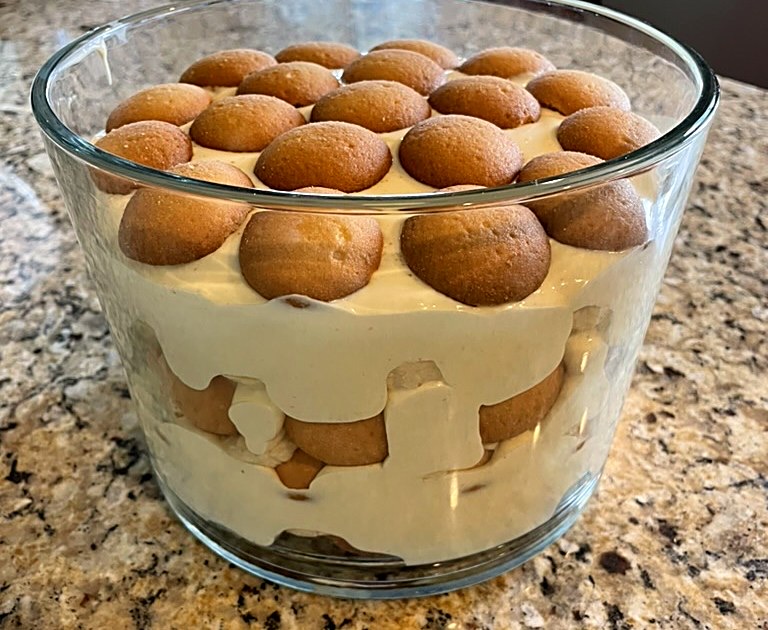
Then you build it. A layer of vanilla wafers across the bottom of the dish, a layer of banana slices, a pour of the warm custard over the top. Then another round, wafers, bananas, custard, until you have used it all, finishing with custard. Tuck a few wafers around the edges standing up if you like the look.
For the top, you have a choice, and Southern households have quietly disagreed about it for a hundred years. You can whip the leftover egg whites with a little sugar into a meringue, spread it over the pudding, and slide it under the broiler or into a hot oven just until the peaks go golden. Or you can skip the meringue, let it cool, and crown the whole thing with sweetened whipped cream instead. The meringue is the older, more traditional finish and it is beautiful. The whipped cream is easier and some people flatly prefer it. We are not going to settle that argument here. Both are right. Make the one your grandmother made, and you will have made it correctly.
Let it cool, then chill it a few hours before serving so it can set and the flavors can marry. Serve it cold, in a bowl, with a spoon, to people you like. Watch the dish empty. That is banana pudding doing the only thing it has ever wanted to do.
The South, shared.
Keep Reading
The Southern Table
From the Church Cookbook: Fried Green Tomatoes, or What to Do With the Ones That Won't RipenGreen tomatoes are firm, tart, and unlovely raw. Dredged in cornmeal and fried, they become one of the great small pleasures of a Southern summer.
The Southern Table
Fried Okra: The Vegetable That Wins You OverRolled in cornmeal and fried crisp in a cast-iron skillet, okra converts even the people who swear they cannot stand it.
The Southern Table
Boiled Peanuts: The Taste of a Roadside SummerGreen peanuts simmered for hours in salty water, sold from roadside pots and gas-station crockpots, and eaten hot from a wet paper bag.