
Photo: Michael Rivera / Wikimedia Commons (CC BY-SA 3.0)
Boiled Peanuts: The Taste of a Roadside Summer
There is a hand-lettered sign you see along Southern back roads in the summer, two words, sometimes misspelled, always understood: boiled peanuts.
Pull over and you will usually find a man under a tent or beside a truck with a pot going, and what comes out of that pot is one of the most divisive and beloved snacks the South produces. A boiled peanut is not the dry, crunchy, salted peanut from a can. It is something else entirely. Green raw peanuts, freshly dug and still in the shell, simmered for hours in heavily salted water until the shells go soft and soggy and the nuts inside turn tender, almost like a bean, salty all the way through. You crack the wet shell with your fingers, slurp the brine, and pop the soft peanut into your mouth. People who did not grow up with them are sometimes baffled on the first try. People who did grow up with them taste summer.
The first thing to know is that you cannot make these with the wrong peanut.
A boiled peanut needs to be a green peanut, which does not mean the color but the stage: a fresh, raw, undried peanut, the kind available only for a stretch in late summer when they come out of the ground. A regular grocery-store peanut, dried and cured, will not do it; boil one of those and you get a sad, leathery thing. So like the tomato sandwich and the peach cobbler, this is a recipe with a season, and the season is the back half of summer, which is exactly why the roadside pots fire up when they do.
The second thing to know is that the whole thing is salt and patience.
You cover the green peanuts with water, you add a serious amount of salt, more than seems right, and then you let them go for hours, sometimes most of an afternoon, until the shells have given up and the salt has worked its way all the way into the nut. There is no shortcut to this. It is slow food in the most literal sense, a pot left to its own devices while the day goes by, which is part of why it belongs to summer and to roadsides and to people who are not in a hurry. Some cooks throw in a packet of crab boil or a few shakes of cayenne and hot sauce and make them Cajun-style, spicy and salty both, and in parts of the South that version has its own devoted following.
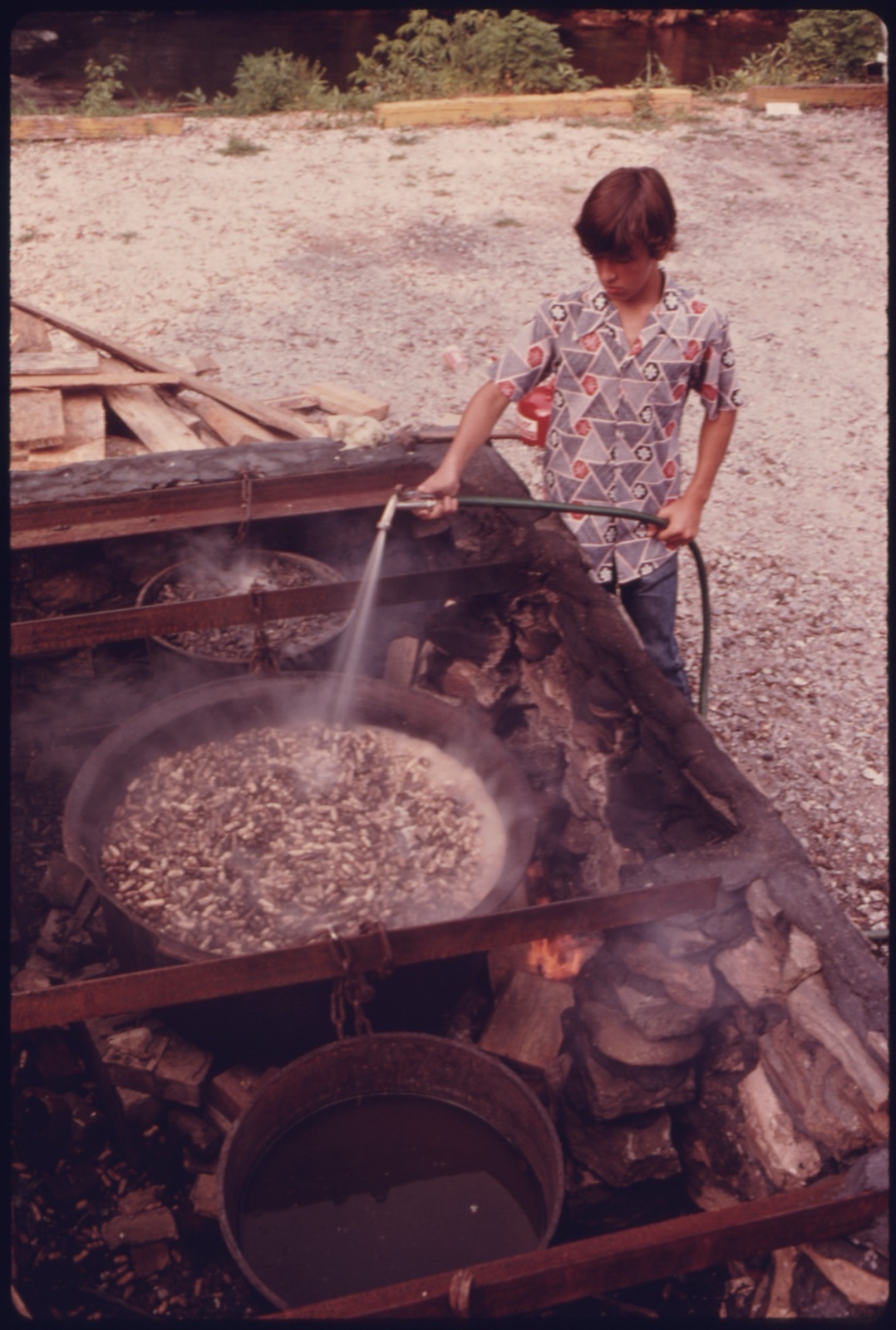
When they are done, you eat them hot, out of a paper bag or a foam cup, somewhere outside, with the brine running down your fingers.
That is the whole experience, and it is inseparable from the snack itself. Nobody eats boiled peanuts at a table with a napkin. You eat them leaned against a truck, or on a tailgate, or driving down a two-lane road with the bag going soft and damp in your lap, cracking and slurping and dropping the wet shells into a second bag. They are messy and salty and warm, and South Carolina loved them enough to make the boiled peanut its official state snack, which is exactly the kind of thing a place does about a food it considers part of itself.
Make a pot toward the end of summer, when the green peanuts come in. Put them on in the afternoon and let them go, and do not rush them, and eat them hot off the porch with the salt on your fingers, the way the roadside has been serving them for as long as anyone can remember.
The South, shared.
Boiled Peanuts
Makes a big pot.
Ingredients
- 2 pounds raw green peanuts in the shell
- 1/2 to 3/4 cup salt (adjust to taste; boiled peanuts are meant to be very salty)
- Water to cover (about 2 gallons)
- Optional, for Cajun-style: 1 packet crab/shrimp boil seasoning, or a few tablespoons of cayenne and a good splash of hot sauce
Instructions
- Rinse the green peanuts well to wash off any dirt.
- Put them in a large pot and cover with water by several inches. They will float, so weigh them down with a plate or a smaller lid to keep them submerged.
- Add the salt (and any optional Cajun seasoning) and stir.
- Bring to a boil, then reduce to a steady simmer. Cook, partially covered, for about 3 to 4 hours, stirring now and then and adding hot water if needed to keep them covered.
- Start tasting at the 3-hour mark. They are done when the nuts inside are tender, soft, and salty all the way through. Some batches take longer depending on the peanuts; if they are not soft yet, keep simmering.
- When they reach the texture you like, turn off the heat and let them sit in the salty water another 30 to 60 minutes to soak up more salt. Drain and eat hot.
Note: they keep in the refrigerator for several days and reheat well; the salt only deepens. Eat outside if you can. They are gloriously messy.
Keep Reading
The Southern Table
From the Church Cookbook: Chicken and Dumplings, the First Cool-Weather SupperThere comes a first cool evening in September when a pot of chicken and dumplings is the only right answer. The plain, forgiving way to make it.
The Southern Table
From the Church Cookbook: Fried Green Tomatoes, or What to Do With the Ones That Won't RipenGreen tomatoes are firm, tart, and unlovely raw. Dredged in cornmeal and fried, they become one of the great small pleasures of a Southern summer.
The Southern Table
From the Church Cookbook: Banana Pudding, the Dessert That Feeds a CrowdWafers, custard, bananas, and a little patience. Banana pudding is the Southern dessert that shows up whenever people gather, and it never comes home full.