Photo: Kiran891 / Wikimedia Commons (CC BY-SA 4.0)
The Southern Fair: Blue Ribbons, Midway Lights, and the Season of Coming Together
There is a smell that means fall in the South as surely as woodsmoke, and it is the smell of the fair.
Fried dough and livestock and trampled grass and diesel and cotton candy, all mixed together and carried on the cooling evening air. If you grew up down here it can put a lump in your throat before you have even parked the truck. The fair is coming. The fair is here. And for a week or two, in county after county and state after state, the whole South leaves off its ordinary business and goes to the fair.
The fairs come in the fall for a reason, and it is worth remembering, because it is the root of the whole thing. The fair is a harvest festival. It always was. Back when nearly everybody farmed, the late summer and the fall were when the crops came in and the work of the growing season reached its end. The fair was the gathering that marked it. The moment the scattered farm families of a county could finally come down off their land, all at the same time, and see one another, and show one another what they had made and grown and raised over the long hard season.
But it was more than a party, at the start. The early fairs were put on by agricultural societies, and they had a serious purpose folded into the fun: to spread better farming. A man who had bred a finer hog or grown a better strain of corn brought it to the fair so his neighbors could see it and learn from it. The premium, the prize, the ribbon, was the society’s way of rewarding and encouraging the improvement of Southern agriculture. Our North Carolina State Fair up in Raleigh has been at it since 1853, put on by the state Agricultural Society. The Mississippi State Fair down in Jackson traces back to 1859. These are old institutions, older than a great many of our towns. Even now, generations after most of us left the farm, the fair still keeps the shape of that old harvest gathering and that old purpose of honoring the best of what the land and its people can produce.
Walk into a Southern fair of an evening and you meet the two halves of it right away. The tension between them is a lot of the fun.
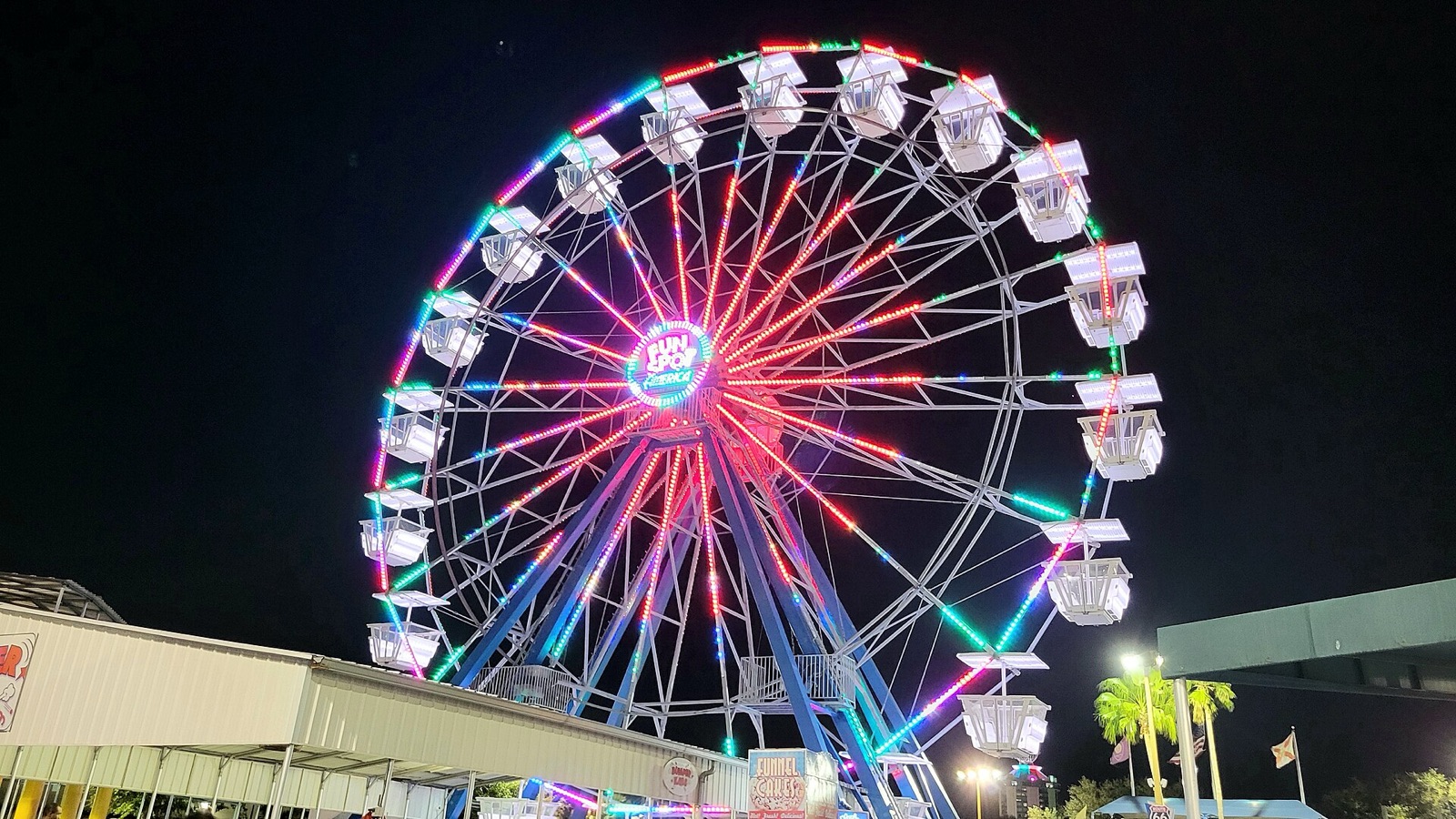
There is the loud half, the midway, blazing with light and noise. The Ferris wheel turning slow against the darkening sky, strung with colored bulbs, the single most iconic sight the fair has to offer. The Tilt-A-Whirl and the Scrambler and the rides that fling the teenagers around and make them scream. The games you cannot win, run by men who have been running them your whole life, promising you a giant stuffed animal for three dollars and a soft toss. The food, oh, the food. The funnel cakes and the corn dogs and the turkey legs and the candy apples.
At the big state fairs the food becomes its own spectacle. Down at the State Fair of Texas in Dallas, oldest and grandest of them all, running since 1886, they have been selling Fletcher’s corny dogs since 1942. Better than half a million of them in a single fair. Every year they hold the Big Tex Choice Awards to crown the most outrageous new fried invention anybody can dream up. Presiding over all of it stands Big Tex himself, a fifty-five-foot cowboy in size-96 boots, howdying the crowds as they pour in past him. It is bright and cheap and a little tawdry and completely wonderful. No child who has ever walked down a lit midway on a fall night with a candy apple in hand, gazing up at a fifty-foot cowboy, has ever entirely forgotten it.
And then there is the quiet half. The true old heart of the fair, over in the barns and the exhibit halls. It is my favorite part by a mile.
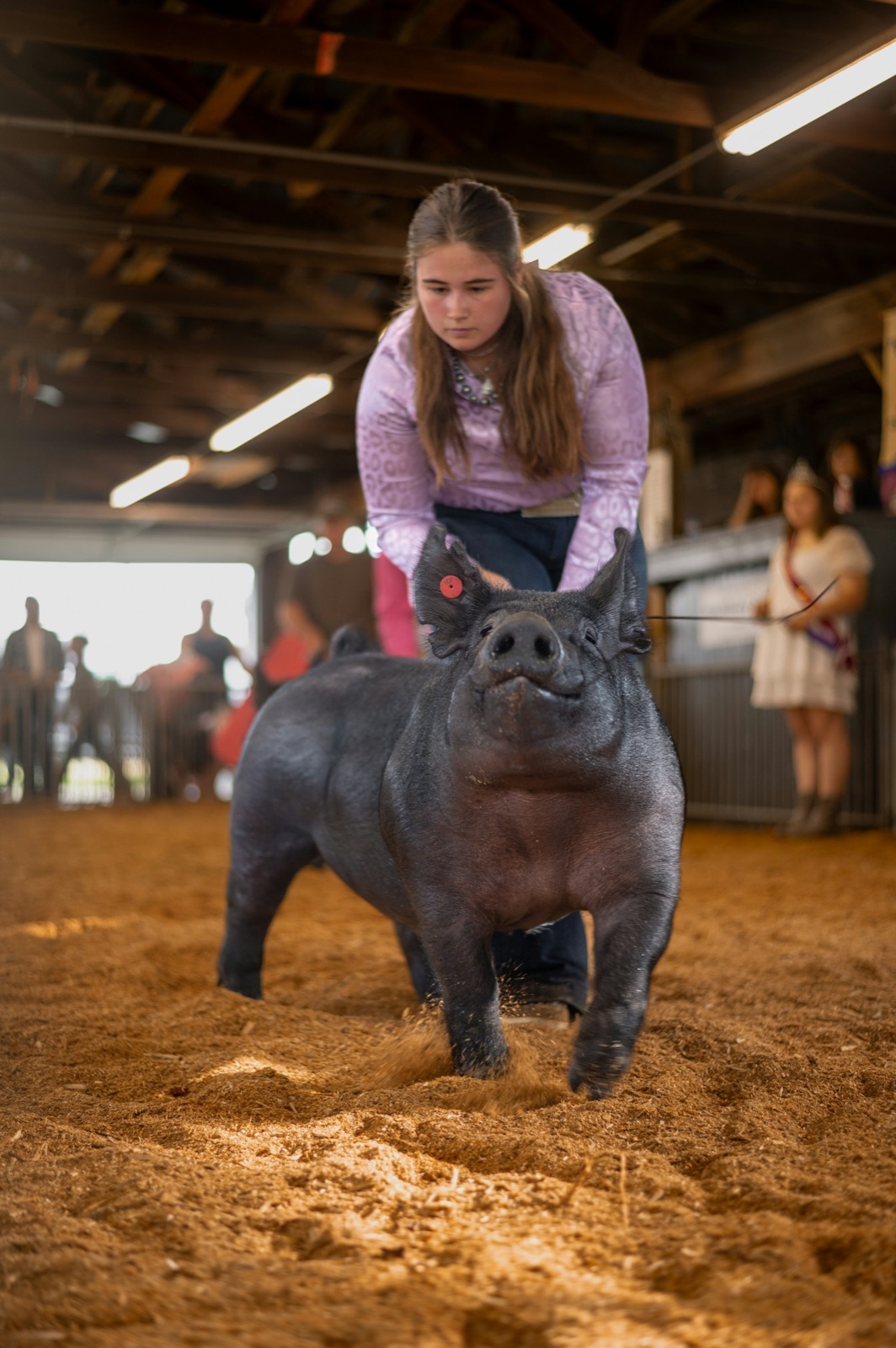
Here the harvest festival is still going strong. Here are the livestock barns, warm and close and smelling of hay and animal, where farm kids who have spent all year raising a calf or a hog or a lamb stand nervous in the show ring in their clean pressed shirts, their 4-H or FFA badges on. A judge in a cowboy hat walks slow around their animal, runs a knowing hand along its back, and decides. Those youth programs, the 4-H clubs and the Future Farmers of America, are the living thread running straight back to the agricultural-society roots. The fair still doing its old work of raising up the next generation of people who know how to grow and raise things well.
And here are the exhibit halls, the long tables of competition. This is where a fair like our North Carolina one gathers up something like thirty-six thousand entries across the categories. The biggest pumpkin, grown to a monstrous prize-winning size. The finest tomatoes and peppers laid out on paper plates. The jars of put-up beans and pickles and jams and honey lined up and gleaming under the lights. The quilts hung high to be judged, each one a winter’s worth of somebody’s evenings. The pies and the cakes and the yeast rolls and the loaves of bread. And on the best of them, pinned to the jar or the plate or the quilt, the blue ribbon.
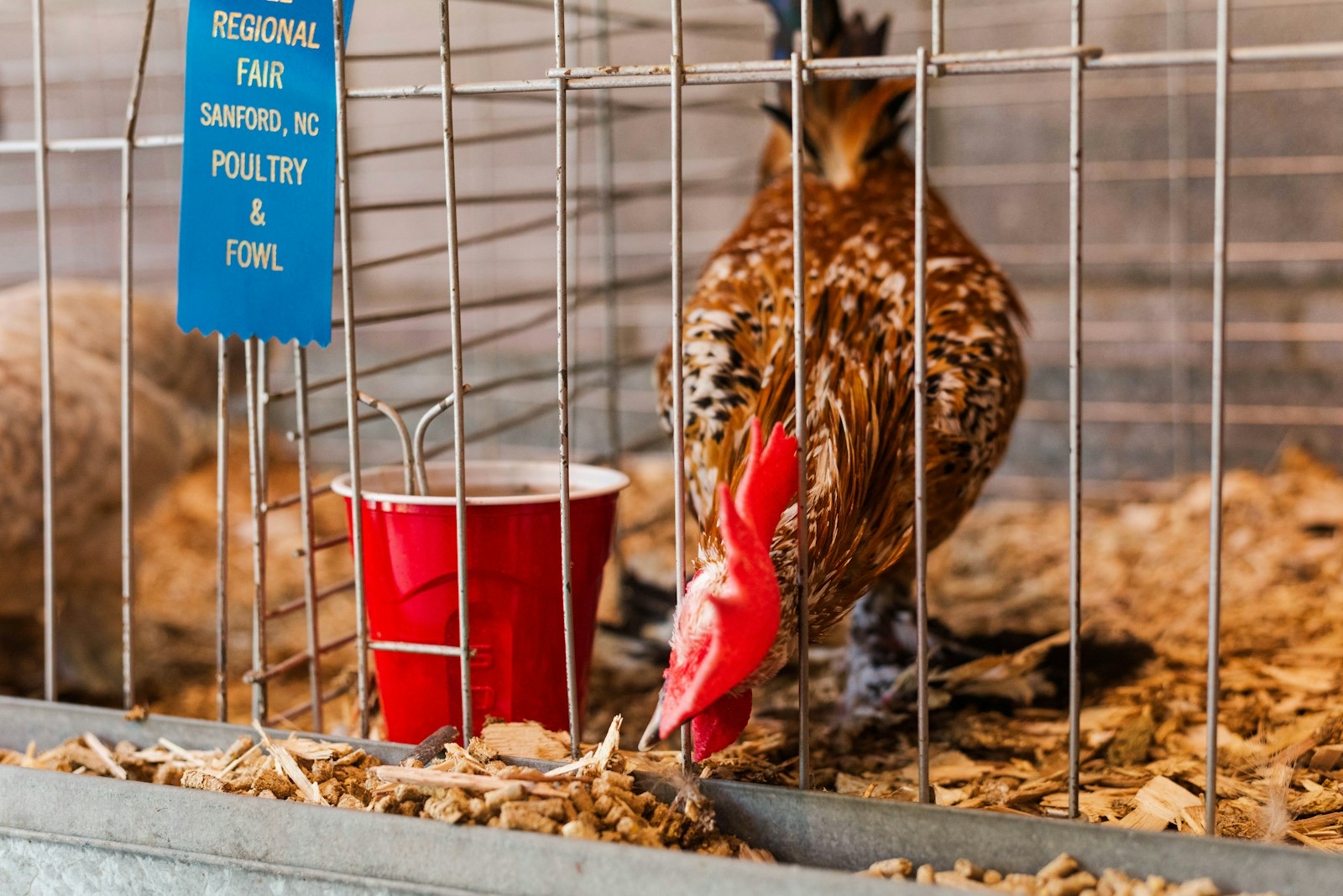
You have to understand what that ribbon means, because it is easy to laugh at until you do. In a rural county, a blue ribbon at the fair is real standing. To be known as the woman who takes the ribbon for her pound cake year after year, or the family whose hogs always place, or the man whose tomatoes are the ones to beat, is to have a reputation that means something to the people whose opinion you actually care about. Your neighbors. It is recognition for the domestic and agricultural arts, the canning and the baking and the quilting and the growing and the raising, the very skills that a farming community lives by and that the rest of the world has mostly stopped noticing. The fair notices. Once a year, the fair pins a ribbon on the best of it and lets the whole county see.
That is what I love most about the Southern fair, in the end. Like the Friday night football game and the tent revival, it is one of the last great occasions when a whole community comes together in one place, in person, on purpose. But the fair does something the others do not. It gathers the town together specifically to honor its own homely excellence. The best pie and the best hog and the best jar of pickles and the proudest 4-H kid. To say out loud, with a ribbon, that this ordinary rural skill is worth celebrating.
There are the big famous fairs, and if you have never been to one of the great state fairs you should go once in your life, just for the sheer overwhelming scale of it. But there are also the smaller ones that hold the truest soul of the thing. And there is nothing on earth quite like the most Southern of them all. Down in Mississippi, the Neshoba County Fair is known as the state’s giant house party. A fair where families own little wooden cabins and actually move in and live there for the whole week of it, generation after generation, cooking and rocking on porches and visiting late into the night. The entire extended community camped out together in one place for one glorious week every year. That is the fair distilled to its essence: not really an event at all, but a family reunion for a whole county.
So when the days shorten and the air turns and you catch that smell on the evening breeze, fried dough and livestock and trampled grass, follow it. Go to the fair. Ride the Ferris wheel up into the cool dark and look down at all the lights and all the people. Eat something fried and terrible for you. But do not skip the barns and the halls. Walk the long tables of blue-ribbon jars and pies. Watch a nervous farm kid show a calf. Stand in the middle of your whole community, gathered up to celebrate the harvest and one another, the way it has done every fall for longer than anybody living can remember, and longer than most of our towns have even stood.
That is the Southern fall. Bright lights and blue ribbons, the whole county under one glowing sky. Go while it’s here. It only comes once a year, and there is nothing else quite like it in all the world.
The South, shared.
Keep Reading
Places
The Haunted South: Hayrides, Ghost Stories, and the Best Fun of the FallThe South does the spooky season better than anybody, and for the fun of it: hayrides, corn mazes, porch ghost stories, the happiest shiver of the year.
Places
The Blue Ridge Parkway: The Most Beautiful Drive in the SouthFour hundred and sixty-nine miles of ridgeline, no billboards and no hurry. America's favorite drive, at its most beautiful in October.
Places
Abbeville, South Carolina: The Town Where a Confederacy Began and EndedAbbeville holds a heavy distinction: where the Confederacy was first cheered into being, and where, five years later, it quietly ended.