Photo: Brian Sumner / Unsplash
A Quiet Morning in the Lowcountry Marsh
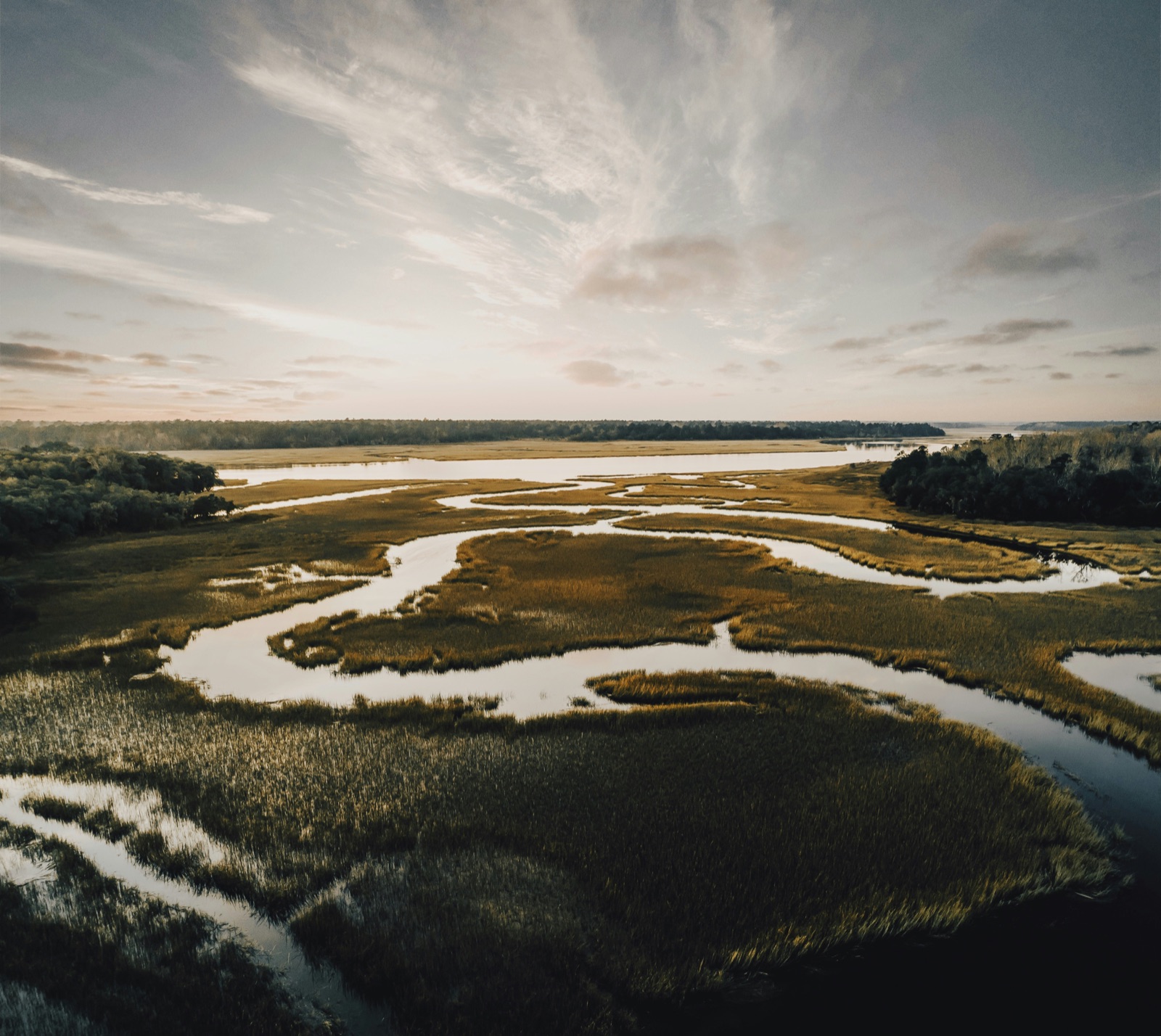
There is a half-hour, just after the sun clears the tree line, when the Lowcountry marsh holds perfectly still. The tide is low and the creeks lie like pewter between the grass. The spartina, gone gray all winter, has come back green and gold, and the whole expanse seems to lean toward the light. If you are out on the water by then, you have the place mostly to yourself.
It is a landscape that rewards patience. A great blue heron stands in the shallows, unbothered, waiting on breakfast. A clapper rail clatters somewhere out of sight. The pluff mud exhales its low, briny smell — the one every coastal Southerner knows the moment it reaches them, no matter how long they’ve been away. Nothing here is in a hurry, and after a few minutes, neither are you.
We tend to drive past these marshes on our way to somewhere brighter and busier. But the morning marsh asks for nothing and gives a great deal: a little quiet, a little wonder, and the reminder that some of the best of the South happens at the edges, where the land gives way to the water and the day has not yet decided what it will become.
Keep Reading
Coastal South
The First Cool Morning on the WaterOne September morning you step onto the dock and the air has changed. The water knows before the calendar does. Summer has turned.
Coastal South
The Wild Horses of the Outer Banks, and the Land That Kept ThemFor five hundred years, Spanish mustangs have run wild on the dunes of the northern Outer Banks. That they are still there is nobody's accident.
Coastal South
Sanibel, and the Beach That Catches the Sea's Best WorkOne Florida island turns sideways to the Gulf and catches what the water carries. The result is the finest shelling beach in North America.