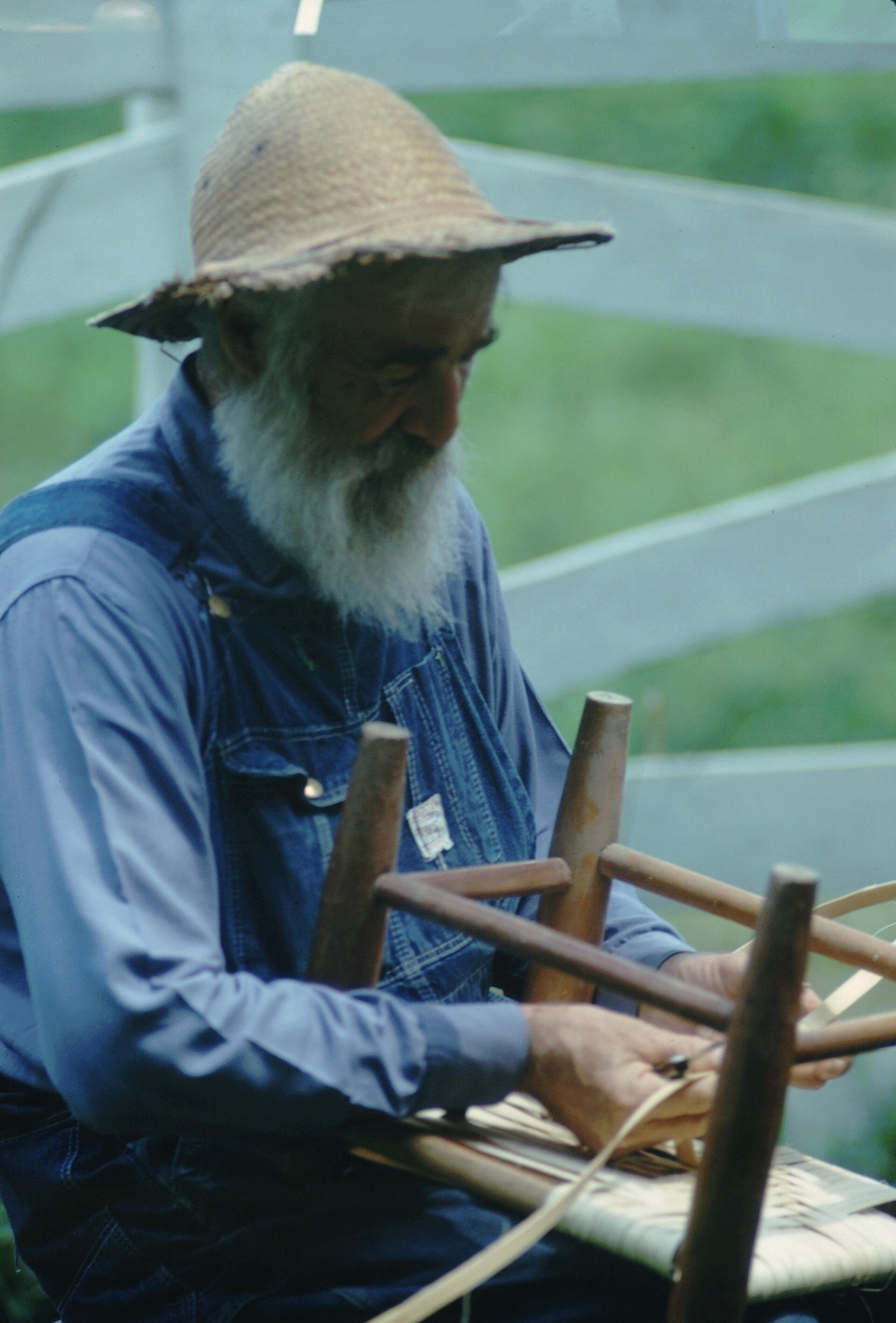
Photo: Shenandoah National Park / Wikimedia Commons (public domain)
The Chair Caners, and the Seats That Outlast Us
Most crafts are about making a thing. This one is about mending it.
That is why it moves me. A chair caner does not usually start with nothing. He starts with a chair somebody loves, an old ladderback or a rocker or a dining chair that has been in the family a long while, whose woven seat has finally given out. The cane has sagged and cracked and split, the way cane does after enough years of enough people sitting down in it. Now there is a hole where a seat used to be, and the chair has been retired to a corner, because nobody has the heart to throw it out and nobody knows how to fix it.
That is where the caner comes in. And what he does is quietly remarkable.
Look closely at a hand-caned seat sometime. It is not woven onto a frame. It is woven through the chair itself, through a ring of small holes drilled around the edge of the seat when the chair was first made, sometimes a hundred years ago. Strand by strand, the caner threads long lengths of cane down through one hole and up through the next, front to back, then side to side, then diagonally one way and the other, building up that familiar six-way pattern of little octagons that has been the standard for generations. It is done entirely by hand, wet cane pulled snug through hole after hole after hole. A single seat can take many hours, a great deal of patience, and fingers that end the day sore.
Here is the part that gets me. When a caner re-canes an old chair, he threads his new cane down through the very same holes the last caner used. And the one before that. And the one before that. All the way back to whoever first sat down in it when it was new. The holes are original. The wood is original. Only the woven part gets renewed, every generation or so, by a new pair of hands doing the same slow work in the same old holes.
This is not really a story about chairs.
The frame outlasts everyone. The seat wears out and is remade, wears out and is remade, and each remaking is one more link in a chain of hands reaching back through time. Sit down in a freshly caned family chair and you are sitting on the newest layer of a thing people have been keeping alive, one re-caning at a time, for longer than anyone in the room has been living.
It was never glamorous work. Caning came up as a practical trade, a thing you got done because a good chair was worth keeping and a worn-out seat was worth mending. There was a time when nearly every town had somebody who could do it, often folks the sighted world overlooked, because caning is work the hands can learn to do largely by feel. More than one blind craftsman made a fine living at it. Honest, useful, patient work, and it kept good furniture in service for lifetimes.
Not many are left who do it well. It is slow, and the world would rather sell you a new chair than fix the old one. But there are still a few, tucked into workshops and back porches across the South, who will take your ruined family rocker and hand it back to you weeks later made whole, the seat tight and clean and good for another thirty years of people sitting down in it.
If you have such a chair in a corner, the one you cannot throw out and cannot use, find one of these menders. Let them do their slow work. And when the chair comes home with its new seat, sit down in it, and think about the hands, all the way back, that kept it a chair.
That is the whole quiet glory of the thing. Not making a seat, but keeping one.
The South, shared.
Keep Reading
Southern Makers
The Gourd Artists, and the South's Oldest HalloweenBefore the pumpkin, there was the gourd. Southern hands have dried, carved, and painted them for centuries, keeping an old craft alive.
Southern Makers
The Face Jugs of the Southern HillsThe face jug is one of the South's strangest folk objects: a pottery vessel with a wild, grimacing face. Deep roots, and potters keep it alive.
Southern Makers
The White Oak Basket Makers of AppalachiaA few mountain hands can still turn a living white oak into a basket that outlasts its maker. It begins not with weaving but with a tree.