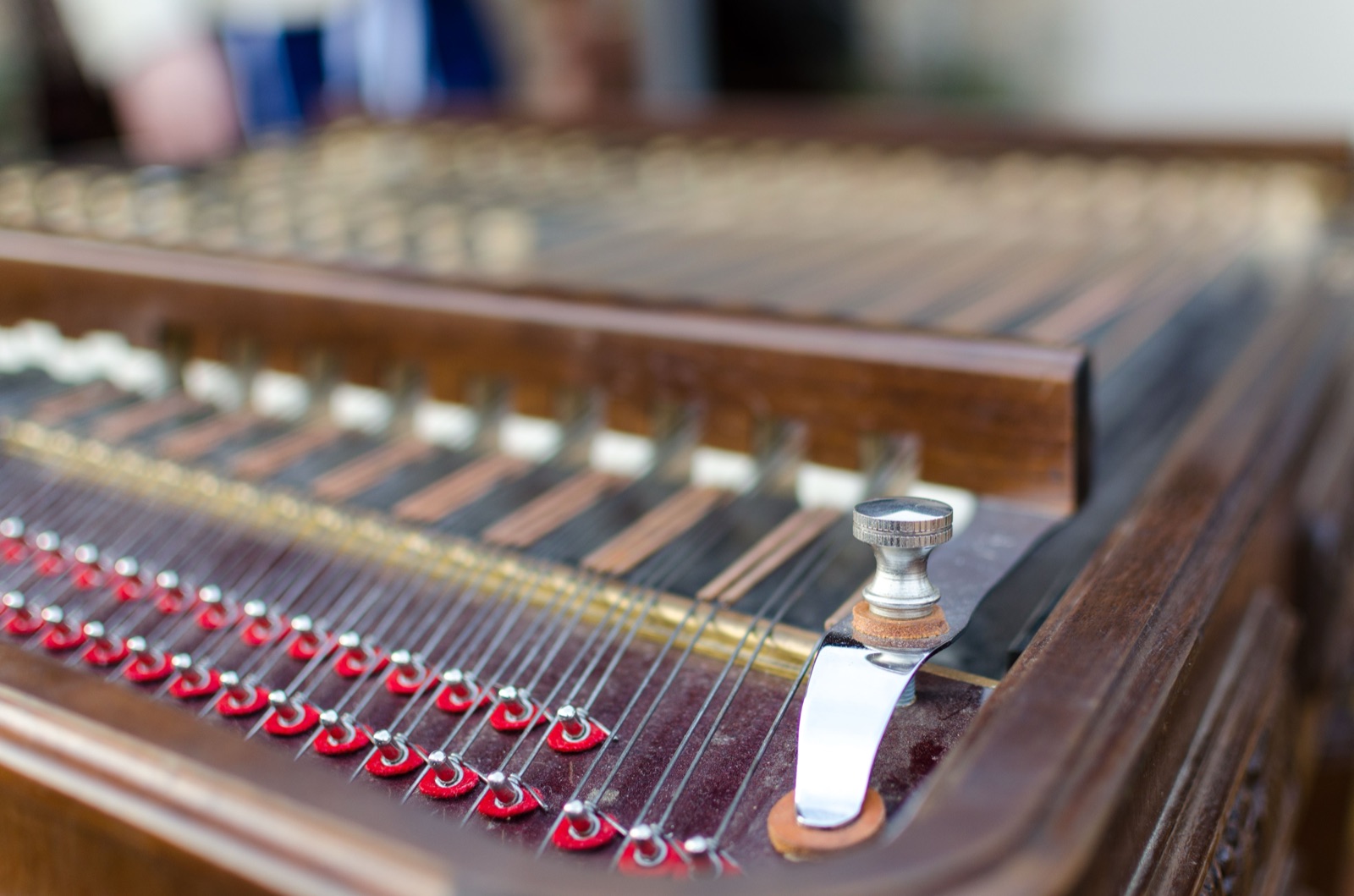
Photo: Lukas Blazek / Pexels
The Dulcimer Makers, and the Sound That Came Down the Mountains
America did not invent many musical instruments. It borrowed most of what it plays. But up in the mountains of the South, out of spare parts and homesickness and long winter evenings, the people built one of their own.
The Appalachian dulcimer is a narrow, fretted, hourglass-shaped thing, laid flat across the lap and played with a strum and a little wooden stick called a noter, and it makes a sound like nothing else, sweet and droning and old, the sound of a ballad sung on a porch with the dark coming down. Nobody is entirely sure who first built one. It grew up in the isolated mountain communities of the Southern Appalachians in the nineteenth century, cousin to older stringed instruments the settlers had carried over from the old countries, adapted with whatever wood and wire a mountain family could get its hands on. It was a homemade instrument for a homemade music, and for a long time it lived only where it was born, in the hollows and along the ridges, handed from one pair of hands to the next.
It nearly disappeared. The mountains modernized, the old ballads faded, the guitar and the radio came in, and for a stretch the dulcimer was in danger of becoming a museum piece, a curiosity behind glass. That it did not is thanks in large part to the people who kept building them, the mountain craftsmen who never stopped making dulcimers by hand and the folk revival that eventually came looking for them and found the tradition still alive in the workshops of the Southern highlands.
The making of one
To build a dulcimer by hand is to work at the exact meeting point of woodworking and music, where a cabinetmaker’s precision serves a fiddler’s ear.
It starts with wood, and the choice of wood is the first thing that shapes the sound. A maker selects the timber the way a baker selects flour, knowing that walnut will speak differently than cherry, that a close-grained spruce top will ring where a denser wood will mute. The pieces are cut thin, thinner than seems safe, because the whole body of the instrument has to be light enough to vibrate, to turn the buzz of a plucked string into a note you can feel in your chest. The maker bends the sides, often over heat and steam, coaxing straight wood into the instrument’s soft curves without cracking it, a step that takes a feel in the hands that no measurement can teach.
Then comes the fretting, and the fretting is where the dulcimer keeps its secret. Unlike a guitar, the traditional mountain dulcimer is fretted to a particular old scale, so that a beginner can lay a finger down almost anywhere and find a note that belongs, which is exactly why it became a people’s instrument, forgiving and welcoming to hands that never had a music lesson. Setting those frets in precisely the right places, so the instrument plays in tune all the way up its long neck, is patient, exacting work, the difference between an instrument and a nice-looking piece of firewood.
And then the details that turn a thing into a thing of beauty. The sound holes, cut in shapes handed down through the tradition, hearts most often, sometimes birds or vines, small openings that let the note out and let the maker sign the work with a bit of grace. The finish rubbed in by hand. The final fitting of the strings and the long, careful business of setting it up so it plays true. A good dulcimer is dozens of hours of quiet, meticulous work, and when it is done it does not look like dozens of hours. It looks simple, almost plain, the way the best handmade things do.
Why it matters that someone still does it
You can buy a factory dulcimer, stamped out and assembled, and it will make the notes. That is not the point, any more than it was ever the point with any of the crafts we write about here.
The point is that when a person builds a dulcimer by hand in the mountains where the instrument was born, using the woods of those mountains and the frets of that old tradition, they are keeping alive something that came very close to being lost, a genuinely American thing, one of the few instruments this country made for itself, in one of the few places remote enough and poor enough and rich enough in song to make it. Every hand-built dulcimer is a small argument that the old sound is worth keeping, that the tradition is worth handing forward, that there should still be people who know how to bend the sides and set the frets and cut the little hearts in the wood.
The music the dulcimer plays is old music, ballads that came down the mountains and across the ocean before that. It deserves an instrument made the old way, by someone who cares. As long as there are hands in the Southern highlands still shaping walnut and cherry into that sweet, droning, unmistakable sound, the whole tradition stays alive, one lap-sized instrument at a time.
The South, shared.
Keep Reading
Southern Makers
The Decoy Carvers of the Southern CoastA working duck decoy is just a block of wood carved into a bird, but on the Southern coast it carries three hundred years of craft handed down.
Southern Makers
Seagrove, Where the Clay RemembersIn a rural pocket of North Carolina, more than a hundred potters work the same red clay their predecessors dug 250 years ago.
Southern Makers
The Boatbuilders of Bayou La BatreFor a few decades, one small Alabama town built more shrimp trawlers than almost anywhere on earth. Bayou La Batre's story is the story of the working Gulf.