Photo: PEO ACWA / Wikimedia Commons (CC BY 2.0)
Berea, Kentucky: The Town That Makes Things by Hand
You can drive into Berea and almost miss it, and that is part of the story.
From the road it looks like a hundred other small Kentucky towns at the foot of the mountains: the gas stations, the dollar stores, a Cracker Barrel off the interstate. But pull off into the old part of town and the place reveals its real face. Studio after studio. Galleries packed along the streets. A glassblower spinning molten glass at a thousand degrees in one window, a woodworker shaping a spoon in the next, a weaver at a loom, a potter at a wheel, a broom maker twisting straw the way it has been twisted for two hundred years. Scattered everywhere, you start to notice them, are six-foot painted sculptures of human hands, raised in welcome. They are the town’s whole meaning in a single image. This is Berea, the Folk Arts and Crafts Capital of Kentucky, a town that decided its purpose would be making things by hand.
At the center of it sits one of the most remarkable colleges in America.
Berea College was founded more than a century and a half ago, and it was, from the start, an unusual and idealistic place. But the thing that makes it extraordinary today is this: Berea College charges no tuition. None. It has been tuition-free since the 1890s. It admits students from families with very little money, and instead of paying tuition, every student works, at least ten hours a week, in the running of the college itself. And a great many of them work in craft. The college has taught the traditional arts of the Appalachian mountains, weaving and woodwork and ceramics and broom-making, since the 1890s, training generation after generation of young people in skills that might otherwise have died out.
So in Berea, craft is not a quaint tourist attraction bolted onto the town. It is the economy and the education both.
A student arrives from a poor mountain family, sits down at a loom older than her grandmother, and learns, over four years, to weave. She earns her degree by making things, and she carries the skill out into the world, and meanwhile the tradition survives one more generation. That is the engine running quietly under the whole town. The studios in the artisan village, the galleries, the state craft center down by the highway showing the work of hundreds of Kentucky makers, all of it grows out of a single conviction this town has held for over a century: that making something beautiful with your hands is worth teaching, worth preserving, and worth building a community around.
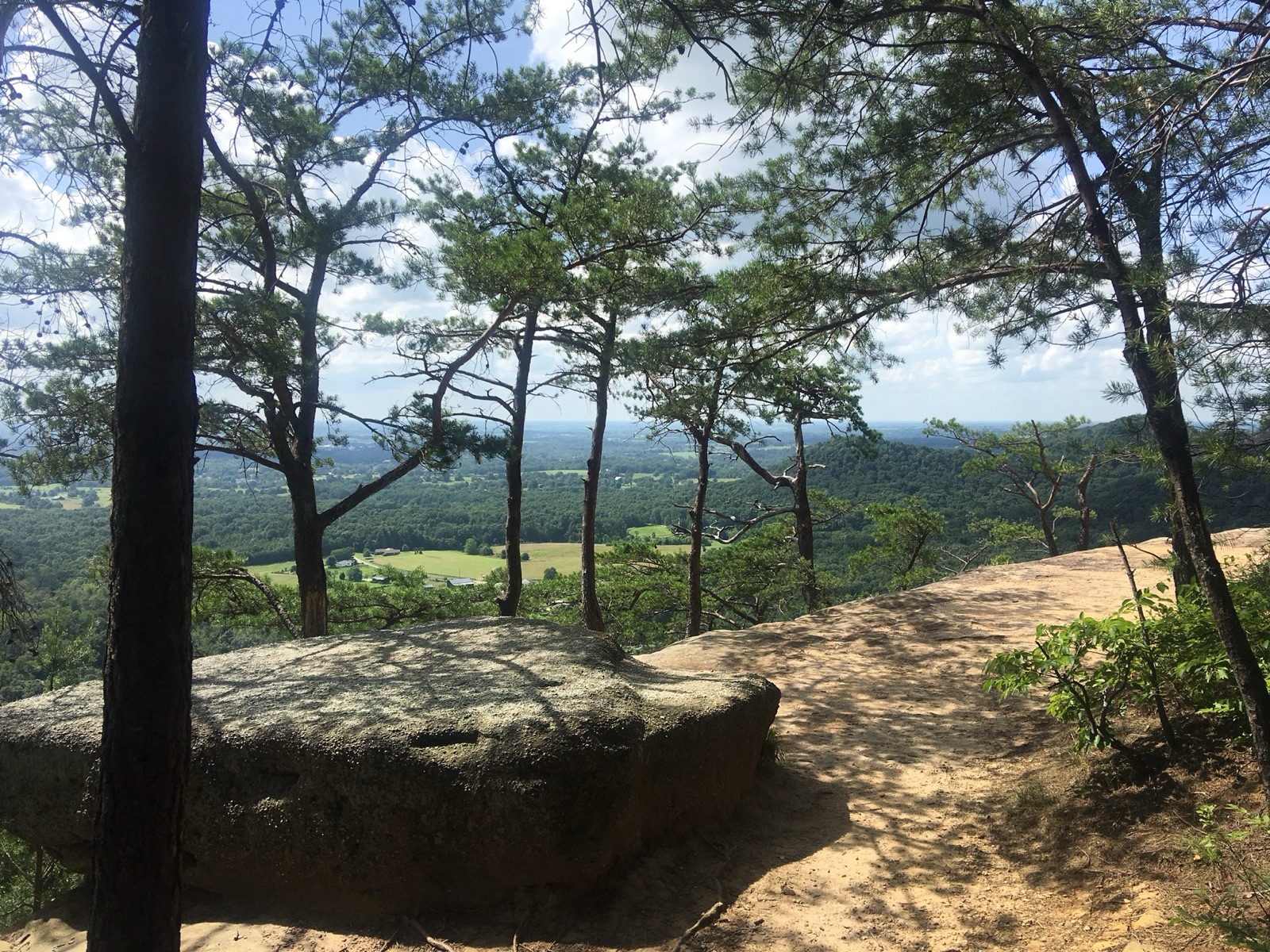
And it is a lovely place to simply be. The streets are walkable and friendly, the kind of town where a craft demonstration turns into a conversation and a stranger becomes a friend over a shared meal. The historic Boone Tavern has been putting up travelers for generations. Just outside town, the trails of the Pinnacles climb to overlooks that have been called the best hike in Kentucky, the same ridges and views that have given the local artists their colors and their inspiration for as long as anyone has been making things here.
Here is what Berea understands, and it is a quietly radical idea.
A craft does not survive on its own. Someone has to teach it, and someone has to be able to afford to learn it, and there has to be a reason for a young person to spend the years it takes to get good. Most places assume the old skills will simply fade, and mostly they do. Berea refused that assumption. It built a college and a town designed expressly to keep the making alive, to put a loom in front of a young person who could never have paid for the privilege, and to let the skill pass down one more time. The painted hands all over town are not just decoration. They are a statement of what this place believes in.
That is rarer and harder than it sounds. It is easy to admire old crafts in a museum, behind glass, safely past. It is much harder to keep them living, in working hands, in young hands, generation after generation. Berea has spent a century and a half doing exactly that, quietly, off the interstate, a whole town organized around the simple and stubborn faith that things made by hand are worth keeping, and worth teaching, and worth handing on.
The South, shared.
Keep Reading
Places
The Lighthouses of the South, Part Three: The Screw-Pile Lights of the SoundsThe last leg of our lighthouse journey, into the quiet sounds where a stranger light once stood: a little house on iron screws over the water.
Places
The Southern Town We Can't Stop Thinking About: Oxford, MississippiThe students come back, the Square fills up, and Faulkner's ghost keeps a quiet house at the edge of town. This is Oxford, Mississippi.
Places
Abingdon, Virginia: The Town That Traded Ham for HamletIn the far corner of Virginia sits a handsome mountain town whose famous theater once let farmers pay for a play with produce. It is still going.