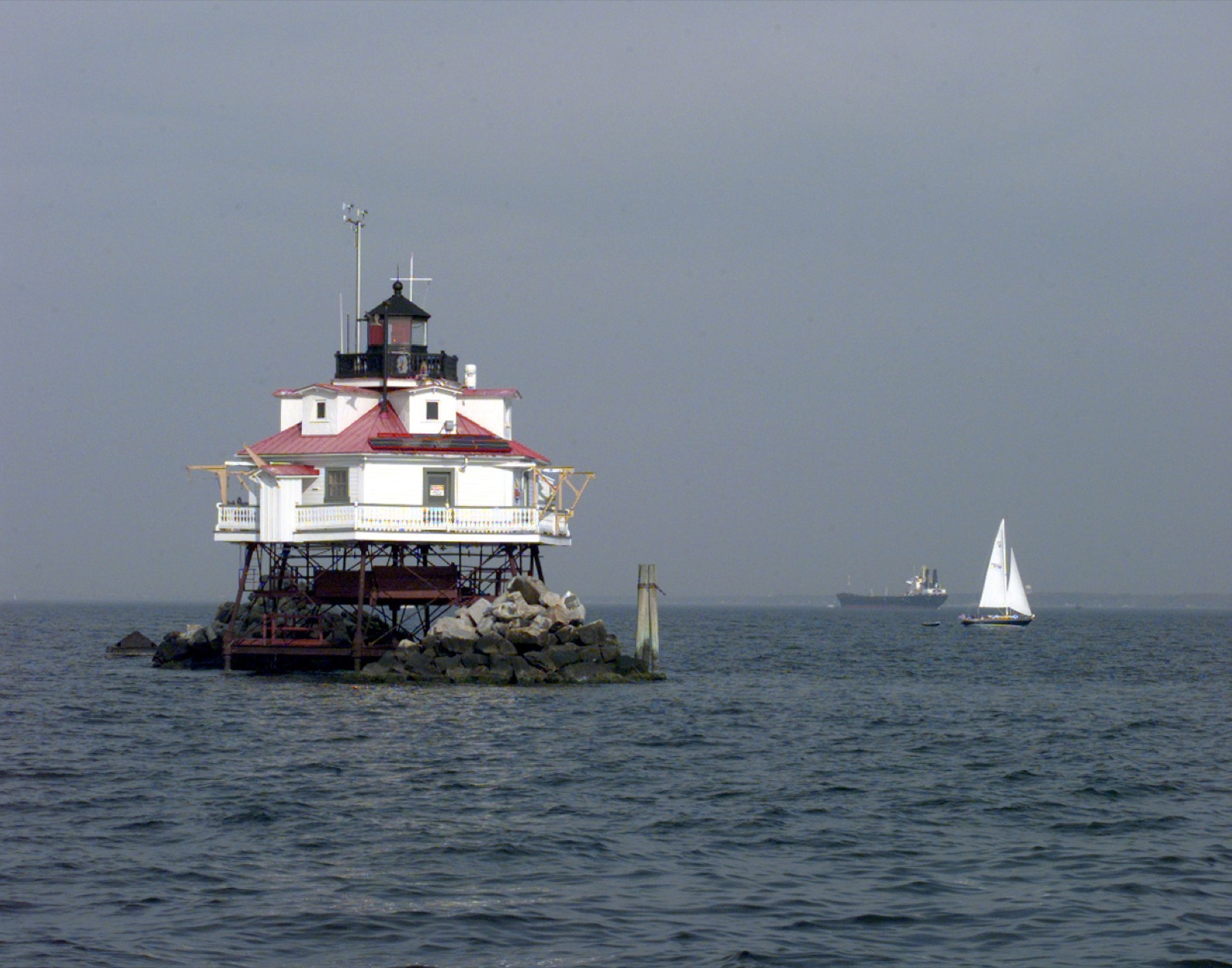
Photo: U.S. Coast Guard / Wikimedia Commons (public domain)
The Lighthouses of the South, Part Three: The Screw-Pile Lights of the Sounds
The finest lighthouse the South ever built was not a tower at all. It was a house.
In the first two parts of this journey, we stood at the foot of the great towers. The tall brick and iron giants of the Atlantic and the Gulf. Striped and stately, throwing their beams far out over the open sea to warn the ships off the rocks and shoals. Those are the lighthouses everyone pictures. They are on the postcards and the coffee mugs and the calendars, and rightly so, because they are magnificent.
But there was another kind of light down here. Stranger, humbler, and to my eye even more wonderful.
To find it you have to leave the pounding open coast. Go behind the barrier islands, into the quiet protected waters of the great Southern sounds. The Pamlico and the Albemarle in North Carolina. The wide shallow reaches where the rivers meet the sea. There, out in the middle of the water, far from any shore, there once stood little wooden houses on iron legs, glowing in the dark. They were called screw-pile lighthouses. They are one of the most charming and ingenious things the South ever built.
Here is the problem they were built to solve. In the sounds, the danger is not a rocky headland. The danger is the shoal. A hidden bar of sand and mud lurking just under the surface, miles from any land, ready to catch a boat that strayed from the channel. You needed a light out there, right on the shoal itself, in the middle of open water. But how do you build a lighthouse on a bottom of soft shifting mud that would swallow a stone tower whole? You cannot pour a foundation on quicksand.
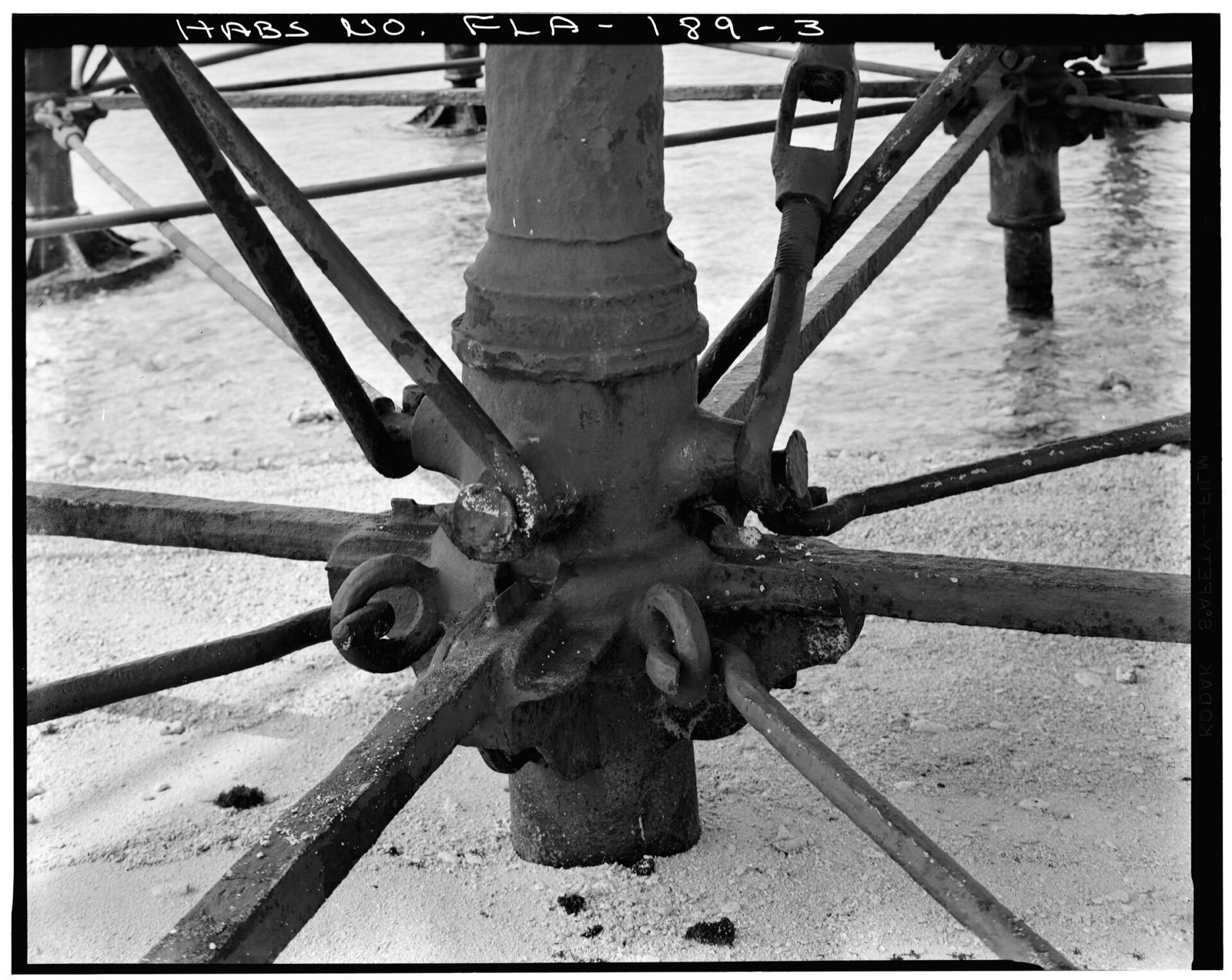
The answer came from a blind Irish engineer named Alexander Mitchell. In the 1830s he patented a beautiful idea. Do not try to drive a piling down into that soft bottom, he said. Screw it in. He designed iron pilings tipped with a great helical screw, like an enormous wood screw, that could be augured down and down into the mud. Twisting deep, so the screw both anchored the leg fast and spread its weight across the soft bottom. Instead of fighting the mud, the screw-pile embraced it. Sink a ring of those screwed-in legs, brace them together, and you had a stable platform standing in open water where no ordinary foundation could ever hold.
And what they built on top of those legs is the part that makes people fall in love. Not a tower. A house. A snug little wooden cottage, usually one room square, or in the prettiest cases a hexagon, with a porch running around it and a peaked roof, and rising up out of that roof, the lantern room with its light. A keeper and sometimes his family lived out there. A little house on stilts in the middle of the sound, miles from shore, surrounded on every side by water and sky.
Picture the life of it, because it is worth picturing. Down on the first floor were the small rooms where the keeper cooked and kept his stores and did his paperwork. Up in the attic, tucked under the peaked roof, were the sleeping quarters. On an open platform below the house, out over the water, the keeper often kept a few chickens and even a goat or two, a little barnyard hung above the sound. When the fog rolled in, there was no automatic horn. The keeper cranked the fog bell by hand. Ten minutes of hard cranking to wind the mechanism enough to ring for a couple of hours, and then he cranked it again, and again, all through a foggy night. Your nearest neighbor was a distant shoreline you could barely see. Your front porch hung over open water. Your whole job was to keep a light burning so the boats crossing the dark sound could find their way home.
It was a life of enormous isolation and enormous responsibility. Something in me thrills at the loneliness and the beauty of it both.
It was also a hard and precarious kind of lighthouse, and here is where the story turns. That little house out in the open water was terribly exposed, and its great enemy was ice. When a hard winter froze the sounds, sheets of ice would form and break up and come grinding down the water on the current. A moving field of ice is a slow, unstoppable, tremendous force. It could shear the iron legs right off a screw-pile light and carry the whole house away in the night.
This was not a rare fear. It happened, and the records of it are harrowing. At Thomas Point up in the Chesapeake, an ice run in 1877 shook the structure so violently that the great lens toppled from the lantern and shattered. That same winter, up at Hooper Strait, the ice tore the entire lighthouse from its piles and floated it away down the bay. The keeper and his assistant had to escape onto the ice itself. They were stranded out there in the cold for the better part of a day, badly frostbitten, before anyone could reach them. And down in the North Carolina sounds, a keeper named Joe Burrus was once cut off at Oliver’s Reef for thirty days when the sound iced over solid. When the floes finally broke up they jammed against his light and battered it half to pieces before he could be rescued.
That was the bargain of the screw-pile life. Beauty and isolation in the fair seasons. Mortal danger when the water froze.
Between the ice and the hurricanes and the ever-present threat of fire in a wooden house lit by open flame, most of these lovely cottages were eventually lost. Torn down and replaced by squat iron caisson lights that could take the punishment the cottages could not. Perhaps a hundred or more screw-pile lights once stood in American waters, a great many of them in the Chesapeake and the Carolina sounds. An 1871 report listed five screw-piles standing on Pamlico Sound alone, with more added in the years after. Today only a small handful survive anywhere in the country. Each one is a small miracle of preservation.
Let me take you to the few that are left, because they are worth a pilgrimage.
Up in the Chesapeake stands the queen of them all, the Thomas Point Shoal Light, lit in 1875. A hexagonal white cottage, still standing out on its own shoal, on its original screwed-in legs, exactly where it was built. It is the last unaltered screw-pile cottage left on its original foundation anywhere in the Chesapeake Bay. It was the very last lighthouse in the bay to be manned, staffed by a keeper right up until 1964, and it was made a National Historic Landmark in 1999. To see it out there on the water is to see the whole vanished world of the screw-pile light still alive.
A few others survive only because they were saved the hard way. Lifted up whole and carried ashore to become museums, so people could walk through the little rooms on dry land. The Hooper Strait Light, the very spot where the ice carried off its predecessor, was moved to the Chesapeake Bay Maritime Museum at St. Michaels. The Drum Point Light was floated to the Calvert Marine Museum at Solomons. The Seven Foot Knoll Light, the oldest screw-pile in Maryland, was lifted off by a derrick and set down in Baltimore’s Inner Harbor. Each one rescued. Each one a survivor. Each one a place you can now stand inside and imagine the keeper cranking his fog bell.
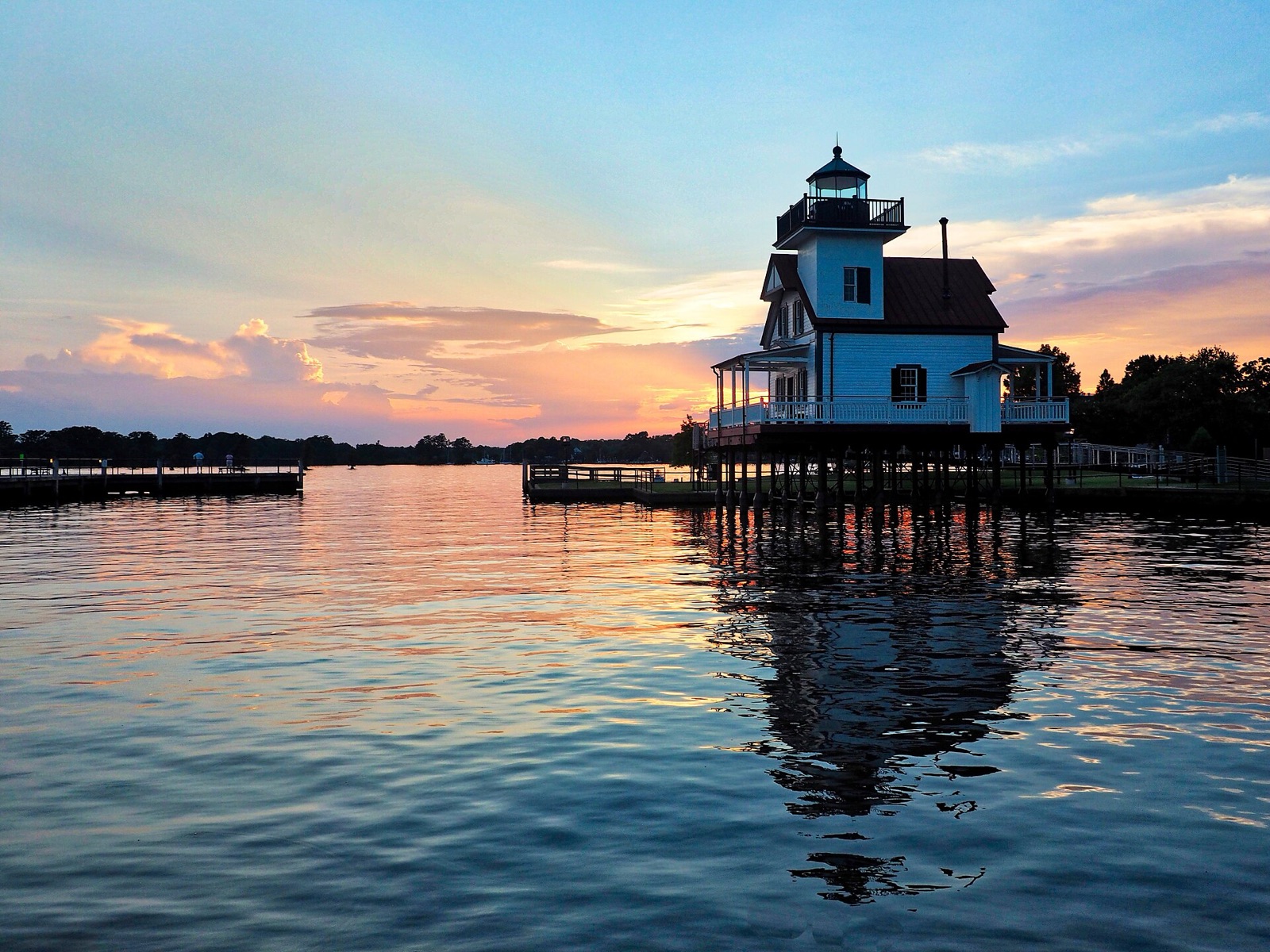
And here in the South, there is one you truly must go and see, because it stands in a town we have already fallen in love with. Down in North Carolina, only a single one of all the state’s screw-pile lights survives. It is the Roanoke River Lighthouse, and it now stands on the waterfront at Edenton, that same lovely town of the tea-party women that we visited not long ago. Its story of survival is the best of the lot. When it was decommissioned in 1941, a man named Emmett Wiggins bought the old cottage, floated it ashore on a surplus World War Two landing craft, and simply lived in it, as his house, for thirty-five years. After he passed, the town bought it, moved it to the waterfront, furnished it as it once was, and opened it up. Today you can climb into a genuine screw-pile keeper’s cottage, on dry land in a beautiful Southern town, and see for yourself how a keeper lived out over the water.
I love the great towers. I do. But it is these little houses on their iron screws that I find myself thinking about.
Maybe because they are so nearly gone, and a thing you can almost no longer see has a pull to it. Maybe because there is something so human about them, so much braver and lonelier than a tower. A tower is a fortress. A screw-pile light is a home. A fragile wooden home, put out in the middle of the wide dark water on purpose, and kept lit by a person living out there in the weather. Cranking a bell by hand through the fog, minding a goat on a platform over the sound, holding on through the ice, for no other reason than that other people, out on the black water at night, needed a light to steer by.
That is the whole of it, really. That is what a lighthouse is, in the end, and the little cottages on their screws say it plainer than the great towers ever could. Somebody went out to the loneliest and most exposed place there was, and made a home there, and kept a light burning in it, so the rest of us could find our way through the dark.
We have stood at the tall towers of the open coast. We have stood at the humble cottages of the quiet sounds. And everywhere, all down the long and dangerous and beautiful coastline of the South, we have found the same thing burning at the top of every one of them. A light. Kept by somebody. On for anybody. Still, after all this time, on for you.
The South, shared.
Keep Reading
Places
The Southern Town We Can't Stop Thinking About: Oxford, MississippiThe students come back, the Square fills up, and Faulkner's ghost keeps a quiet house at the edge of town. This is Oxford, Mississippi.
Places
Abingdon, Virginia: The Town That Traded Ham for HamletIn the far corner of Virginia sits a handsome mountain town whose famous theater once let farmers pay for a play with produce. It is still going.
Places
The Lighthouses of the South, Part Two: The Gulf CoastThe second in our series on the beacons of the Southern coast. From Pensacola to Sanibel, the Gulf lights guard a flatter, trickier shore.