Photo: Wescbell / Wikimedia Commons (CC BY-SA 3.0)
The Southern Town We Can't Stop Thinking About: Oxford, Mississippi
A writer can ruin you for a town, and Oxford, Mississippi is the one that did it to me.
Not because it is grander than the rest. It isn’t. It is because a man once sat in a house at the edge of it and decided this ordinary red-dirt county was worth writing down forever, and in doing so he taught the rest of us to look at our own small places twice.
Come the first week of September, Oxford wakes all the way up. The students of Ole Miss pour back into town, and the Square that had gone slow and green over the summer fills up again with the noise of it. There is a particular energy to a college town in the South when the fall term starts, a mix of youth and heat and expectation, and Oxford has it about as pure as anyplace I know.
The Square is the heart of it. The old Lafayette County courthouse stands in the middle like it is holding the whole town together, and the shops and cafés run around it in a tight, walkable ring. On one corner sits Square Books, opened in 1979, one of the finest bookstores in the American South. People come from a long way off just to stand on that balcony with a cup of coffee and look down at the courthouse and feel, for a minute, like they are living inside a better story than the one they left at home.
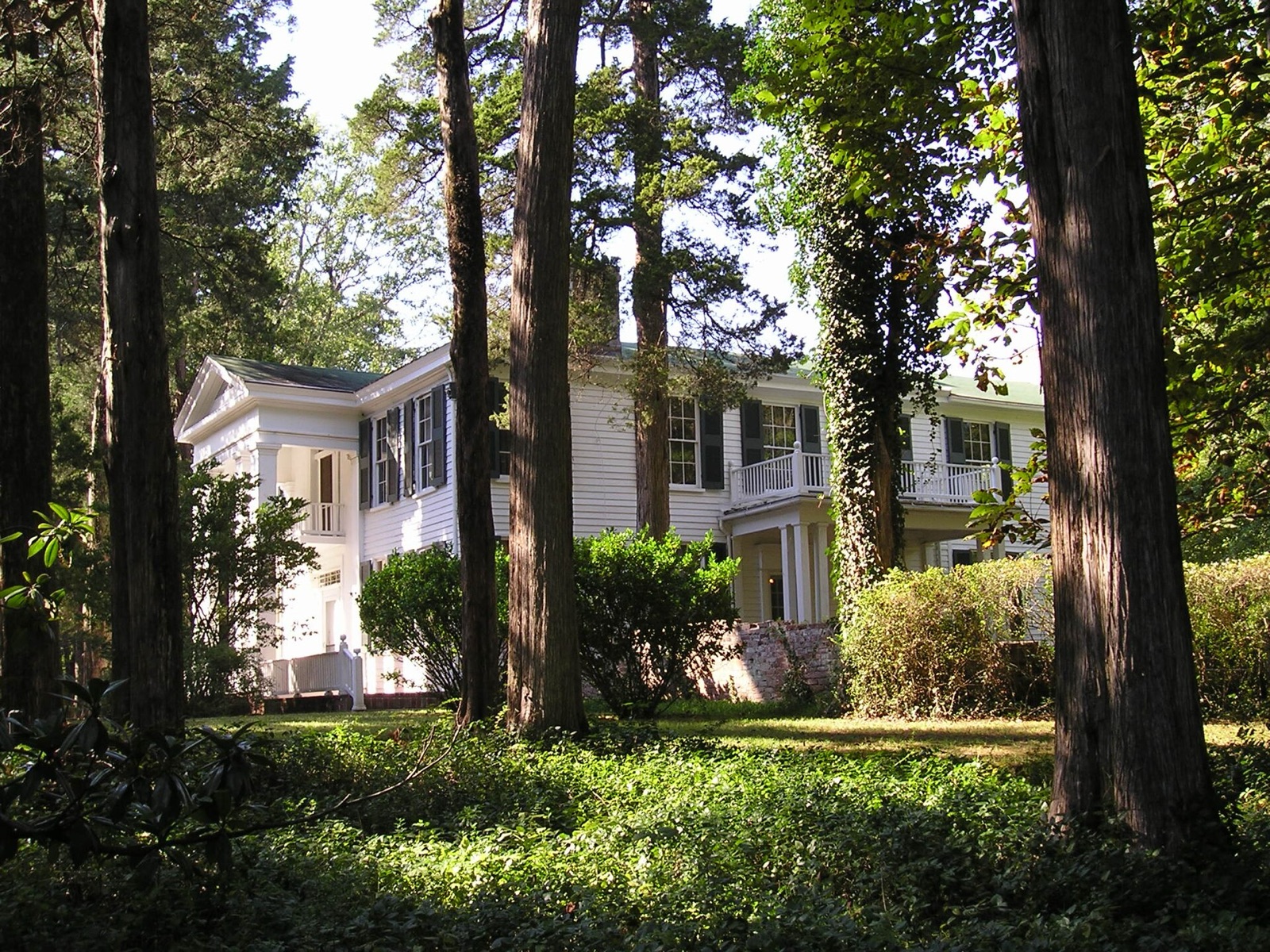
But the reason to come to Oxford is out past the Square, down a quiet lane where the trees close in and a plain white house waits under the cedars.
Rowan Oak.
William Faulkner bought it in 1930, when it was run down and cheap and nobody wanted it, and he lived in it until he died in 1962. Thirty-two years. He named it Rowan Oak after the Scottish rowan tree, a tree of peace and safety, though no rowan grows on the grounds and never did. He wanted the idea of it more than the fact.
Walk through it now and it is kept almost exactly as he left it. But the thing that stops people is the study. Faulkner wrote the entire day-by-day outline of one of his novels directly onto the plaster walls of that room, in pencil and red grease crayon, because he could not keep the plot straight any other way. It is still there. A man’s whole racing mind, spilled out onto the wall of a quiet room in a quiet town, and left for the rest of us to stand in front of and wonder at.
Here is the thing about Oxford.
Faulkner did not go anywhere to find his material. He took this county, Lafayette County, and he barely even changed it. He called it Yoknapatawpha and he called the town Jefferson, and then he wrote about the same red hills and the same courthouse Square and the same porches and the same people until he had built an entire country of the imagination out of a place most folks would have driven straight through.
He won the Nobel Prize for it. Two Pulitzers. And he did it without ever really leaving home.
That is what a town like Oxford will teach you, if you let it. The story you are looking for is probably not somewhere else. It is probably right where you are standing, in the town you think you already know, waiting for somebody to love it enough to look.
So go in September, when the students are back and the Square is loud and the light comes down gold through the courthouse trees. Sit on the balcony at Square Books. Drive out to Rowan Oak of an afternoon, and stand in that study, and read a dead man’s handwriting off the wall. And on the way home, look a little harder at your own town.
That is what Oxford is really for.
The South, shared.
Keep Reading
Places
Abingdon, Virginia: The Town That Traded Ham for HamletIn the far corner of Virginia sits a handsome mountain town whose famous theater once let farmers pay for a play with produce. It is still going.
Places
The Lighthouses of the South, Part Two: The Gulf CoastThe second in our series on the beacons of the Southern coast. From Pensacola to Sanibel, the Gulf lights guard a flatter, trickier shore.
Places
The Lighthouses of the South, Part One: The Atlantic CoastThe first in a series on the beacons of the Southern coast. Seven Atlantic towers built to keep ships off the shoals, and worth the climb.