The Lighthouses of the South, Part One: The Atlantic Coast
There is a particular kind of building that exists only to save the lives of people it will never meet.
A lighthouse does one thing. It stands at the edge of the land where the water turns dangerous, and it says, in the only language it has, here is the danger, steer wide. For most of American history that message was the difference between a safe passage and a wreck, and along the Southern coast, where the shoals run miles out and the storms come up fast, it was a message that had to be sent night after night, by keepers who climbed the same stairs in the dark for a lifetime. The keepers are gone now, their work done by machines. But the towers still stand, and there is something about them that pulls at people who have no reason to care about nineteenth-century navigation. They are beautiful, and they are lonely, and they were built to watch over us. That is a hard thing not to love.
The South raised more of these towers than one story can hold, so we are going to take them a coast at a time. This first part runs the Atlantic shore, from the Outer Banks of North Carolina down to the old Spanish light at St. Augustine. The Gulf beacons and the strange little screw-pile lights of the sounds will have their own days later. For now, here are seven Atlantic towers worth clearing a day to go stand beneath.
Cape Hatteras, North Carolina
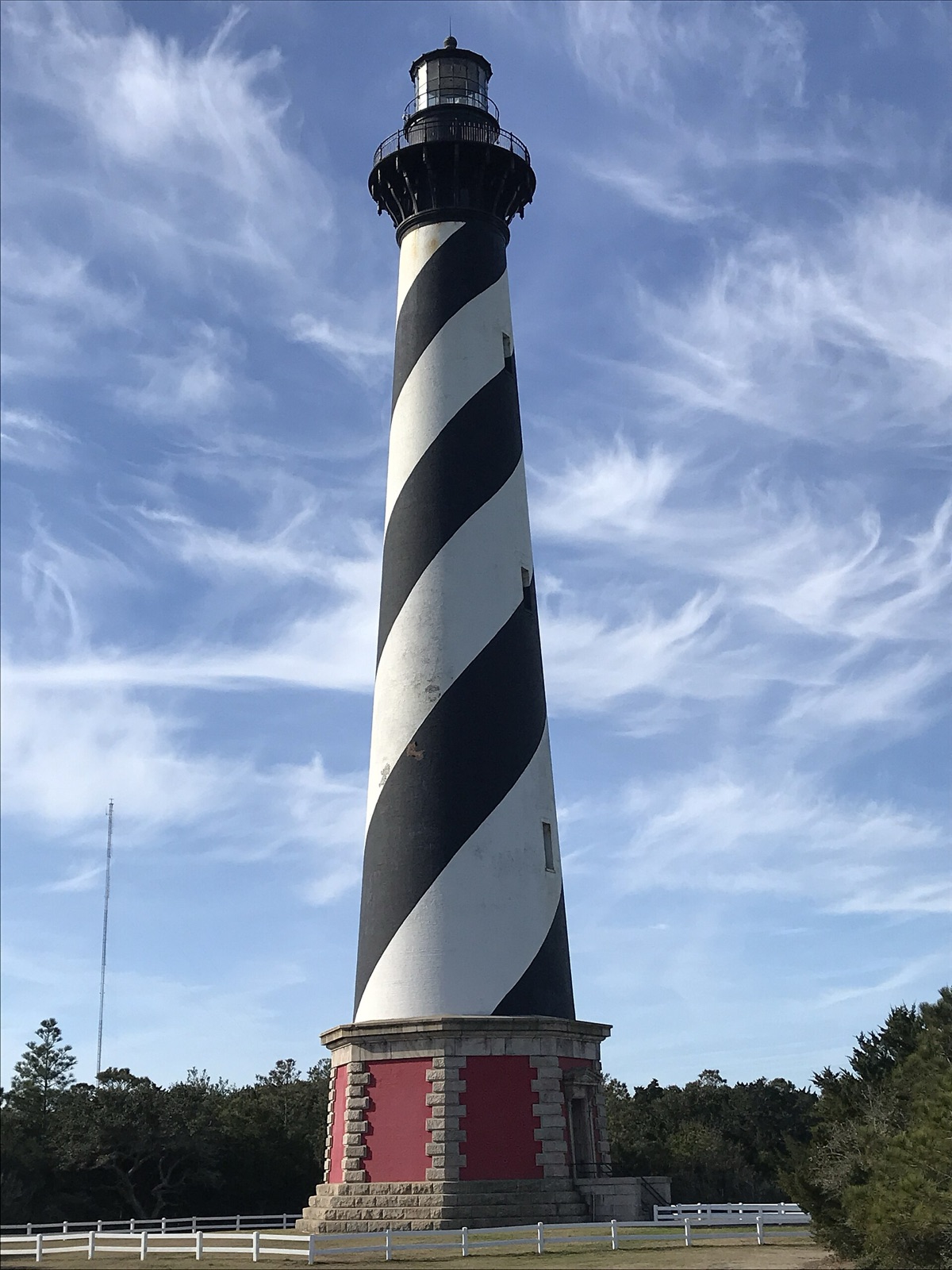
Start with the giant. The Cape Hatteras Lighthouse on the North Carolina Outer Banks is the tallest brick lighthouse in America, and its black-and-white spiral stripe is probably the most recognized lighthouse in the country, the one a child draws when you say the word. It stands watch over Diamond Shoals, a treacherous run of shifting sandbars that reaches fourteen miles out into the Atlantic, where the warm Gulf Stream collides with the cold Labrador Current and cooks up some of the worst water on the Eastern Seaboard. Sailors have a name for this stretch. They call it the Graveyard of the Atlantic, and they earned it the hard way, ship by ship.
The tower you see today was first lit in 1870, and it holds a story that says everything about why these places still matter. By the end of the twentieth century the sea had crept so close it threatened to take the lighthouse down. So in 1999, rather than let it fall, engineers picked up the entire 200-foot, million-brick tower and moved it 2,900 feet inland, a slow and astonishing act of preservation that took weeks and held the whole coast’s breath. They did not let it go. They moved the mountain to save it. If you climb the stairs to the top, you are standing in a building that people refused to surrender to the ocean.
Bodie Island, North Carolina
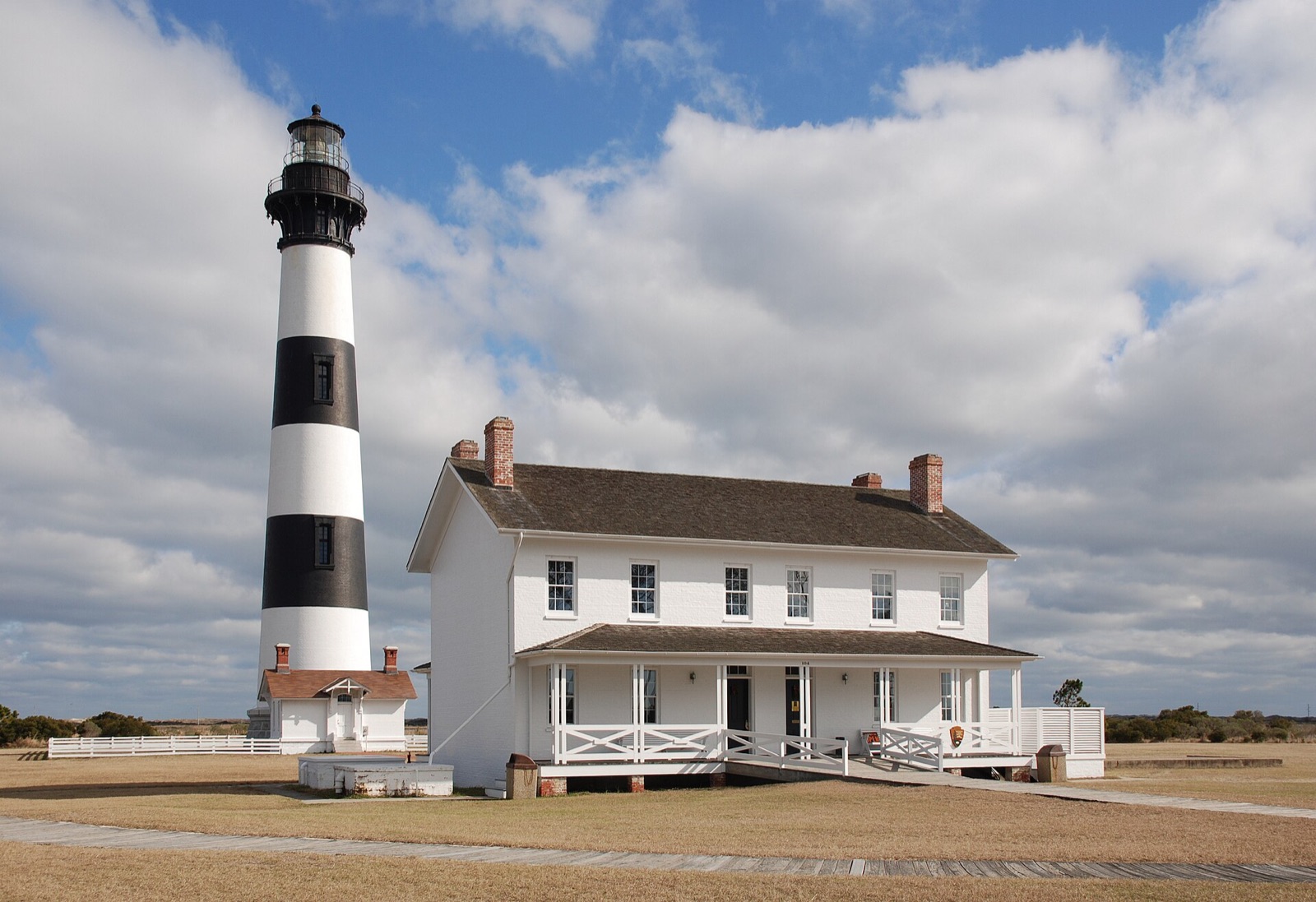
A little to the north, rising out of the marsh near Nags Head, stands the Bodie Island Lighthouse, and the first thing to know is how to say it. It is pronounced “body,” not “bode-ee,” and getting it wrong is the local shibboleth, the same small threshold you cross with Staunton or the Beauforts. The tower wears wide horizontal black-and-white bands instead of Hatteras’s spiral, the difference in pattern being no accident. Each lighthouse was painted with its own daymark so a sailor could tell one from another by daylight, reading the coast like a page.
Bodie Island carries the Civil War in its history the way so much of the Southern coast does. An earlier tower here was destroyed during the war, and the present one rose in 1872 to replace it. There is a keeper’s tale from the early days, of a flock of geese flying into the lit lantern one night and shattering the great glass lens, that has the ring of the kind of thing that only happens to a building standing all alone at the edge of a dark marsh.
Ocracoke, North Carolina
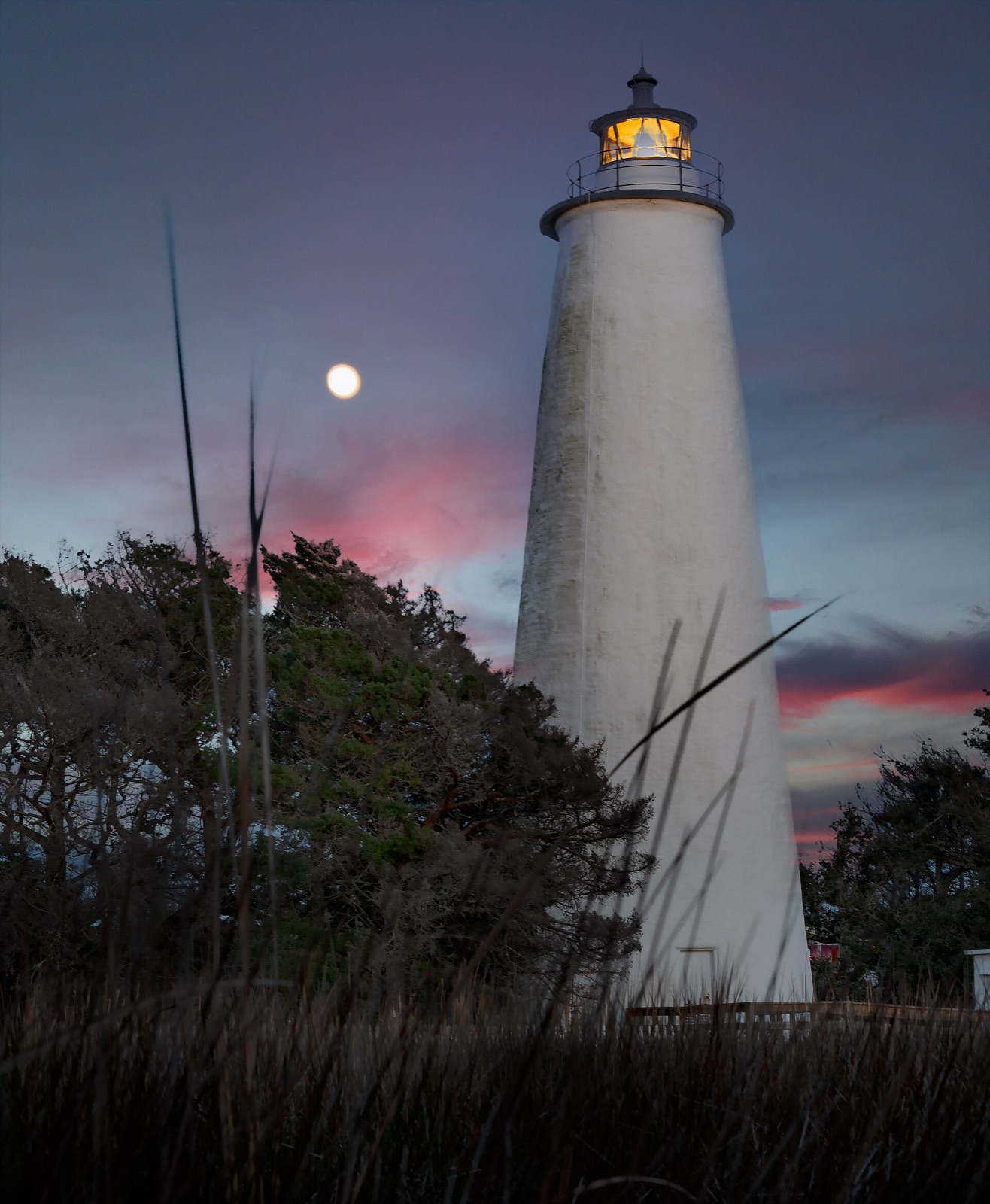
Take the ferry down to Ocracoke Island and you come upon the oldest of them, a short, stout, whitewashed tower that has been burning since 1823. The Ocracoke Lighthouse is the oldest operating lighthouse in North Carolina, and it is a different creature from the tall striped giants up the coast. It does not tower. It sits low and plain and white among the live oaks of a fishing village, and its light was once fed by whale oil, tended by hand, a small steady flame in a big darkness.
Ocracoke village is Blackbeard country, the island where the pirate met his end, and the lighthouse presides over it with the modesty of something that has simply always been there. It is the kind of place that rewards the effort of the ferry, the sense of having gone somewhere you had to mean to go.
Cape Lookout, North Carolina
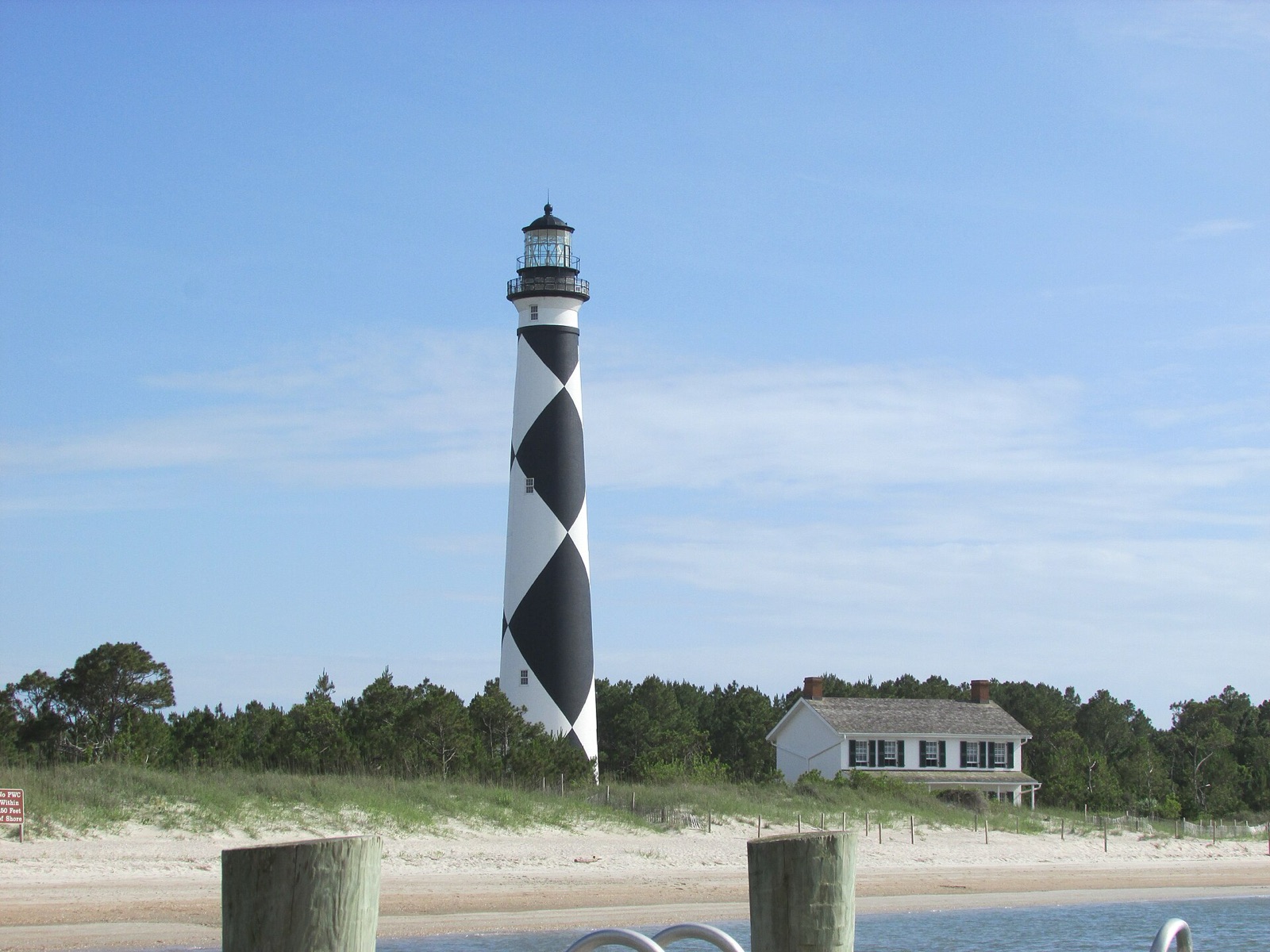
Farther south, at the bottom end of the Outer Banks, the Cape Lookout Lighthouse wears the strangest and most wonderful daymark of them all: not stripes, but a pattern of black-and-white diamonds. And the diamonds are not decoration. They are a code. The story told along that coast is that the black diamonds face the dangerous shoal waters and the white ones face the safer channel, so that a sailor reading the tower could tell at a glance which way meant deep water and which way meant the bottom. Whether every sailor truly navigated by it, the intention is a small marvel, a building that tried to speak in shapes.
Cape Lookout stands on a remote spit of the national seashore, reachable only by boat, which keeps the crowds down and the wildness up. It is worth the trouble to get to. Most of the best ones are.
Tybee Island, Georgia
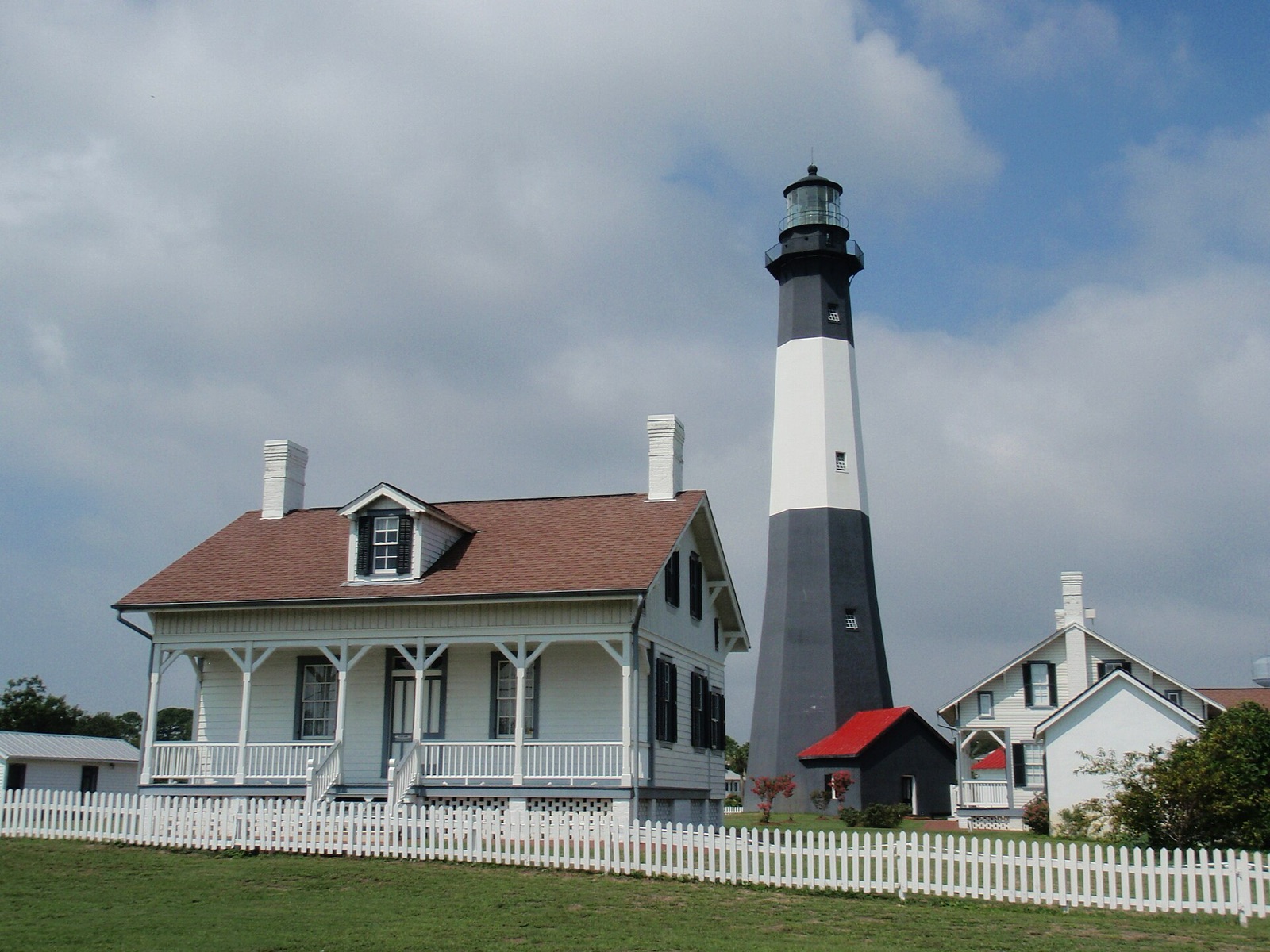
Down in Georgia, near Savannah, the Tybee Island Light Station has stood in one form or another since 1736, which makes it one of the oldest light stations in America. It has been knocked down and burned and rebuilt more than once across those three centuries, most recently wearing a clean daymark of black at the top and bottom with a white band through the middle. It is also one of the most complete light stations left in the country, meaning the supporting buildings, the keeper’s cottages and the outbuildings, survive alongside the tower, so you can see not just the light but the whole small world that ran it.
That completeness is its gift. A lighthouse alone is a monument. A lighthouse with its keeper’s quarters still standing is a story about a way of life, about families who lived at the edge of the sea and kept a fire lit so that strangers could get home. Tybee gives you the whole of it, saved by a historical society that understood the difference.
St. Augustine, Florida
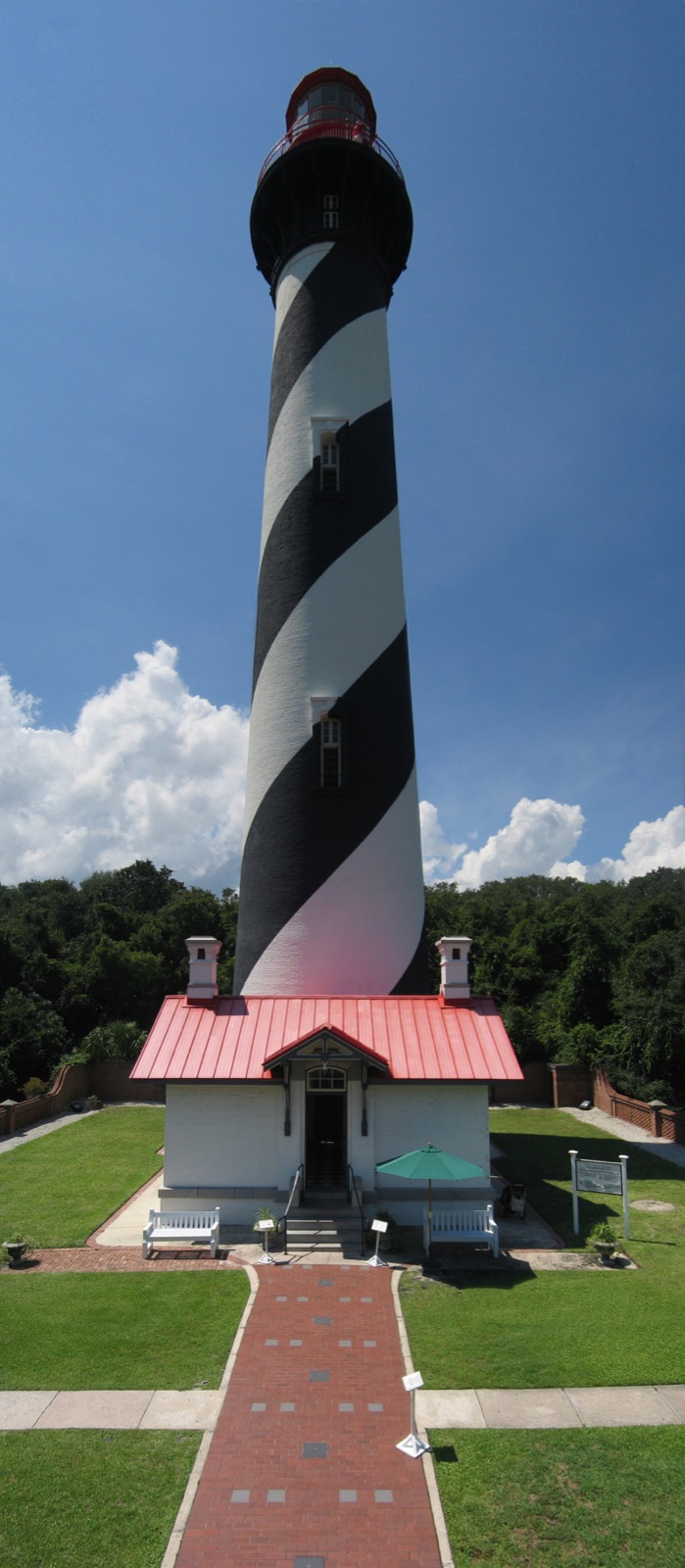
On Anastasia Island in Florida, guarding the oldest city in the nation, the St. Augustine Lighthouse spirals up in black and white with a red top, a daymark that makes it look like something out of a storybook. There has been a beacon at St. Augustine since the earliest Spanish days, but the tower standing now dates to the 1870s, and if you have the legs for it, you can climb its 219 steps to a view that stretches out over the Atlantic and back across the old town’s rooftops.
St. Augustine keeps a maritime museum at its base, and the light has gathered around itself all the lore that a very old place by the sea tends to gather, including a reputation as one of the more famously haunted spots on the coast. Ghost stories and lighthouses go together for a reason. A tower that has stood alone through that many storms, that has been tended by that many lonely keepers, seems to hold onto its past more stubbornly than ordinary buildings do.
Sullivan’s Island, South Carolina
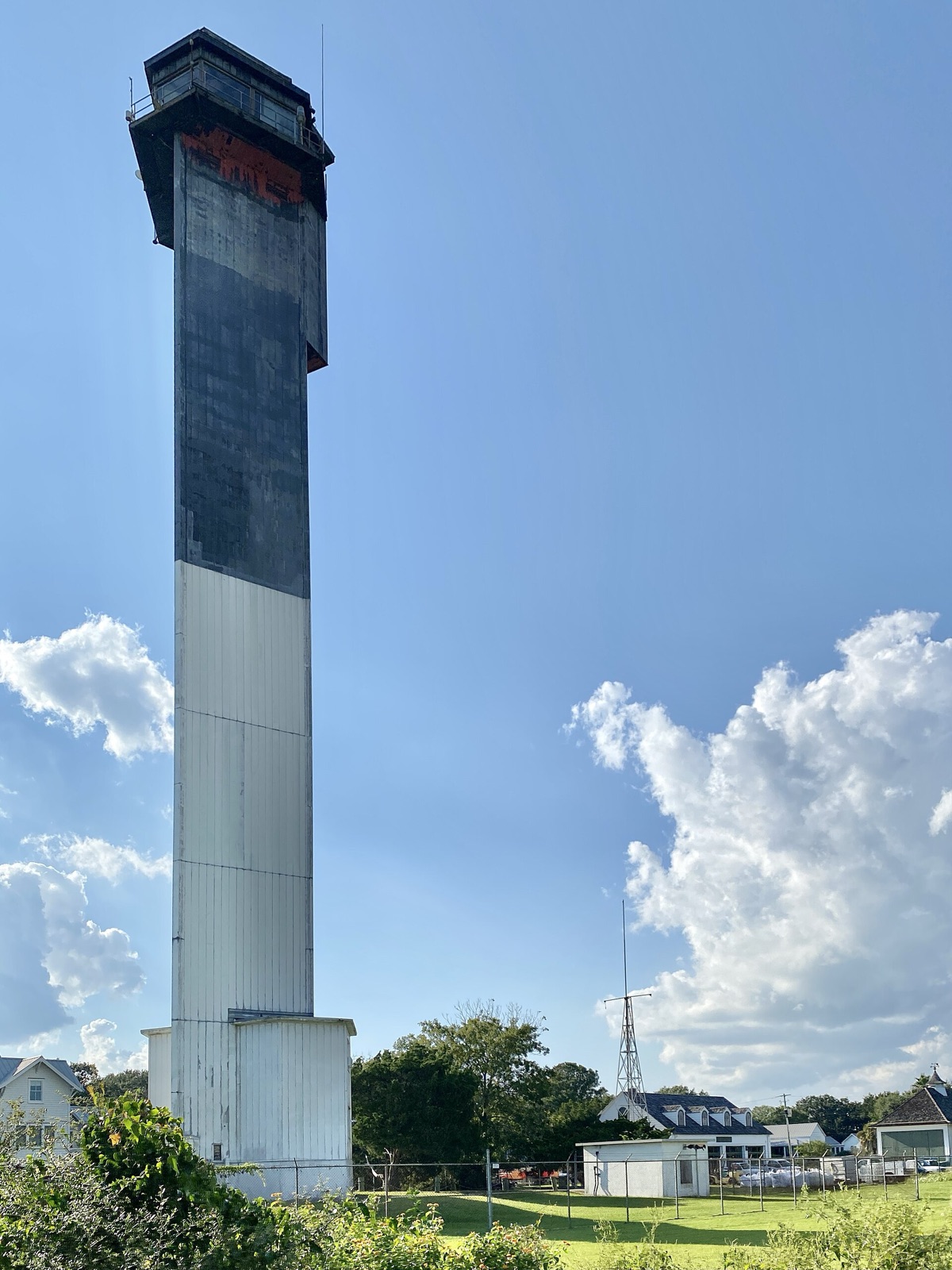
End with the odd one, because it makes a point worth ending on. The Sullivan’s Island Lighthouse near Charleston looks like no other beacon on this list. It is not a graceful cone or a striped tower. It is triangular, modern, more air-traffic-control tower than storybook lighthouse, and when it was first lit its beam was so blindingly powerful that the keepers could not safely tend it and the light had to be turned down.
Sullivan’s Island is here as the exception that frames the rest. It is the reminder that lighthouses were never really about beauty. They were about function, about throwing a light as far out to sea as the technology of the day allowed, and the graceful old towers we love so much were simply the best that brick and iron could do at the time. When the engineers finally built one purely for function, it came out looking like an airport. Which tells you that the beauty of the old lights was, in a way, a happy accident of their era. They were trying to save lives. They made something lovely almost by mistake.
Here is what all seven have in common, and it is the reason they still draw us.
Nobody needs them anymore. The ships that pass now navigate by satellite, and the great glass lenses and the whale-oil flames and the keepers who climbed the stairs are relics of a world that ended. By every cold measure, these towers are obsolete. And yet we moved a million bricks two thousand feet to save one of them. We rebuilt Tybee more than once. We formed societies and raised money and fought the sea to keep them standing, long after they stopped doing the only job they were ever built to do.
That is the thing worth keeping in mind as you stand at the bottom of one, looking up. We did not save these because we needed the light. We saved them because they are how the coast remembers itself, because a people that would let its lighthouses fall would be a people that had forgotten something about who watched over them, and at what cost. They stand watch still. Only now, we are the ones keeping them.
These seven are only the Atlantic shore. Around the tip of Florida and along the Gulf stand more of them, squatter and stranger in the flat coastal light, guarding a different kind of water. And back in the quiet sounds behind the barrier islands, out over the shallows, once stood the oddest lights of all, little houses on stilts that hovered above the water on iron legs. We will get to those. A coast this long does not give up its beacons all at once.
The South, shared.