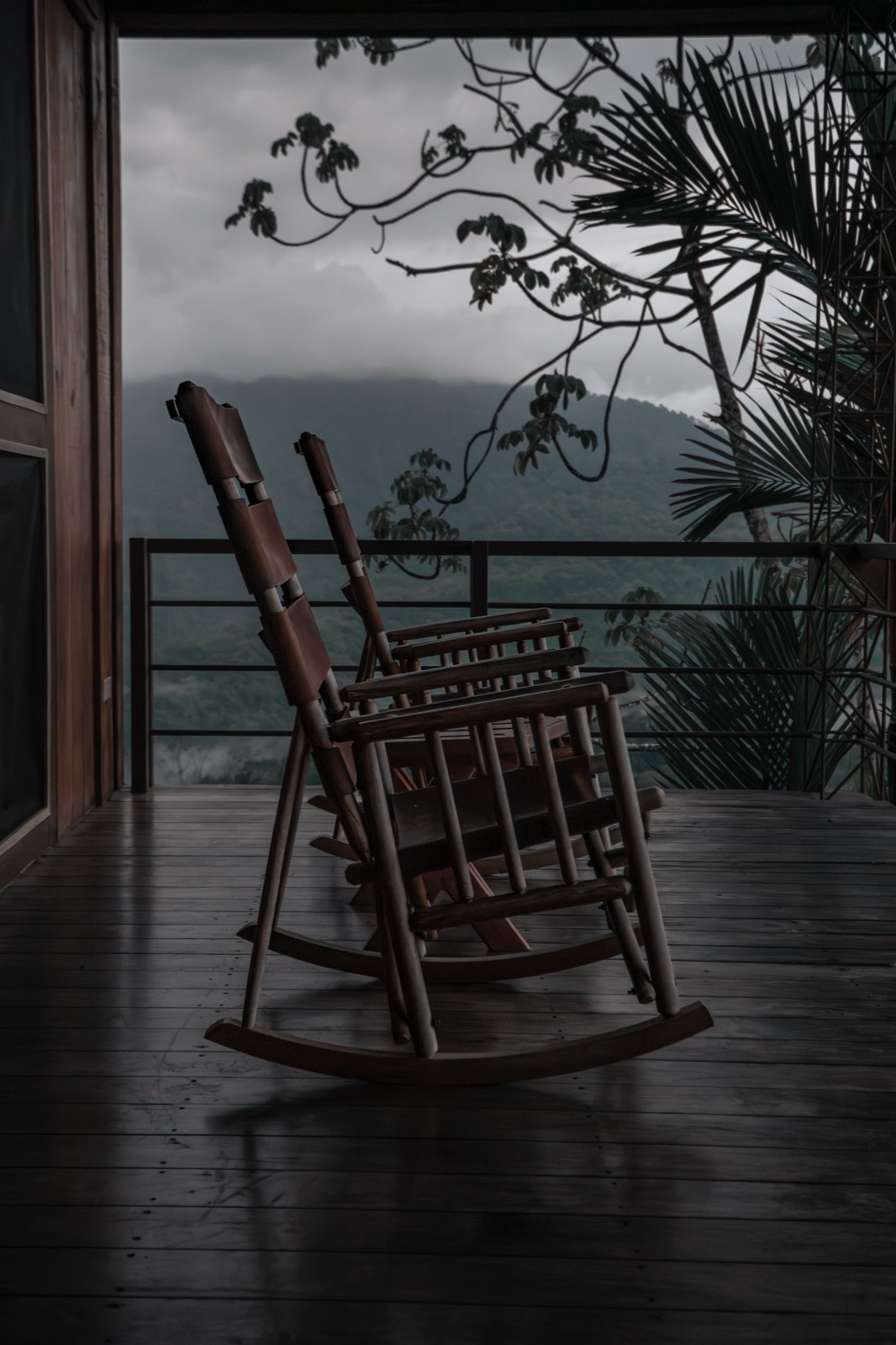
Photo: Paul Bill / Pexels
The Storytellers' South: A Halloween Night of Porch-Told Tales
It is Halloween night, and all across the South the oldest art the region has is being practiced yet again.
Not the carving of pumpkins, though that is happening too. The telling of stories. Because before the South was famous for anything else, before the food and the music and the manners, it was a place where people told stories out loud to one another. On this night of all nights, that ancient art comes into its own. Let me make the case, on Halloween, that the true beating heart of Southern culture is not any single thing you can point to. It is this. We are a people who tell stories, and we tell them to each other’s faces.
Think about where Southern culture actually lives and gets passed down. Not, for most of our history, in books. It lives in the voice. It lives on the front porch of a summer evening, where the grown folks sit and talk while the children catch lightning bugs and half-listen and soak it all in. It lives around the fire and the hunting camp and the fish fry. It lives at the kitchen table after the meal is done and the dishes have gone cold, and nobody has gotten up yet, because the story is not finished and nobody wants it to be. It lives on the liars’ bench, that honored institution outside the courthouse or the country store where the old men gathered to swap tall tales, each one stretching the truth a little further than the last, everybody knowing it and nobody minding, because the point of the liars’ bench was never accuracy. It was the telling. It lives in the pew and the pulpit, for the South’s great preachers are great storytellers first, working a congregation with repetition and rising cadence and call-and-response, and no tradition on earth has done more to keep the spoken word powerful than the Southern church. It lives wherever Southern people gather and one of them says the magic words, “Did I ever tell you about the time,” and everybody settles in, because they know what is coming and they want it anyway, even for the hundredth time.
This is oral tradition. The South has kept it alive longer and richer than almost anywhere else in modern America. Our history has been handed down this way. The family stories, the county legends, the tales of the war and the flood and the year the crops failed and the great-uncle nobody talks about. Our humor lives here, in the tall tale and the long windup and the perfectly-timed turn. A Southerner telling a funny story is doing a kind of jazz, stretching it, adorning it, taking the scenic route on purpose, because the point was never just to get to the end. Even our grief and our hard truths get carried in stories, because a story can hold what a plain fact cannot.
And the tradition runs so deep that it has its own heroes and its own holy places. Up in the mountains of Appalachia, there is a whole cycle of old folktales built around a character named Jack, the same humble Jack of the beanstalk, a poor and unpromising boy who wins the day again and again through wit and luck and good humor. These are the Jack Tales, carried down through the mountain families for generations. The most famous teller of them was a man named Ray Hicks of Beech Mountain, North Carolina, who told them in an old mountain dialect so pure it was like hearing the eighteenth century speak, and who was honored as a national treasure for it. And not far away, in Jonesborough, Tennessee, the oldest town in the state, the whole nation’s storytelling revival was born. Since 1973, tellers have gathered there every fall for the National Storytelling Festival, tens of thousands of people sitting under tents to do nothing but listen to stories told aloud. A thing that sounds impossible in our restless age, and is somehow, in that Southern town, one of the most beloved gatherings in the country.
I have to tell one harder part of this story too, because it belongs to the truth of it. Some of the most famous Southern tales ever put into print were the Uncle Remus stories, the tales of Br’er Rabbit outwitting the bigger, stronger animals, written down by a white Georgia journalist named Joel Chandler Harris starting in 1880. And here is the thing that must be said plainly. Those trickster tales were not his. They came out of the deep oral tradition of enslaved African Americans, and the sly genius at their heart, the small weak creature outsmarting the big powerful ones, carried a coded and courageous meaning for the people who first told them under slavery. Harris collected them, and framed them through the figure of a contented old former slave spinning yarns on the plantation. That nostalgic framing, later made far worse by Hollywood, has rightly been criticized ever since. The tales themselves are a genuine and brilliant inheritance of Black Southern storytelling. The plantation wrapper Harris put around them is the part we have learned to set aside. It is a reminder that the South’s storytelling tradition is not a simple or an innocent thing, but a shared and tangled inheritance. The honest way to honor it is to remember whose voices the best of it truly came from.
And our ghosts, of course, live here most of all, which is why Halloween belongs to the storyteller. The ghost story is oral tradition at its purest and its most delicious. It cannot really be read off a page and have the same power. It has to be told, in a low voice, in the dark, by someone who knows how to pause in the right places and drop their voice at the right moment and let the silence do the work, while the listeners lean in and the hair stands up on their arms. Every Southern community has its tellers, the ones who know the old local tales and know how to tell them. On a night like this they are worth their weight in gold. Gather the young ones close on the porch, let the dark come down, and let the old teller begin, and you are handing down not just a scary story but the whole tradition of handing-down itself. The child who listens spellbound on the porch tonight is learning, without knowing it, how to be a teller someday.
That is the thing I want to leave you with on this Halloween, the reason this whole publication exists, if I am honest. Blessed South is, in the end, an attempt to keep telling the stories. The towns and the recipes and the crafts and the coast and the Sunday letters, all of it is the old porch tradition carried on by other means. One Southerner saying to a gathered circle of others, “Let me tell you about this place, this dish, this way of life, this thing worth remembering.” We are a storytelling people. It is the deepest and truest thing about us. And a story only stays alive as long as somebody keeps telling it.
So tonight, on the oldest storytelling night of the year, do the Southern thing. Turn off the screens for an hour. Get some people out on the porch, or around a fire, or gathered in a low-lit room. Let the dark come on. And tell the stories. The scary ones, sure, the ghost tales and the local legends, this being Halloween. But the other ones too. The family stories. The one about your grandfather. The Jack tale, if you know one. The one everybody has heard a hundred times and wants to hear again. Tell them out loud, to real faces, in real time, the way it has always been done down here.
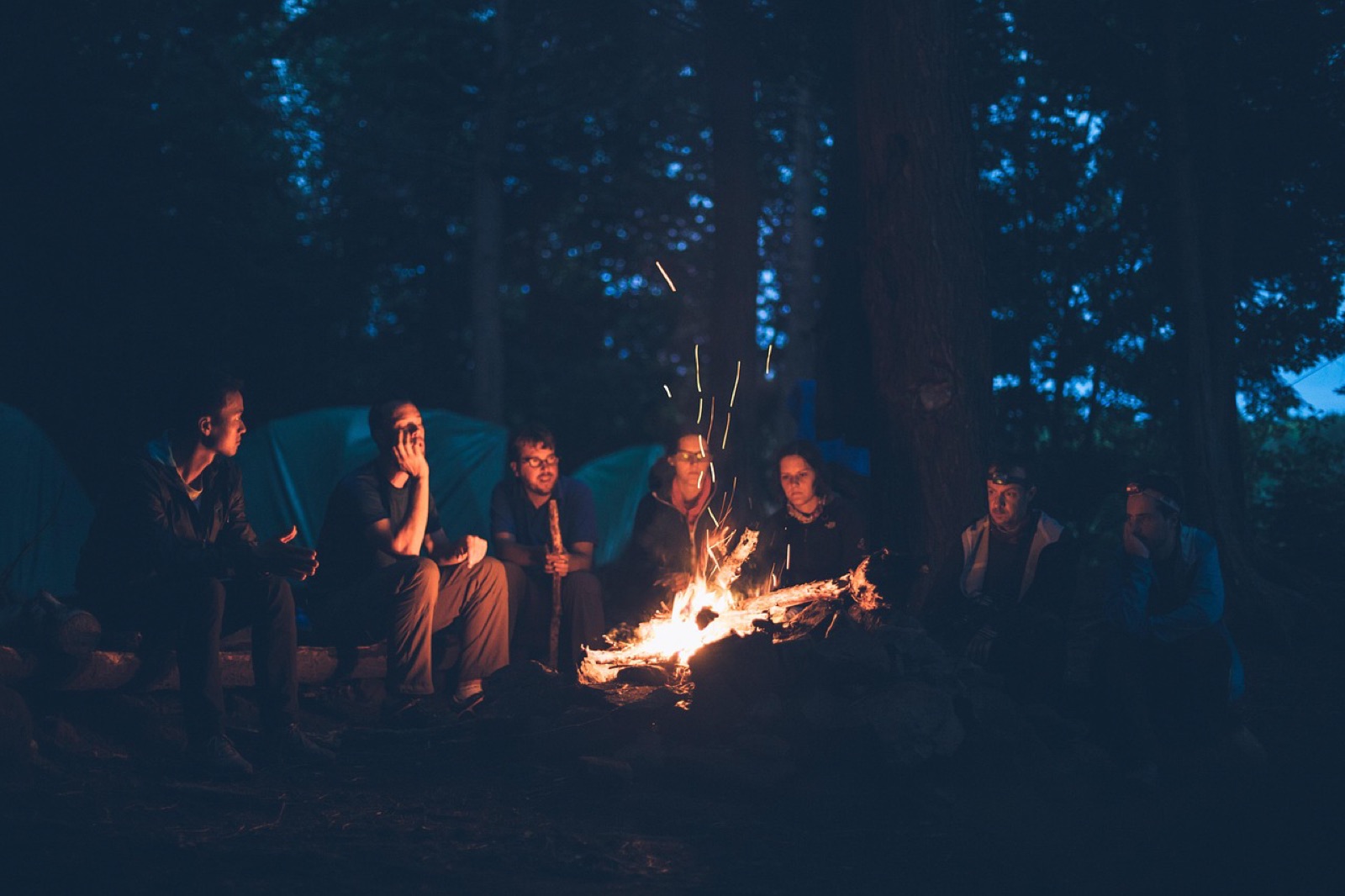
Because that is how the South keeps itself alive, and always has. One voice, one porch, one gathered circle, one story handed down to the next set of listeners, who will grow up and gather their own circle and tell it again. The light is on tonight, on porches all across the South, over people telling one another who they are. Pull up a chair. It is your turn to listen, and one day soon, it will be your turn to tell.
The South, shared.
Keep Reading
Places
The Haunted South: Hayrides, Ghost Stories, and the Best Fun of the FallThe South does the spooky season better than anybody, and for the fun of it: hayrides, corn mazes, porch ghost stories, the happiest shiver of the year.
Places
The Blue Ridge Parkway: The Most Beautiful Drive in the SouthFour hundred and sixty-nine miles of ridgeline, no billboards and no hurry. America's favorite drive, at its most beautiful in October.
Places
The Southern Fair: Blue Ribbons, Midway Lights, and the Season of Coming TogetherThe midway lights, the livestock barns, the blue-ribbon pies, and a whole county gathered up in one glowing place. A love letter to the fair.