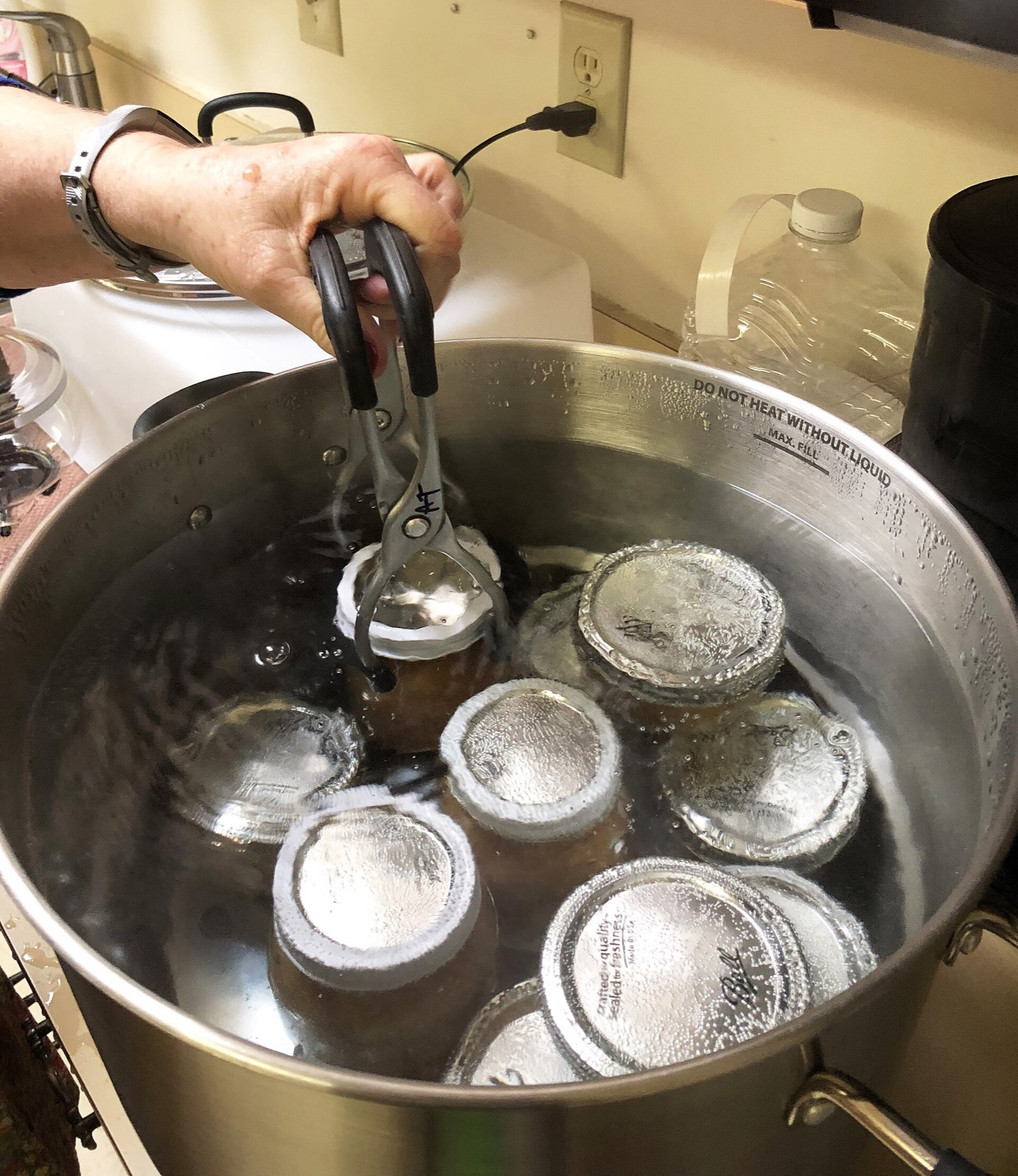
Photo: Alabama Extension / Wikimedia Commons (CC0)
The Best Southern Thing We Saw This Week: The Community Cannery Still Running
The best Southern thing we saw this week was steam.
It came out of a low cinderblock building with a hand-painted sign that said CANNERY, and a line of people carrying in bushels of the fall harvest to put up for winter, the way it has been done here the better part of a century.
You may not know such a thing exists. Most of them are gone. But there was a time, through the Depression and the war years, when nearly every rural Southern community had a community cannery. The school ran it, or the county, or the extension service. The idea was beautifully simple. Not every family could afford the equipment to safely put up a whole garden at home, the big pressure canners and boilers and sealers. So the community built one shared facility, with the equipment and someone who knew how to run it, and everybody put up their produce there, together, for pennies.
The one we came upon this week is still running.
Still open, this very fall, doing exactly what it was built to do.
Walk inside and it is a scene from another era, happening right now. Steam kettles and pressure retorts. Long stainless tables. Racks of gleaming jars. And the people, farm families and gardeners and church groups, bushels of tomatoes and beans and corn and squash spread across the tables, everybody snapping and peeling and blanching and packing, the room loud with talk and hot with steam. An older man who has run the place for decades moves among them, checking seals, minding the pressure, teaching the young ones what they never learned at home.
Here is what got us.
It was not just efficient, though it was that. It was communal. These people were not each canning alone in their own hot kitchens. They were canning together, in one shared room, the experienced hands showing the new ones, the whole labor of putting up the harvest turned back into the neighborly, shoulder-to-shoulder thing it used to be everywhere and almost nowhere is now. Somebody’s grandmother was teaching somebody else’s granddaughter how to know when a jar had sealed. You cannot buy that. It was just happening, for free, in a cinderblock building on a fall afternoon.
There is a whole philosophy in that old cannery. Some things are better shared than owned. A community is richer for a few good things held in common than for everybody owning a lesser version alone. The knowledge of how to feed yourself through a winter is worth passing hand to hand in a warm loud room, and not letting die.
Most canneries closed. Home freezers came in, fewer folks gardened, the old communal habits thinned. It would be easy to write the whole thing off as a relic.
But relics do not steam.
This one was going full tilt, jars stacking up, neighbors laughing, the harvest coming in and getting put up the old shared way, right on schedule, another fall.
If your county still has a community cannery running, count yourself lucky. Go see it. Carry in a bushel of something yourself this fall. And if yours has been shut a long time, remember it was there, and why, and what it knew that we would do well not to forget: we are, all of us, better off putting up the harvest together.
The South, shared.
Keep Reading
Southern Stories
The Best Southern Thing We Saw This Week: The Pumpkin Patch a Family KeptA family pumpkin patch that opens its gates every October and, in doing so, keeps a family, a piece of land, and a whole town's autumn alive.
Southern Stories
The Best Southern Thing We Saw This Week: The Fall Revival Under a TentA tent, some folding chairs, a piano hauled out into the evening, and a whole community gathering to sing as the season turns.
Southern Stories
The Best Southern Thing We Saw This Week: Friday Night LightsA small-town high school football game, where the whole town shows up under the lights and remembers, for a few hours, that it is one thing.