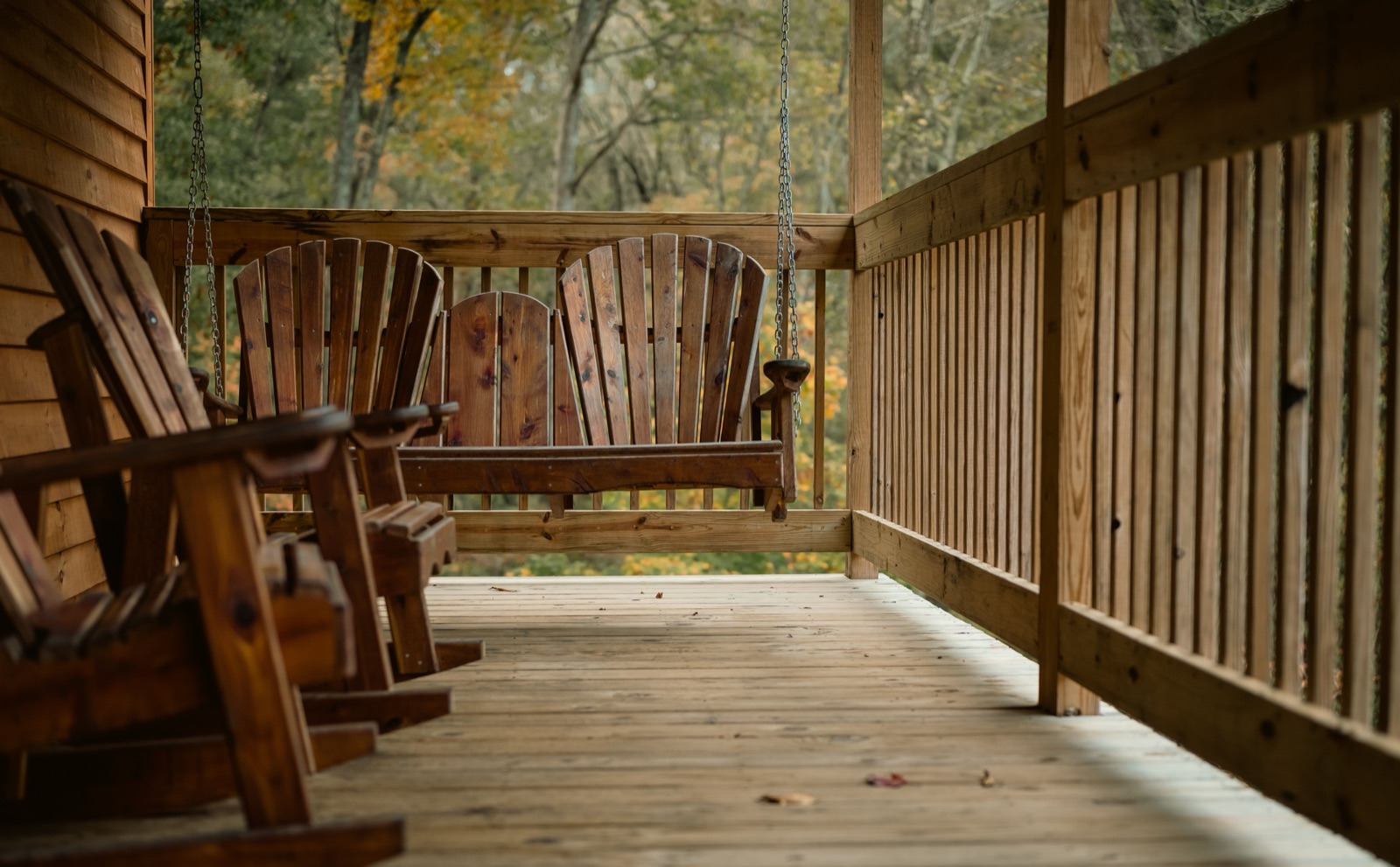
Photo: Chris F / Pexels
The Front Porch, Part Two: On the Art of Sitting a Spell
We wrote once, in the early days of this magazine, in defense of the front porch, about why the South built them and what was lost when houses turned their backs on the street and moved their living out to the deck behind the fence. This is the companion to that piece, and it is about something harder to build than a porch. It is about what people did there.
Because a porch is just lumber until somebody sits on it. What made the Southern front porch a great institution was not the architecture. It was the practice, the deeply held and now nearly vanished art of sitting a spell, of going out after supper into the cool of the evening and lowering yourself into a rocker and doing, in the strictest sense, nothing at all. No screen. No task. No plan. Just sitting, and watching the yard go from gold to gray, and letting the day drain out of you as the light drained out of the sky.
It is worth taking seriously, because we have almost entirely lost it, and I am not sure we understood what it was for until it was gone.
The rules of doing nothing
Sitting a spell had a form, though nobody would have called it that. It was an unhurried, low-stakes, open-ended kind of leisure that our current world has almost no room for.
You went out to the porch when the work was done and the dishes were washed, in that soft hour when the heat finally broke. You might carry a glass of tea. You sat, and you rocked, and you were available. That was the key thing about the porch: it made you available without making any demands. If a neighbor walked by, you spoke, and maybe they came up and sat, and maybe they did not. If nobody came, that was fine too. You watched the lightning bugs come up out of the grass. You listened to the evening sounds start, the crickets, a dog somewhere, a screen door down the street. You let your mind wander or you let it go quiet. The whole activity, if you can call it an activity, was to be present and unhurried in a particular place at a particular time of day, and to let whatever happened, happen.
Conversation on a porch had its own unhurried rhythm, full of long comfortable silences that would be unbearable indoors. You did not have to keep it going. You could sit with someone for ten minutes without a word and it meant nothing except that you were both content. Children caught fireflies in the yard and the grown-ups half-watched them and half-talked and mostly just sat, and the evening passed, and nobody was in a hurry for it to be over, because passing the evening was the entire point.
What we traded it for
We do not sit spells anymore, most of us. And it is easy to see what happened, because we all did it and we all know why.
The air conditioning pulled us inside, where the cool was, and the television gave us something to point our attention at once we got there, and the porch went quiet. Then the phone arrived, and the phone finished the job, because the phone is the exact opposite of sitting a spell. Sitting a spell is open, unhurried, and present. The phone is closed, urgent, and elsewhere. You cannot watch the lightning bugs come up out of the grass if your eyes are down in a screen, and you cannot be available to the neighbor walking by if you are already somewhere else entirely, scrolling through the whole loud world.
I do not want to be too hard on any of it. The air conditioning is a mercy in a Southern August and I would not give mine back. But we traded something real for our screens and our cool inside rooms, and I think we know it, because there is a hunger now for exactly the thing the porch used to give, all these people paying good money for meditation apps and digital detoxes and mindfulness retreats, chasing a state of unhurried presence that a Southern grandmother had for free every evening in a rocking chair.
Try it once
Here is my suggestion, and it costs nothing, and you can do it tonight.
Find a porch, or a stoop, or a step, or a chair in a carport, anywhere out of doors that faces the going-down of the sun. Go out after supper, in the cool of the evening, and take nothing with you. Leave the phone inside. Sit down. And then just sit, and watch the light change, and let the evening come on, and do not reach for anything to fill the time, because the time is not a thing to be filled. It is a thing to be spent, slowly, on purpose, doing nothing.
It will feel strange at first, maybe even uncomfortable, because we have trained ourselves so thoroughly out of stillness. Sit through the strangeness. Let it pass. And somewhere in the second ten minutes, when the lightning bugs start to come up and the crickets start and the sky goes from gold to lavender to gray, you may feel something loosen in your chest that you did not know was clenched, and you may understand, all at once, what all those people were doing out on all those porches for all those years.
They were not doing nothing. They were doing the most human thing there is, which is to be somewhere fully, in the company of the evening, in no hurry at all. The porch is still there, or one is, close enough. The evening still comes on the way it always did. All that is missing is us, out in the cool, sitting a spell.
The South, shared.
Keep Reading
Southern Stories
The Courthouse Square, and the Town That Grew Around ItIn a thousand Southern towns, everything points to the same place: the courthouse on the square. Here is why it was built that way, and why it still holds.
Southern Stories
The Last of the Whole-Hog PitmastersCooking a whole pig over wood coals from dark to dawn is one of the oldest crafts in the South, and one of the fastest disappearing.
Southern Stories
The Last of the Water-Powered MillsA creek, a wheel, and two stones once ground a community's cornmeal. A few of those mills still turn, and the meal they make tastes like nothing from a bag.