Photo: Amy C. Evans / Southern Foodways Alliance / Wikimedia Commons (CC BY 2.0)
The Last of the Whole-Hog Pitmasters
The fire is lit at night, which is the first thing that tells you this is not ordinary cooking.
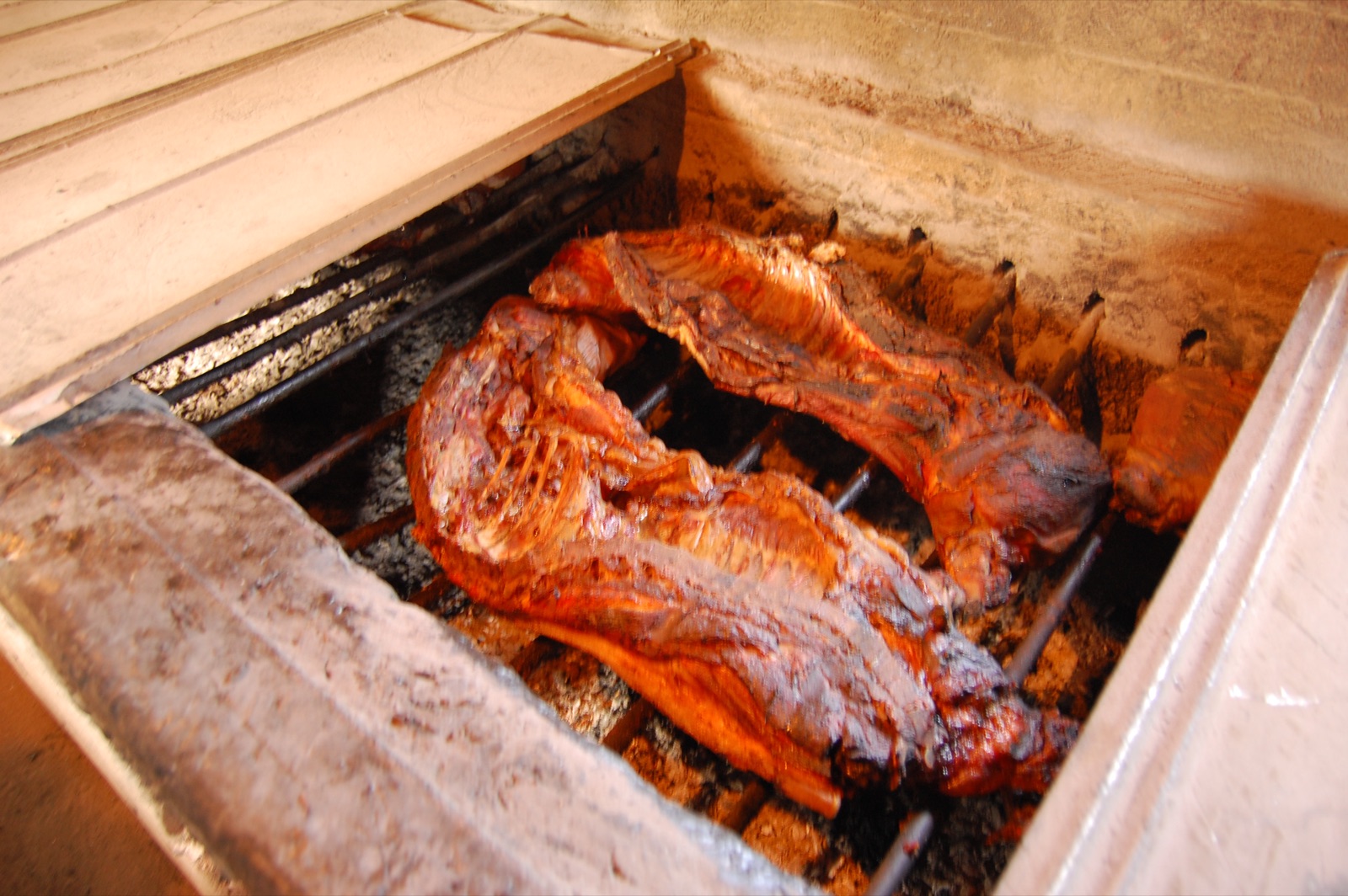
To make whole-hog barbecue the old way, you start in the dark. You build a bed of coals from hardwood, oak or hickory, and you lay the whole pig over it, the entire animal, snout to tail, and then you do not leave it for the better part of a day. You tend the fire. You shovel fresh coals under the thick parts where the meat is slow to give up. You watch the temperature, which has no dial and no alarm, only the feel of it and the smell of it and decades of knowing. The pig cooks low and slow through the night and into the morning, and somewhere near the end the skin goes crisp and the meat goes so tender it falls off the bone on its own.
Then the pitmaster chops the whole thing together. The lean and the fat and the crackling bits of skin, all of it, into one chopped pile, dressed with almost nothing, just a thin splash of vinegar and pepper and salt. No thick sweet sauce. The smoke is the seasoning. That blend of every part of the animal in a single bite is what gives the real thing its depth, and it is a flavor you cannot get any faster way.
This is one of the oldest foodways in the South, and one of the hardest to learn.
It takes years to learn to read a fire and a hog in the dark. There is no recipe for it, not really, nothing you could write on a card. You learn the weight of a shovel of coals and where to place it. You learn what the smoke should smell like at three in the morning and what it means when it changes. You learn by standing next to someone who already knows, season after season, watching, until one night you are finally trusted to tend the coals yourself. That is the only way the knowledge moves, hand to hand, the way the best knowledge in the South has always moved, and it cannot be rushed.
And it is disappearing.
You hear the same thing on the barbecue trail that you hear on the shrimp docks. There used to be more. The old pitmasters are aging, the ones who learned it from the generation before them, and when one of them finally hangs it up, more often than not the pit goes cold for good. The work is brutal. It is an all-night vigil over a hot fire for a thin margin, in an age when you can smoke a few pork shoulders in a fraction of the time and call it close enough. The young people who might have carried it on have done the math, the same math the shrimpers’ children did, and many of them have chosen a life with regular hours and a regular check. No one can blame them.
So the wood-fired whole-hog places thin out, year by year. Some of the most famous have stood for generations, packed every day, the chopping block worn down to a smooth bow in the middle from decades of the same motion. But a famous few do not make a tradition safe. For every one that draws pilgrims from across the country, there are small-town pits that simply close when the man who ran them retires, taking with them not just a restaurant but a gathering place, the spot where the whole town used to mix on a Saturday, doctor next to farmer, everyone holding the same paper tray.
This is not really a story about pork.
It is a story about a kind of knowledge that lives in a person’s hands and cannot be written down, not fully, not the part that matters. A pitmaster is not just someone who cooks a pig. He is the keeper of a way of reading fire and meat and time that took a lifetime to learn and takes a lifetime to pass on. When the last of them puts down the shovel, the pit does not just lose a cook. It loses a craft that took generations to perfect.
Some things are worth keeping not because they are easy or efficient, but because they hold so much patience and skill in them, and when they go, they are nearly impossible to get back. The all-night fire is one of those things. It still burns, in fewer places every year, tended from dark to dawn by people who learned it the only way it can be learned, and the South that lets it go cold will be missing something it cannot easily relight.
The South, shared.