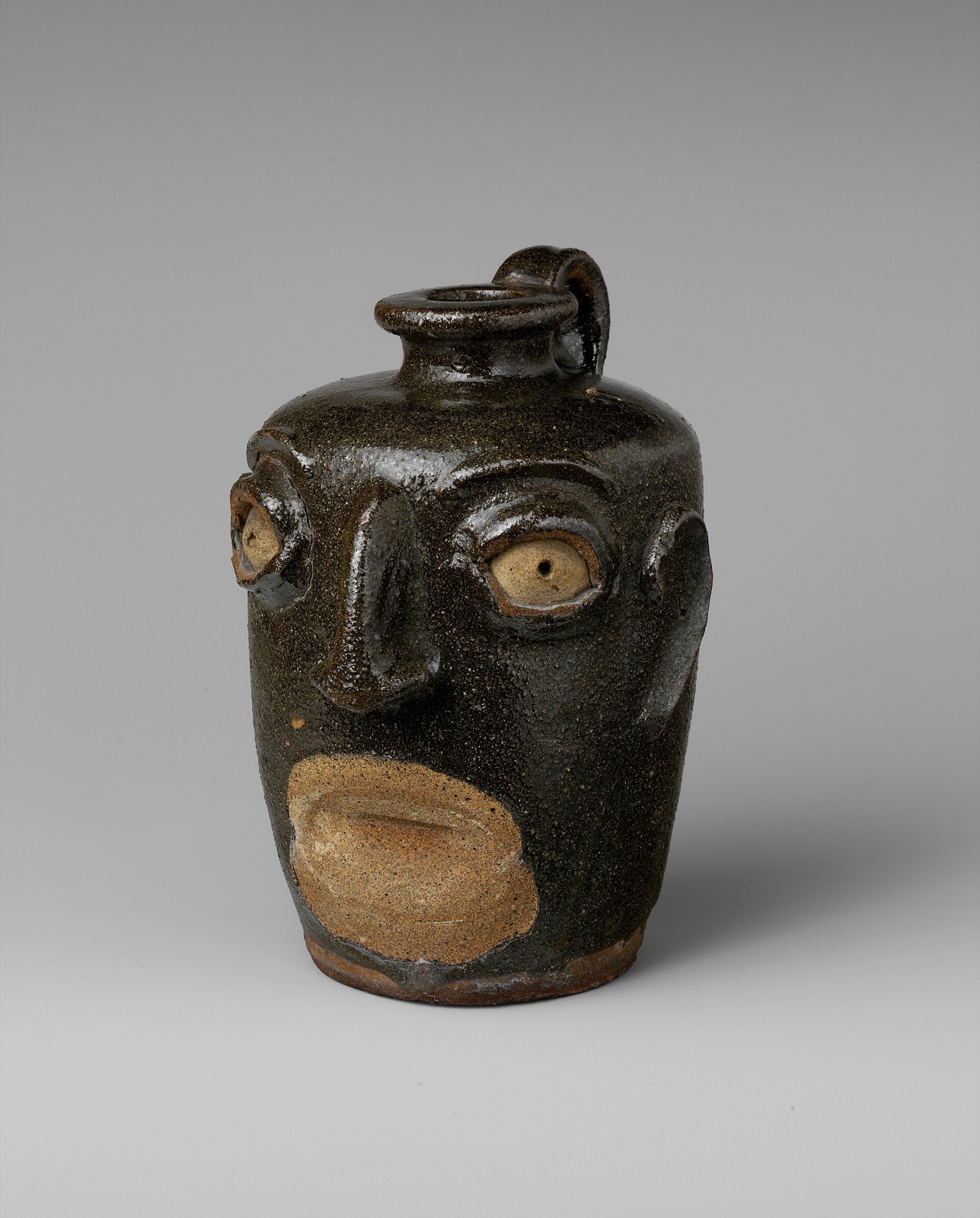
Image: The Metropolitan Museum of Art / Wikimedia Commons (CC0)
The Face Jugs of the Southern Hills
A face jug stares back at you.
Of all the folk crafts of the American South, this is the one that stops people in their tracks the first time they see it. Picture a simple stoneware jug, the kind a potter has thrown for centuries, but with a face pressed and sculpted onto the front, a wild, grotesque, grimacing human face, bulging eyes and bared teeth, ugly on purpose and unforgettable. Strange, unsettling, genuinely powerful. And they come out of a deep and serious history in the Southern hills.
The story is older and heavier than most people realize, and it deserves to be told with care.
The tradition traces most strongly to the enslaved African American potters of the Edgefield district of South Carolina in the years before the Civil War, a great center of Southern stoneware. Among the utilitarian jugs and crocks they threw by the thousands, some potters made these extraordinary face vessels. Scholars believe they carried real meaning brought across the ocean from West and Central African traditions, spiritual objects, perhaps protective, perhaps used at graves or in ritual.
These were not novelties. They were, very likely, sacred and serious things, made by people held in bondage, reaching back through the clay to a spiritual world their captors had tried to take from them. You cannot look at an old Edgefield face jug and see only a folk curiosity. There is a whole history of endurance and belief pressed into it.
Over the generations the tradition spread and changed and traveled up into the mountain South, into the potting communities of the Southern Appalachians, in North Georgia and the Carolinas, where whole families of folk potters carried it on. New stories attached to it. One much-repeated bit of mountain folklore holds that the ugly jugs were made to hold moonshine or something dangerous, set up on a shelf, their fearsome faces meant to scare the children, and maybe the haints, away from what was inside. Whether that was ever their true purpose or a story told after the fact, it stuck. Some say the fiercest faces were meant to guard a grave, standing watch, ugly enough to turn away whatever might come.
What is certain is that the face jug became one of the signature folk arts of the Southern hills, handed down through families of potters, each maker giving the faces their own character. And it is still being made today. Go to the right pottery towns and folk-art fairs in the Southern Appalachians and you will find potters, some from families that have thrown pots for many generations, still making face jugs by hand. Each one is sculpted by eye, so no two faces are ever quite alike. Some are fearsome. Some are almost comic. Some are strangely dignified. And all of them carry that jolt of a human face where you did not expect one, staring back out of the clay.
There is a reason these jugs have their moment every October, as the nights draw in and folks turn toward the spooky season. A face jug is folk art with a shiver in it. It feels like it knows something. It seems to be about the boundary between the living world and whatever lies past it. In a season built around ghosts and the old dark stories, it fits right in. It is the South’s own homegrown piece of Halloween, except it is real folk art with real history, not a plastic thing from a seasonal aisle.
But the face jug is worth loving all year. It is a thread that runs from the enslaved potters of Edgefield, through the mountain folk potters of the Appalachians, all the way down to the makers still throwing them today. A tradition that carried spiritual meaning and human dignity through some of the hardest chapters of Southern history and out the other side, in the form of a strange face pressed into a jug. That is a heavy and remarkable thing for a piece of pottery to hold.
So if you come across a real hand-thrown Southern face jug this fall, from a potter who knows and honors where the tradition comes from, look at it a long moment. Let it look back. And if you take one home, set it on your shelf and know you are keeping company with one of the oldest, strangest, most deeply rooted folk arts the South ever made. It has been staring out of the clay for two hundred years, and thanks to the potters who keep the tradition alive, it is staring still.
The South, shared.
Keep Reading
Southern Makers
The Gourd Artists, and the South's Oldest HalloweenBefore the pumpkin, there was the gourd. Southern hands have dried, carved, and painted them for centuries, keeping an old craft alive.
Southern Makers
The Chair Caners, and the Seats That Outlast UsA caned seat wears out in a generation, but a good caner makes it whole again, weaving through the same holes his grandfather's chairs used.
Southern Makers
The White Oak Basket Makers of AppalachiaA few mountain hands can still turn a living white oak into a basket that outlasts its maker. It begins not with weaving but with a tree.