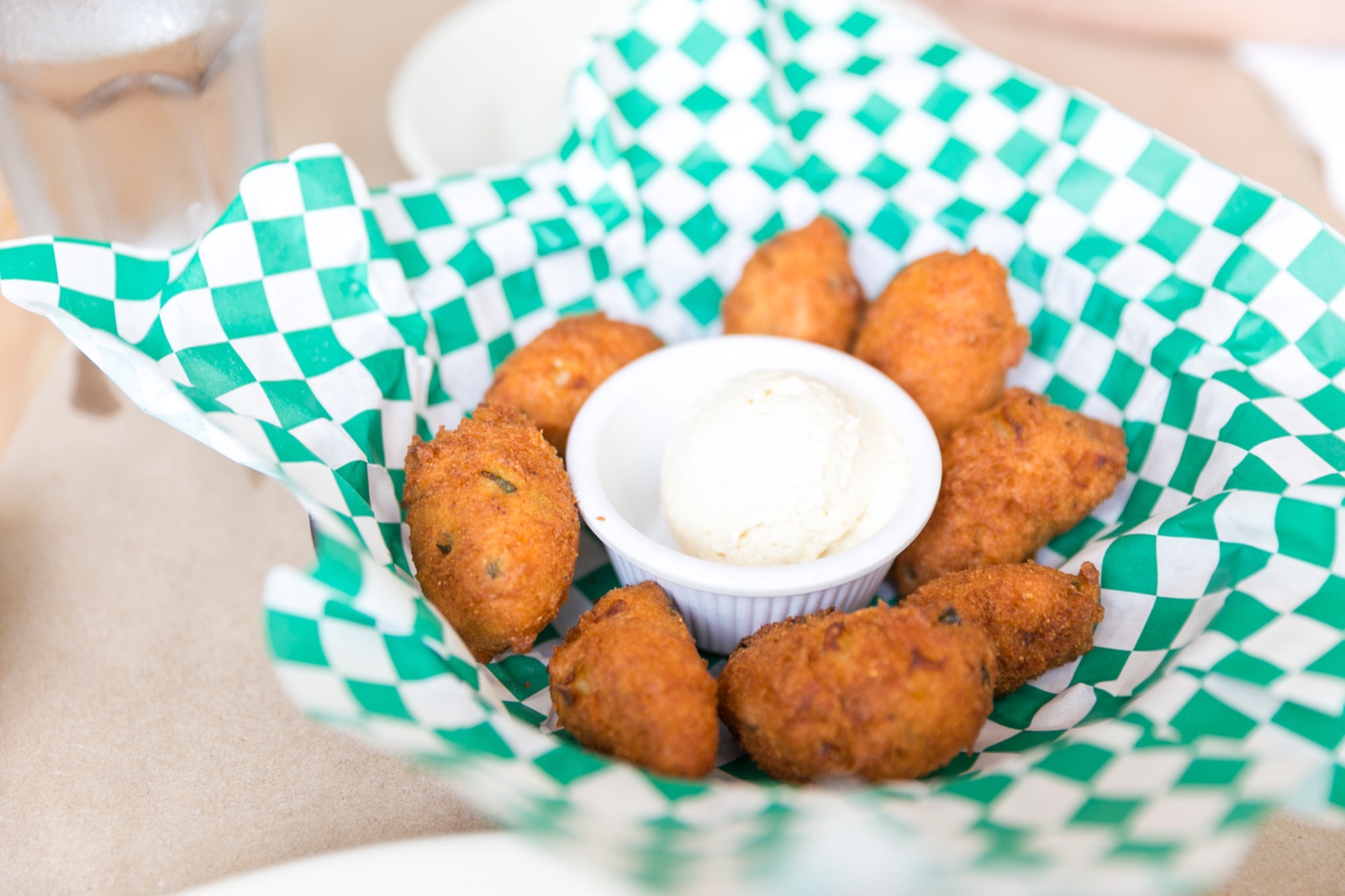
Photo: City Foodsters / Wikimedia Commons (CC BY 2.0)
From the Church Cookbook: Fried Green Tomatoes, or What to Do With the Ones That Won't Ripen
Fried green tomatoes began, like a lot of good Southern food, as a way to not waste something.
At the end of the season, or after a storm knocked the vines down, or simply because the garden gave you more than the summer had time to ripen, there were always green tomatoes. Hard, tart, unlovely things, no good sliced raw on a sandwich the way a ripe one is. But the South has never been a place that threw food away when a little cornmeal and a hot skillet could fix it, and somewhere along the way somebody discovered that a firm green tomato, sliced thick, dredged in cornmeal, and fried, becomes something close to perfect. Crisp on the outside, tangy and juicy within, tart enough to cut the richness of the fry. A small miracle made from the thing you could not otherwise use.
They are a little addictive, is the honest truth. Fried green tomatoes have a way of disappearing off the plate faster than you can cook them, eaten hot and standing up in the kitchen before they ever make it to the table.
The most important thing is the tomatoes themselves. You want them good and green, firm to the squeeze, with no give and no blush of pink. A tomato that has started to ripen will be too soft and too sweet and will fall apart in the pan. Hard and green and tart is what you are after. Slice them a good quarter to half an inch thick, thick enough to hold together and stay juicy, and lay them out and salt them lightly while you set up your dredge.
The classic Southern coating is cornmeal, and cornmeal is what gives fried green tomatoes their particular crunch, coarser and more honest than a flour crust. Most cooks use a three-step dredge: a dip in seasoned flour, then a bath in buttermilk or beaten egg, then a press into cornmeal, or a cornmeal and flour mix, seasoned with salt and pepper. The flour helps things stick, the buttermilk carries the coating, the cornmeal makes the crust. Do not skip the first flour step, because it is what keeps the crust from sliding off in the pan.
Fry them in a cast-iron skillet in about a half inch of hot oil, not deep-frying, just enough to come up the sides of the slices. Get the oil hot before they go in, hot enough that a pinch of cornmeal sizzles on contact, because a tomato that goes into cool oil will sit and soak and steam instead of crisping. Lay the slices in without crowding, give them room, and let them go two or three minutes a side until they are deep gold and crisp. Turn them once, gently. Pull them onto a rack or a paper towel and salt them the second they come out, while the crust can still take it.
Eat them hot. That is not a suggestion, it is the whole point. Fried green tomatoes are at their glory in the first few minutes, when the crust is at its crispest and the inside is still steaming and tart. Some people serve them with a remoulade or a buttermilk dressing for dipping, and that is fine and good. But the first one, straight out of the skillet, salted and too hot to eat and eaten anyway, needs nothing at all.
The South, shared.
Keep Reading
The Southern Table
From the Church Cookbook: Banana Pudding, the Dessert That Feeds a CrowdWafers, custard, bananas, and a little patience. Banana pudding is the Southern dessert that shows up whenever people gather, and it never comes home full.
The Southern Table
Fried Okra: The Vegetable That Wins You OverRolled in cornmeal and fried crisp in a cast-iron skillet, okra converts even the people who swear they cannot stand it.
The Southern Table
Boiled Peanuts: The Taste of a Roadside SummerGreen peanuts simmered for hours in salty water, sold from roadside pots and gas-station crockpots, and eaten hot from a wet paper bag.