Photo: Bill Fitzpatrick / Wikimedia Commons (CC BY-SA 3.0)
Abbeville, South Carolina: The Town Where a Confederacy Began and Ended
Abbeville, South Carolina is where the Confederacy was cheered into being and where, five years later, it was quietly laid to rest.
No other town in America can claim that. It is a small place: a pretty square, an opera house, a handful of old churches and fine old homes. But it holds the whole terrible arc of a thing inside its few square miles.
Start with the beginning. On a November day in 1860, a month before South Carolina became the first state to leave the Union, a great crowd gathered on a rise of ground just outside town to rally for secession. They came fired up and certain, the way people are at the start of a thing, when nobody yet knows the cost. The speeches were given. The cause was cheered. The hill has been called Secession Hill ever since.
It may be the first place where the terrible momentum began to roll.
Now come forward five years, to May of 1865. The war is lost. Richmond has fallen. Lee has surrendered in Virginia. And Jefferson Davis, president of a country dissolving underneath him, is fleeing south with what is left of his government, trying to find some way, any way, to keep the cause alive.
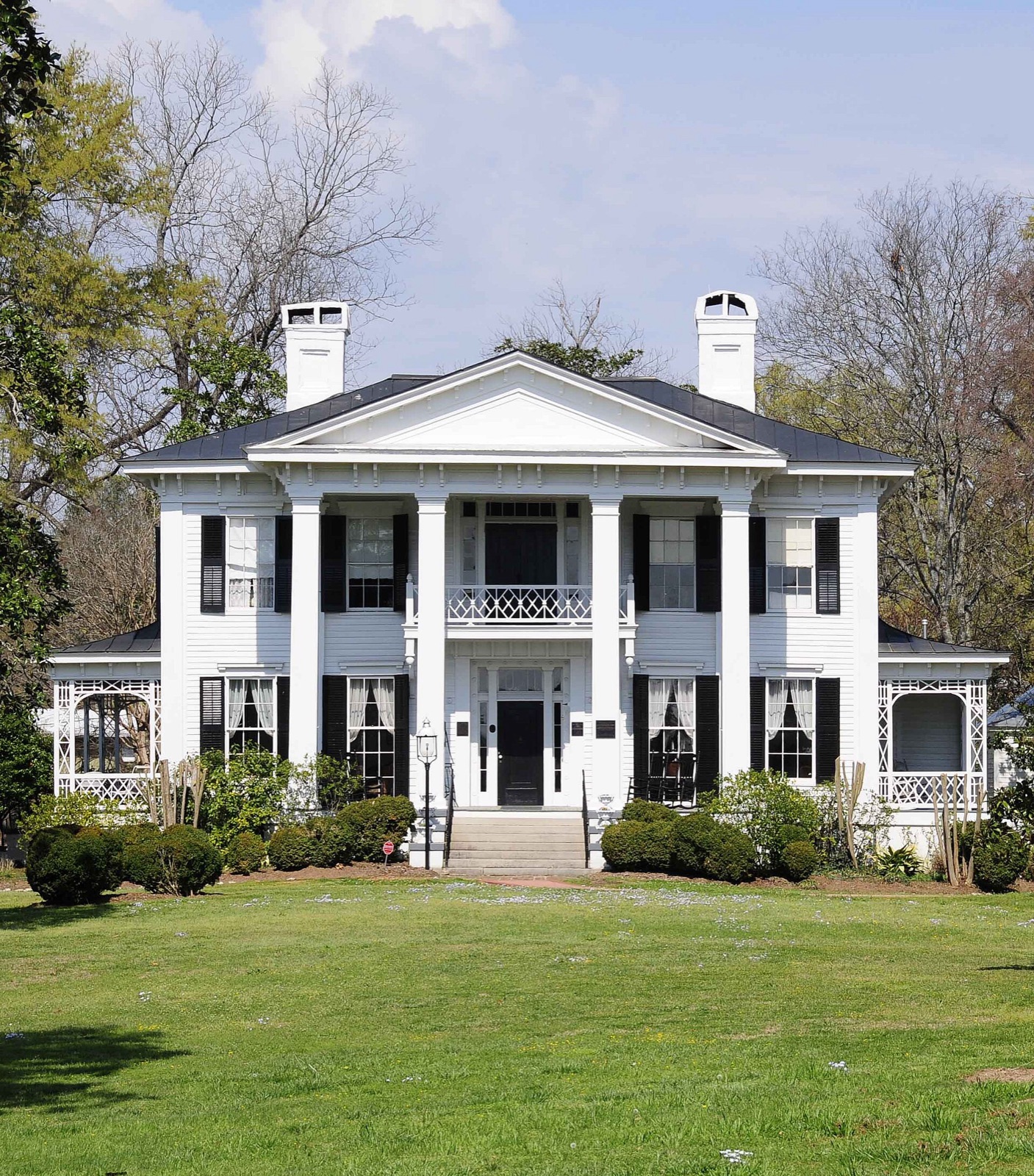
He comes to Abbeville. To the home of an old friend, Armistead Burt, a fine Greek Revival house on a quiet street. And there, in the drawing room, on the afternoon of May 2, 1865, he holds his last council of war.
His generals are with him. He lays out his plan. They will fight on, he says, take the war west of the Mississippi, keep the flame lit somehow. And his officers, hardened men who have followed him a long and bloody way, tell him no. Gently, but plainly. The cause is finished. The armies are gone. There is nothing left to fight with, and the only duty remaining is to see him safely away.
Davis argues. And then, in that room, he gives it up.
With that quiet surrender in a friend’s parlor, the Confederate government effectively came to its end.
The house still stands. It is called the Burt-Stark Mansion now, made a National Historic Landmark for exactly that reason: in its drawing room the Confederacy drew its last real breath. You can walk through it. You can stand in the very room. And it is a sobering thing to stand there, because you are standing at the end of the story whose beginning was cheered on a hill just up the road, and you can feel the whole arc of it close in that small space.
This is not really a story about a war.
I do not tell it to reopen old arguments. I tell it because it is true, and because Abbeville holds it with unusual honesty. Here is the whole shape of a thing in one town: the loud certain beginning on the hill, the quiet broken ending in the parlor. There may be no better lesson anywhere about how these things go: how easily a crowd can cheer a course whose true cost only comes clear at the end, in a much smaller and much lonelier room.
There is more to Abbeville than that heavy history, and I would not want you to think the town is only a monument. The square is genuinely lovely, anchored by the Abbeville Opera House, which opened in 1908 and still puts on shows. This is also Calhoun country: the great and controversial statesman John C. Calhoun was born near here and practiced law in town. You can get a good meal, walk the square, sit a while.
But stand in that parlor before you go. Abbeville earned its strange distinction the hard way, and it does not flinch from it. Come see the place where a nation was cheered into being on a hill and laid down in a front room, all within the same few square miles, all within the span of five years.
It is one of the most quietly powerful stops in the whole South.
The South, shared.
Keep Reading
Places
The Lighthouses of the South, Part Three: The Screw-Pile Lights of the SoundsThe last leg of our lighthouse journey, into the quiet sounds where a stranger light once stood: a little house on iron screws over the water.
Places
The Southern Town We Can't Stop Thinking About: Oxford, MississippiThe students come back, the Square fills up, and Faulkner's ghost keeps a quiet house at the edge of town. This is Oxford, Mississippi.
Places
Abingdon, Virginia: The Town That Traded Ham for HamletIn the far corner of Virginia sits a handsome mountain town whose famous theater once let farmers pay for a play with produce. It is still going.