The Lighthouses of the South, Part Two: The Gulf Coast
The Atlantic coast wears its danger on its face. You can see the fury in the water off Cape Hatteras, the way the currents pile up and the storms come roaring in. The Gulf is trickier, because the Gulf hides it.
Look out at the Gulf of Mexico on a calm summer evening and it seems the gentlest water in the world, warm and green and flat to the horizon, nothing at all like the churning gray Atlantic. But that flatness is the deceit. The Gulf coast is low and sandy, without the cliffs and headlands that let a sailor read the shore from far off, and just beneath its placid surface lie the sandbars and the shoals and the hidden reefs that have opened the hulls of more ships than the coast likes to count. A low coast is a dangerous coast, because you cannot see it until you are on it. And so the Gulf, too, got its lighthouses, a string of them running from the panhandle down around the peninsula, and they are a different breed from their Atlantic cousins, shaped by a different kind of danger.
This is the second part of our journey down the Southern coast by its beacons. The first ran the Atlantic shore. This one follows the Gulf, from the old sentinel at Pensacola down to the shell island at the bottom. The screw-pile lights of the sounds are still to come, in their own time.
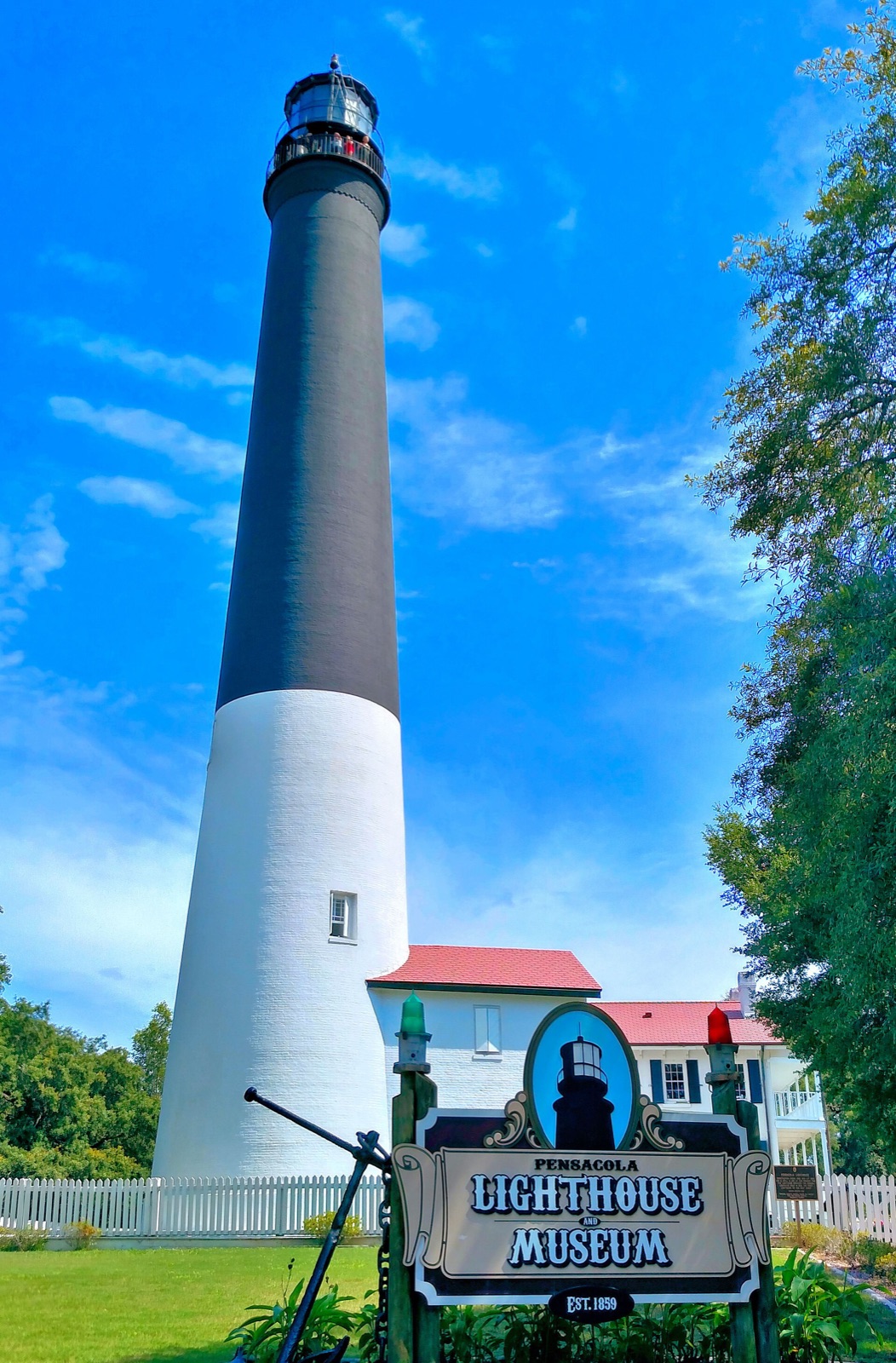
Pensacola, Florida
Begin where the Gulf lighting began. The Pensacola Lighthouse marks the oldest lighthouse site on the entire Gulf coast, a beacon having stood watch over the entrance to Pensacola Bay since the 1820s, when the young United States made Pensacola a naval station and decided its harbor needed a light. The tower standing now, tall and striking in white below and black above, was first lit in 1859, which means it was almost brand new when the country tore itself apart, and it carries that history in its stones.
During the Civil War the lighthouse changed hands with the coast around it, its light extinguished and its lens carried off, the tower itself catching fire from the fighting. It survived all of that, and lightning strikes, and a rare earthquake, and a century and a half of Gulf hurricanes, and it still stands on the naval air station, still throwing its light out over the bay where the Blue Angels now fly. Climb its 177 steps and you are standing in the oldest lighthouse tradition on the Gulf, in a tower that has seen the whole American story pass beneath it.
Cape San Blas, Florida
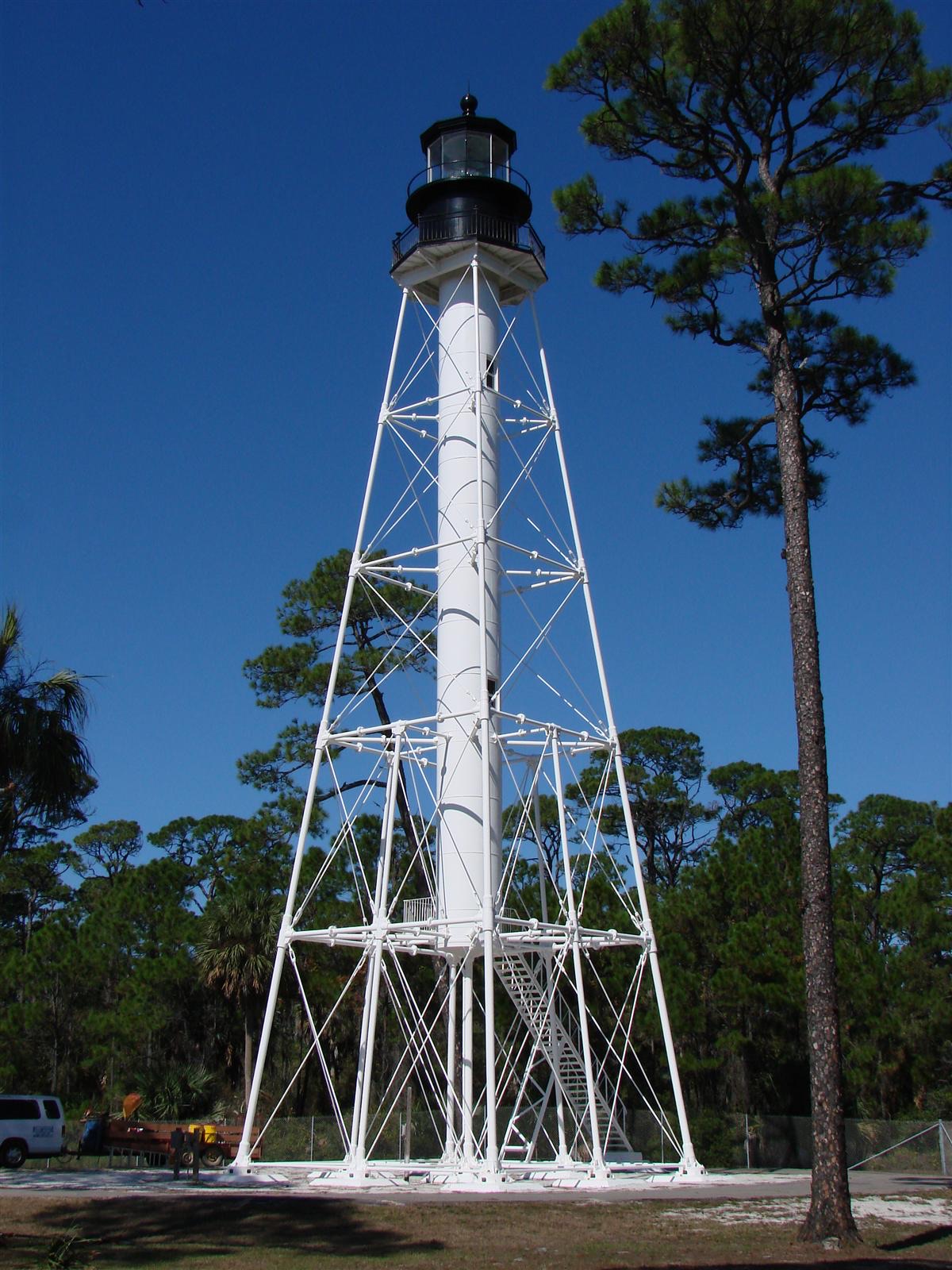
Some of these lights tell a story not of endurance but of stubbornness, of a coast that would not let a lighthouse stand and people who kept building anyway. The Cape San Blas Light, out on the panhandle’s Forgotten Coast, is the great example. The sea took it again and again. A tower went up in the 1840s and a storm knocked it down within a few years. The next one lasted only months before the same thing happened. The Confederates blew up the one after that. And when a tower finally did stand, the water crept up and surrounded it and threatened to topple it too, so they moved it, and later moved it again.
That is four or five lighthouses’ worth of trouble to keep one point of a low sandy cape marked. And they kept doing it, because the ships needed the light, and because there is something in people that refuses to let the sea win a fight like that. The Cape San Blas story is the Gulf coast in miniature: a soft, shifting, treacherous shore, and a stubborn insistence on lighting it anyway, no matter how many towers it cost.
Ponce de Leon Inlet, Florida
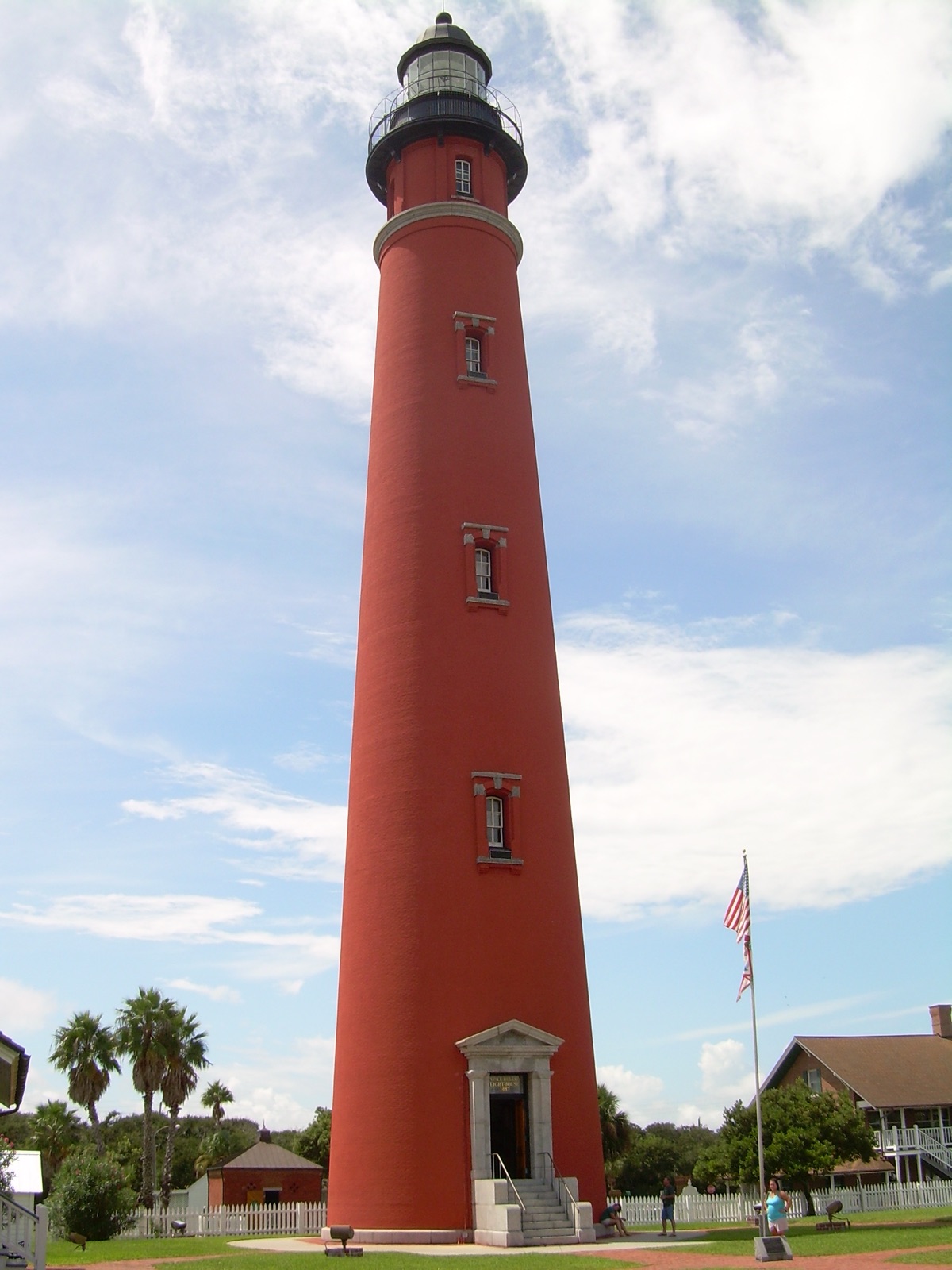
For grandeur, stop at the Ponce Inlet Lighthouse, south of Daytona on Florida’s Atlantic-facing east coast but belonging in spirit to this Gulf-peninsula run of Florida lights. At 175 feet it is the tallest lighthouse in Florida and one of the tallest in the nation, a soaring red-brick tower that replaced an earlier light the sea had, in the by-now-familiar pattern, undermined and dropped into the ocean within a year of its building.
What makes Ponce Inlet worth the climb, beyond the view from its great height, is how complete it is. All three of the original keepers’ houses still stand at its base, and the station keeps a collection of the huge glass Fresnel lenses that once turned a small flame into a beam that reached miles out to sea. To walk the grounds is to see not just a tower but a whole working light station preserved intact, the way Tybee is preserved back on the Atlantic side, so that you understand the light was never just a building. It was a household, a way of life, a family living at the edge of the water tending a fire for strangers.
Cape St. George, Florida
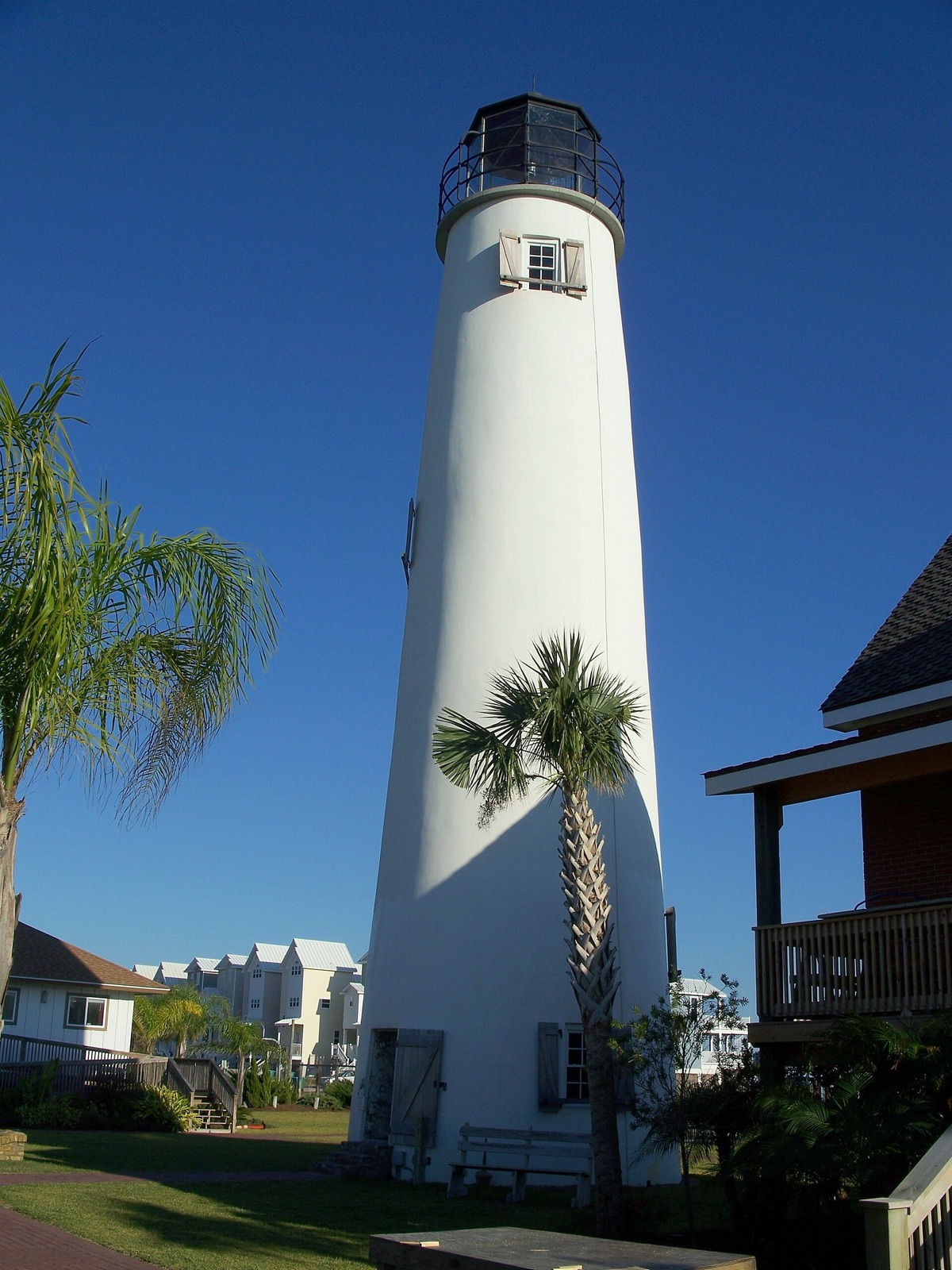
Then there is the beacon that came back from the dead. The Cape St. George Light stood on a barrier island off the panhandle until erosion finally did what erosion does on this coast and toppled it into the Gulf. It could have ended there, another lighthouse lost to the water, remembered only in photographs.
Instead the local people went into the surf and salvaged the old bricks, and with grants and state money and a great deal of determination, they rebuilt the tower on firmer ground, brick by salvaged brick. Lighthouse people speak of it with a particular reverence, a tower that fell into the sea and rose again, phoenix-like, because a community would not accept its loss. If you want to understand why any of this matters, why people fight so hard to save obsolete towers that no ship needs anymore, stand at the foot of the rebuilt Cape St. George Light and consider that every brick in it was carried up out of the Gulf by someone who decided the light was worth having back.
Sanibel, Florida
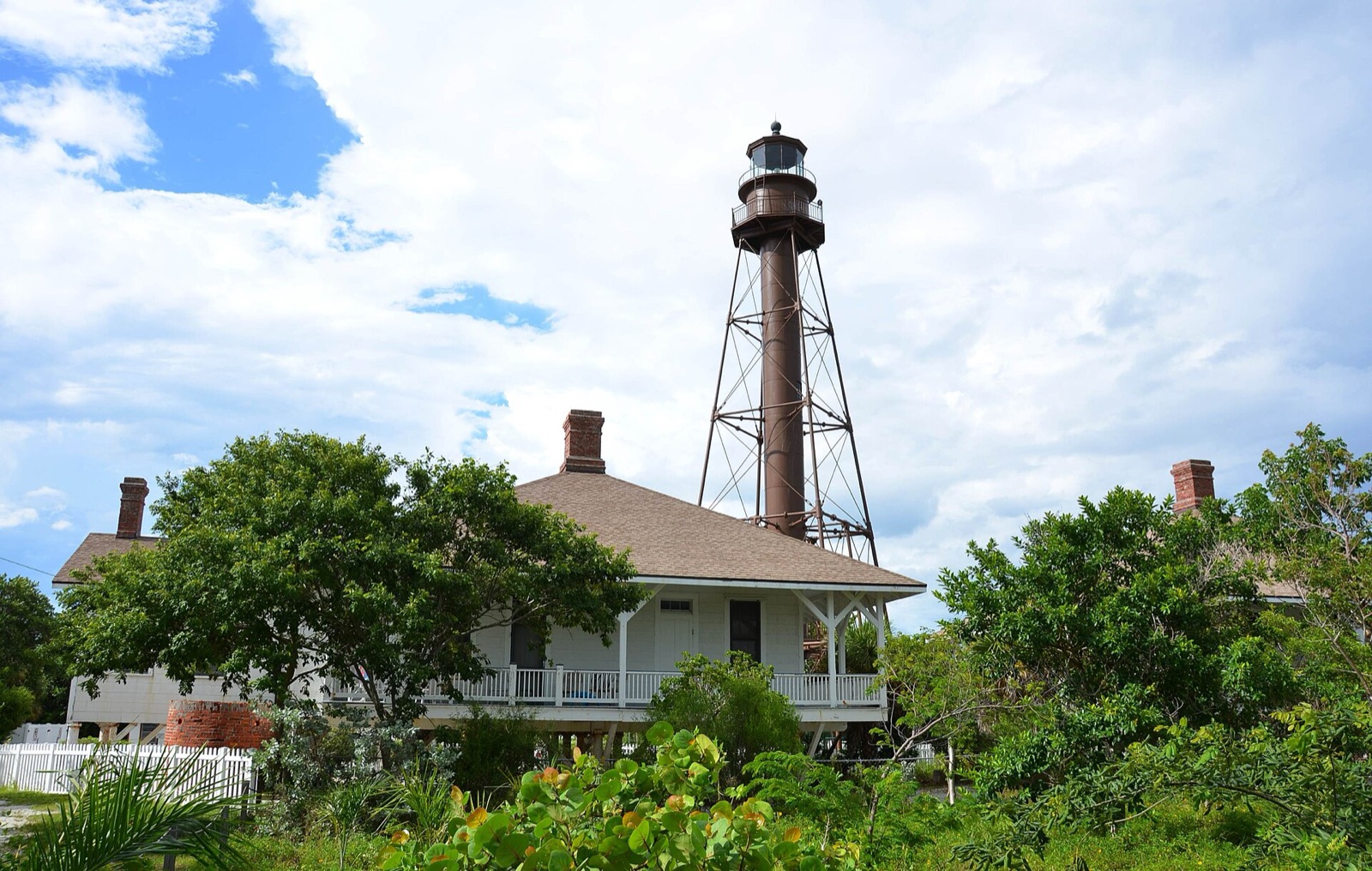
End at the bottom, on the shell island. The Sanibel Island Light is not a graceful cone or a grand brick tower. It is a spindly iron skeleton, a brown pyramid of legs with a staircase running up the middle, first lit in 1884 as one of the first lighthouses on the Gulf coast north of the Keys. It was built to guide ships toward the old cattle port across the bay, in the days when Florida ranchers drove their herds to the water and shipped them to Cuba.
The Sanibel light has stood through dozens of storms in its long life, and a few years ago it stood through one of the worst, a hurricane that swept away its keeper’s houses and tore off one of its four iron legs and left it standing wounded on the sand. And it did stand. They repaired it, and relit it, and its return to service became a small symbol of the whole island’s recovery, a light coming back on at the edge of a battered coast. There is no better place to end this Gulf run than at that stubborn iron tower on the beach where the shells wash up, a light that took the worst the Gulf could throw and lit again anyway.
Here is the thing the Gulf lights teach that the Atlantic ones only hinted at.
On a coast this low and this soft, where the sea is forever taking the land back and knocking the towers down, keeping a lighthouse standing was never a one-time act of building. It was a running argument with the ocean, a refusal repeated across generations, tower after tower, salvage after salvage, relighting after relighting. The Gulf did not make it easy to be lit. And the people lit it anyway, and keep lighting it, and go into the surf to carry the fallen bricks back up when they have to.
That is the whole spirit of this coast, and of these towers, and frankly of a lot of what we love about the South. The water keeps taking. The people keep rebuilding. And the lights keep coming back on. Around the peninsula and up into the quiet sounds behind the barrier islands stood the strangest beacons of all, the little houses on stilts, and we will get to those. A coast this long does not give up its beacons all at once.
The South, shared.
Keep Reading
Places
The Lighthouses of the South, Part One: The Atlantic CoastThe first in a series on the beacons of the Southern coast. Seven Atlantic towers built to keep ships off the shoals, and worth the climb.
Places
Edenton, North Carolina: Where Women Told a King NoA quiet bay town that was North Carolina's first colonial capital, home to the state's oldest working courthouse and an early women's political protest.
Places
Staunton, Virginia: The Town That Kept Its FaceIn the Shenandoah Valley sits one of the finest Victorian downtowns in the South, a walkable little city that decided its old buildings were worth keeping.